we are in cycle
《花園-滿月與下弦月》
2025
Driftwood, Site-specific Installation
材質|Materials
漂流木、現地裝置


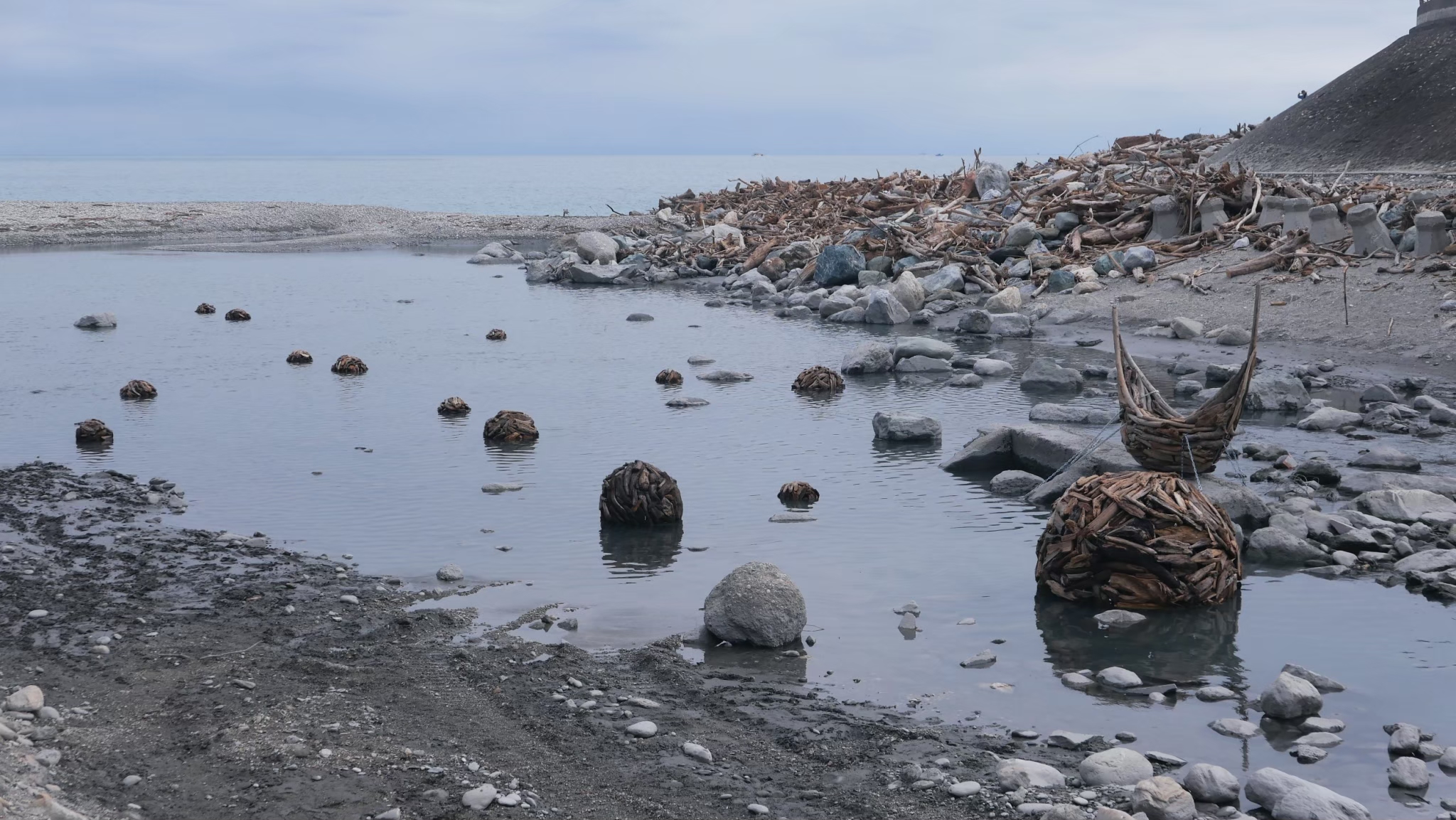
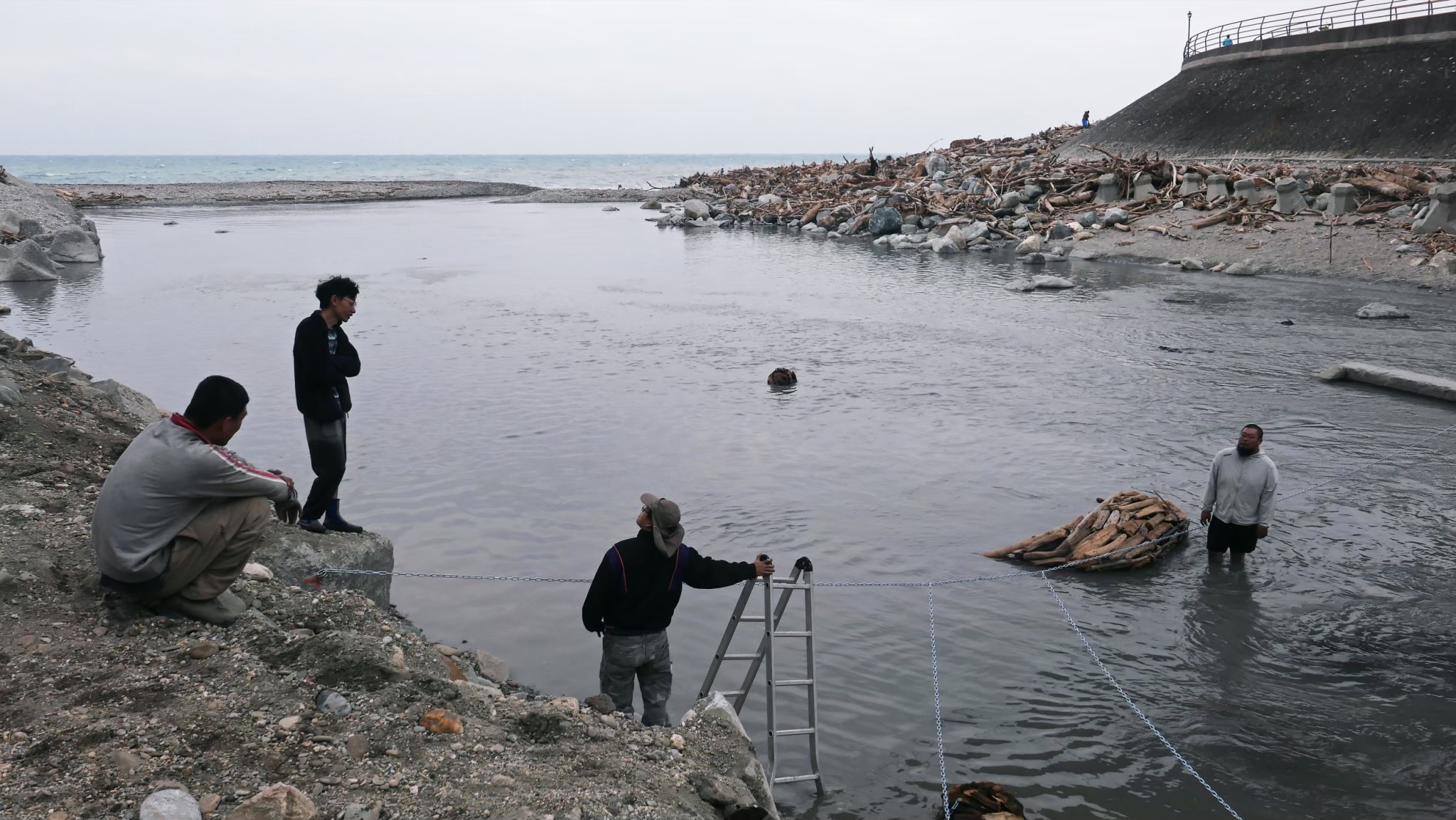
We Are in Cycle is a site-specific installation located at the estuary of the Ji'an River (also known as the Cikasuan River) in Hualien, Taiwan. As the point where the river meets the Pacific Ocean, the estuary marks the final stage of driftwood's journey from the mountains to the sea.
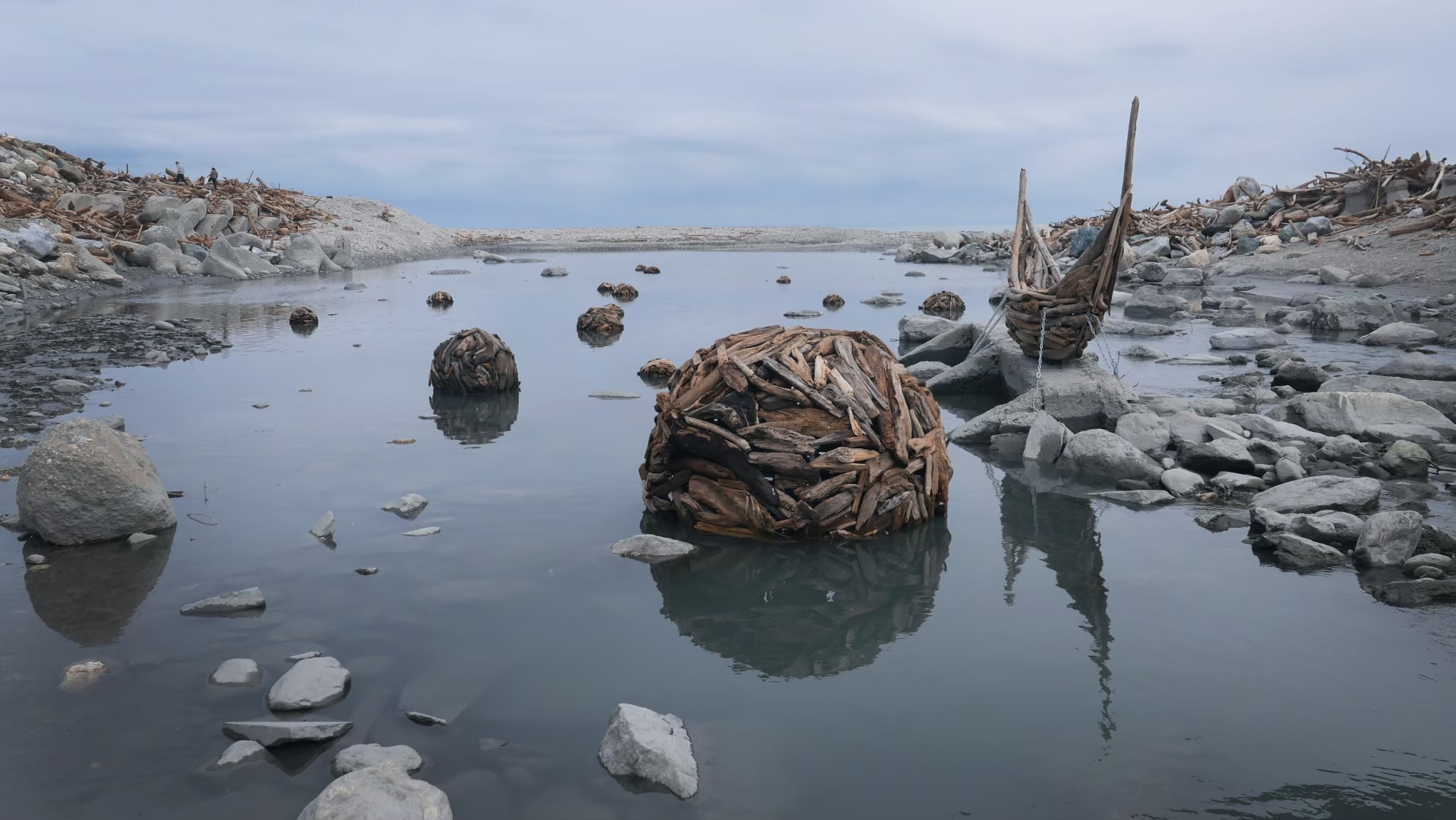
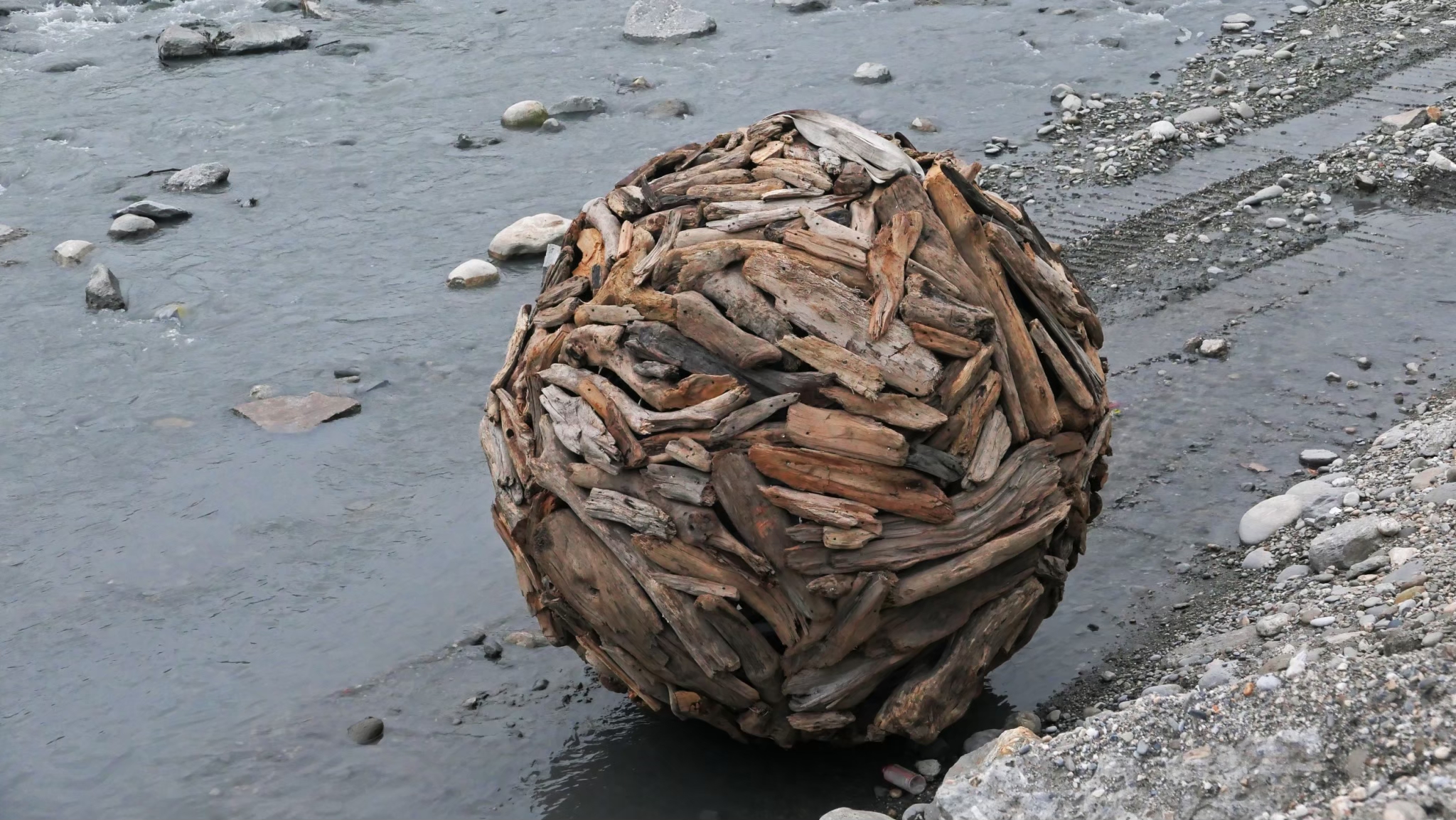
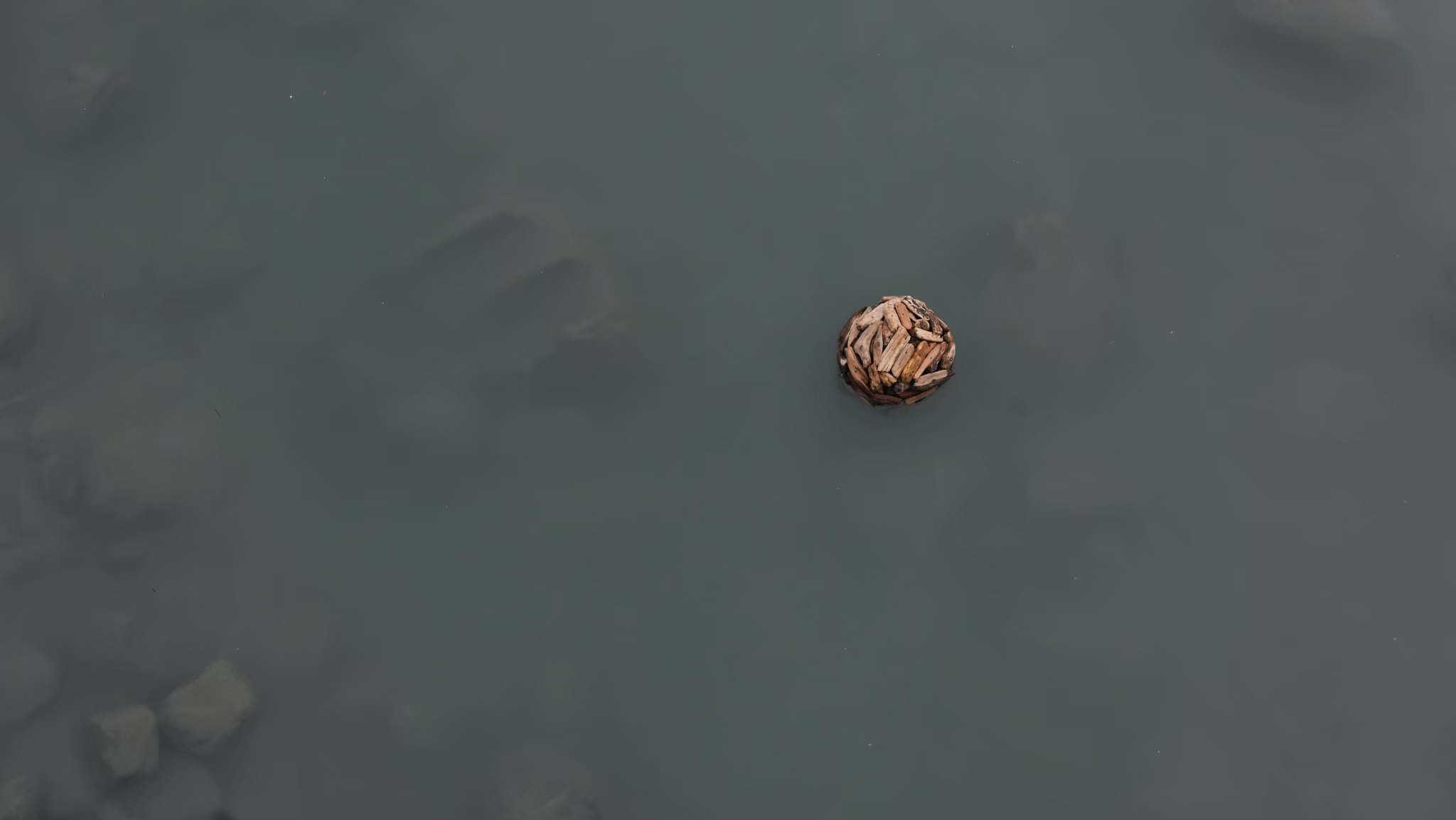
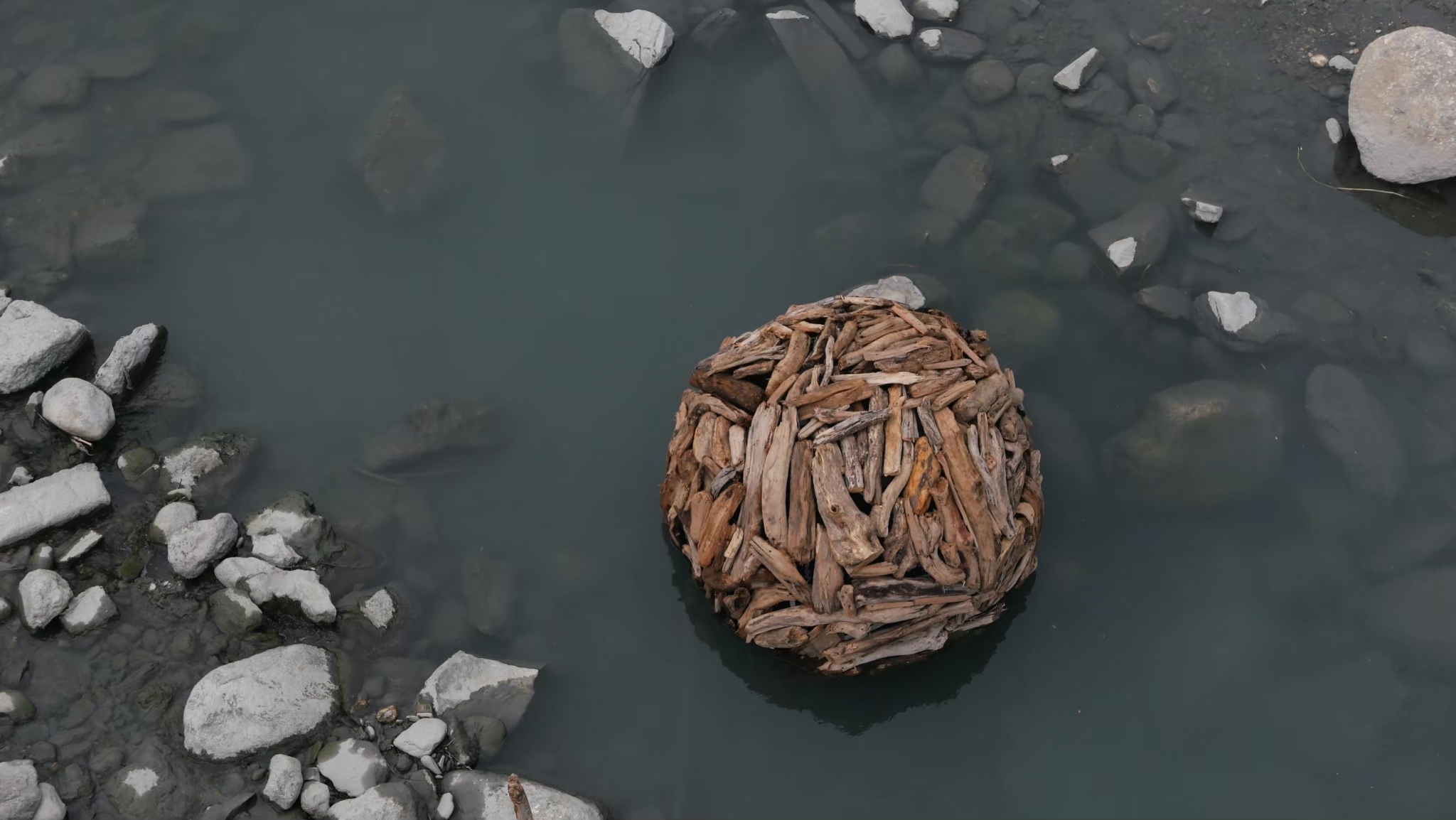
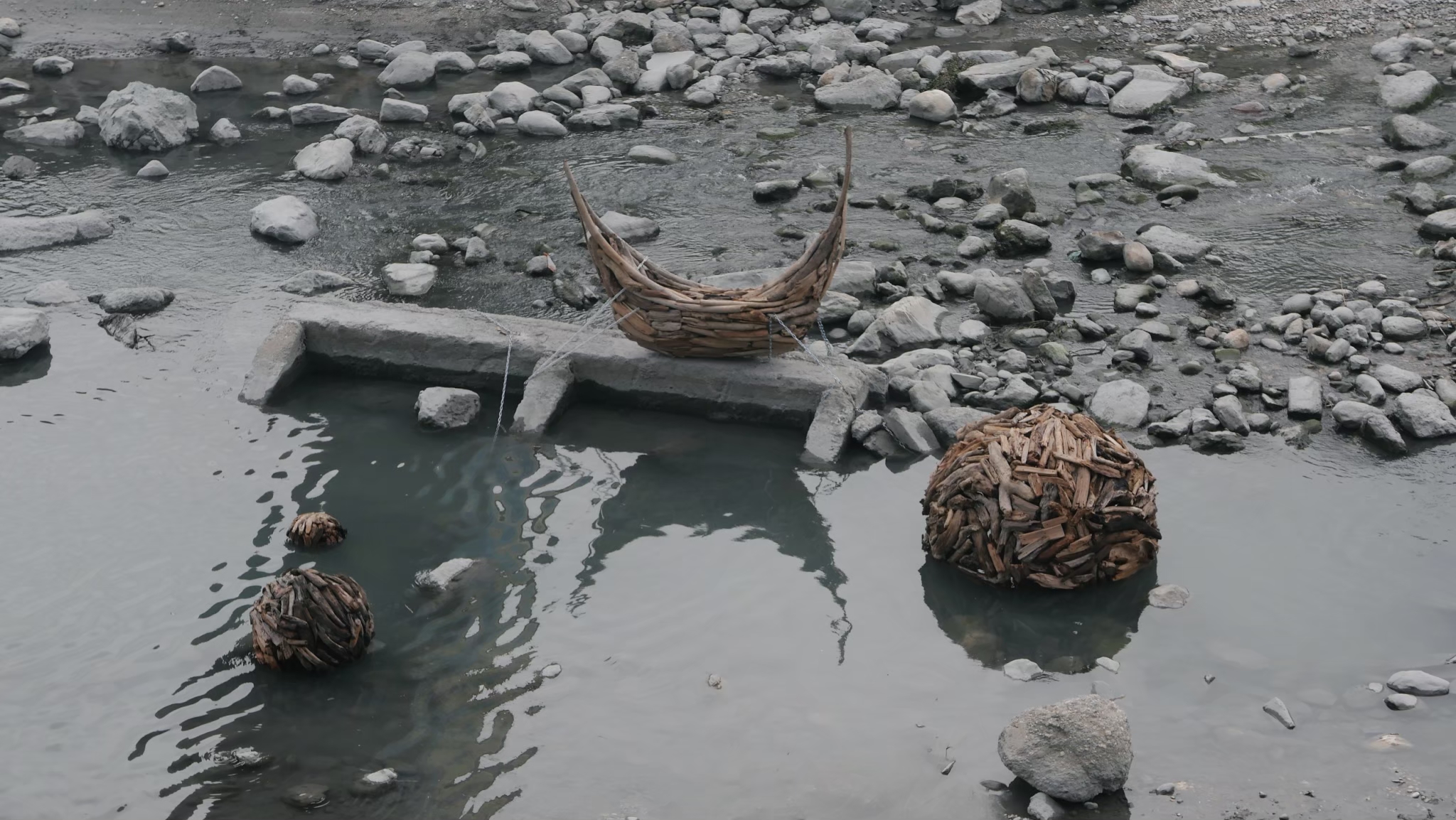
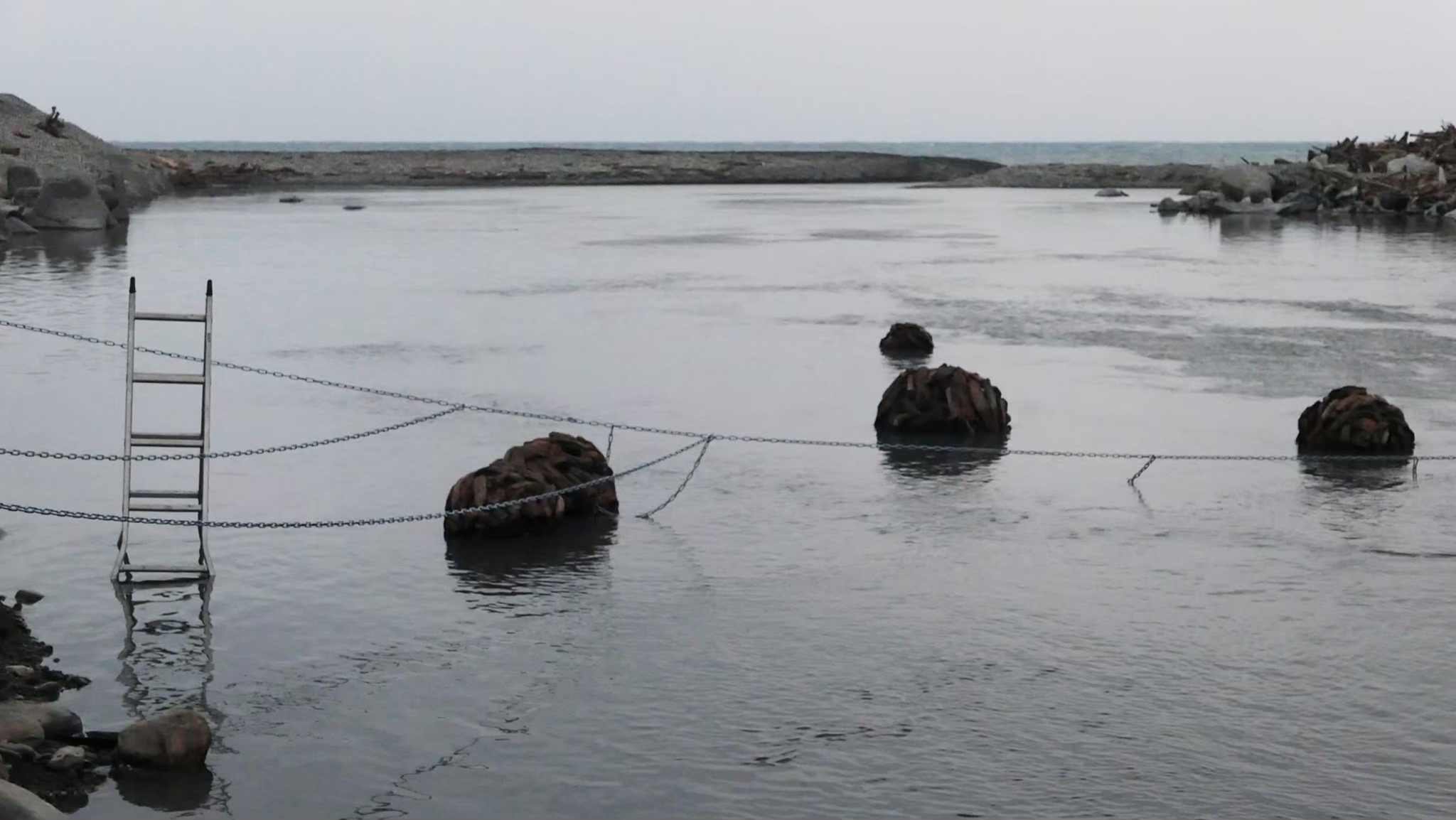
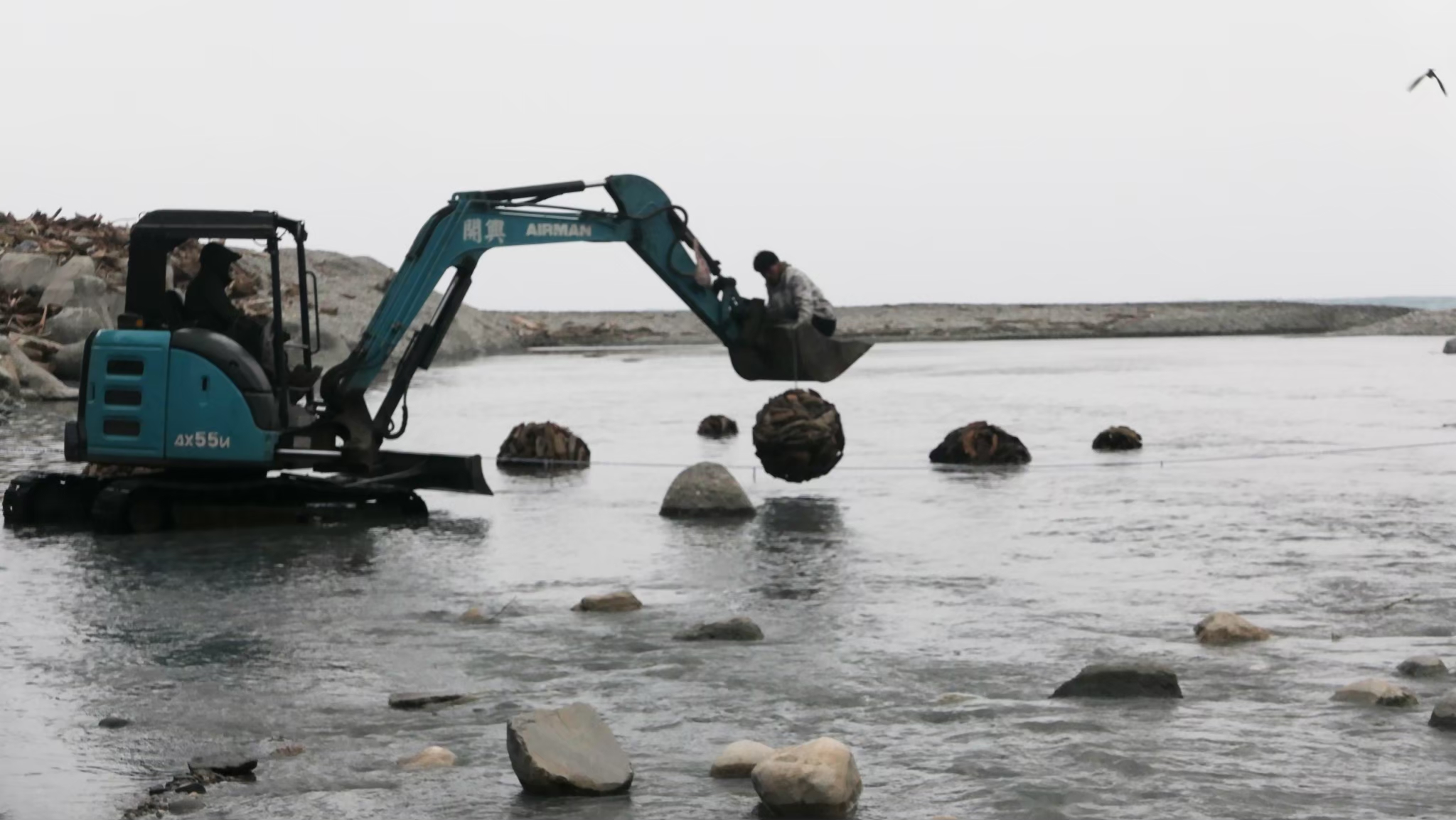
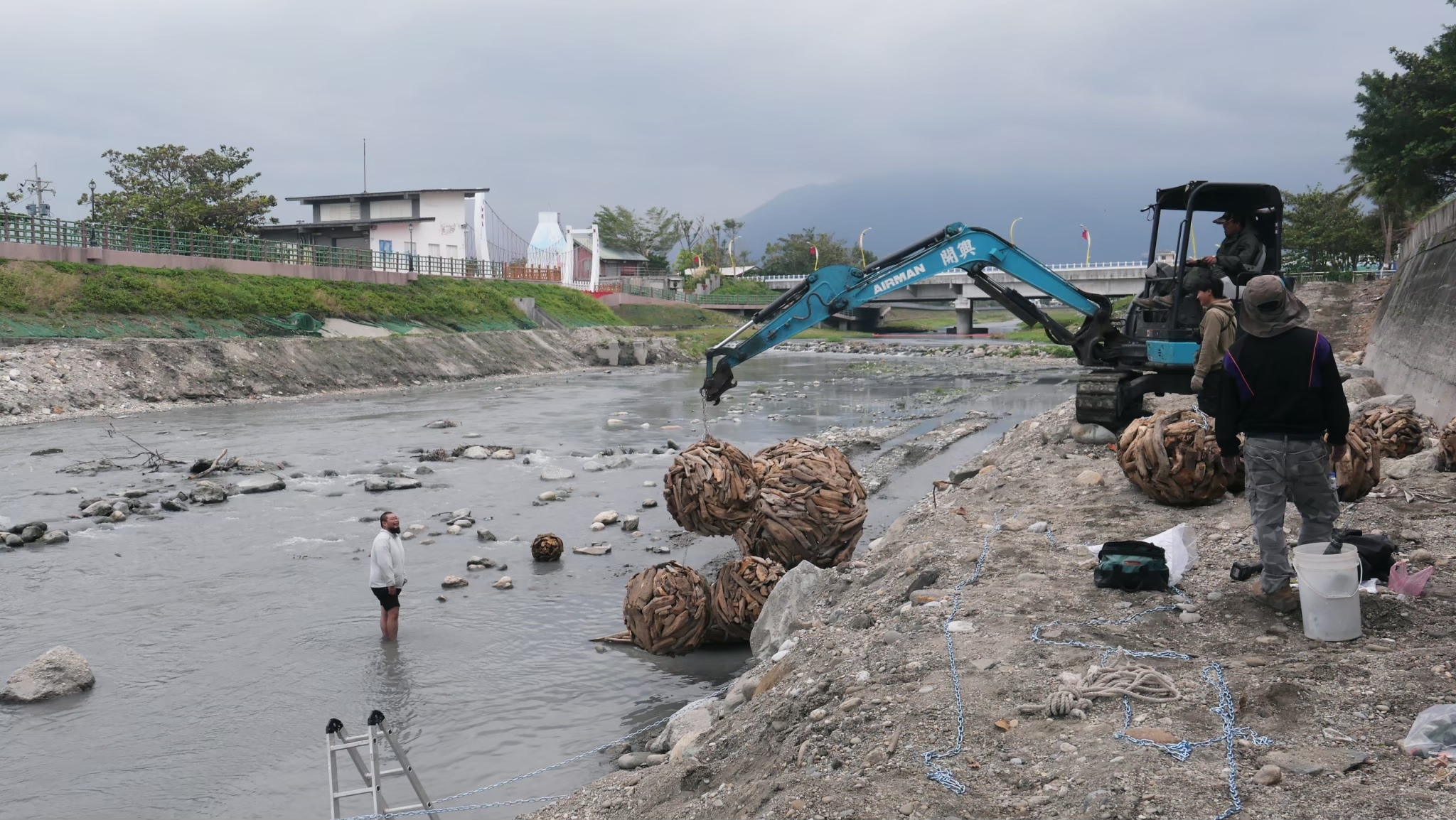
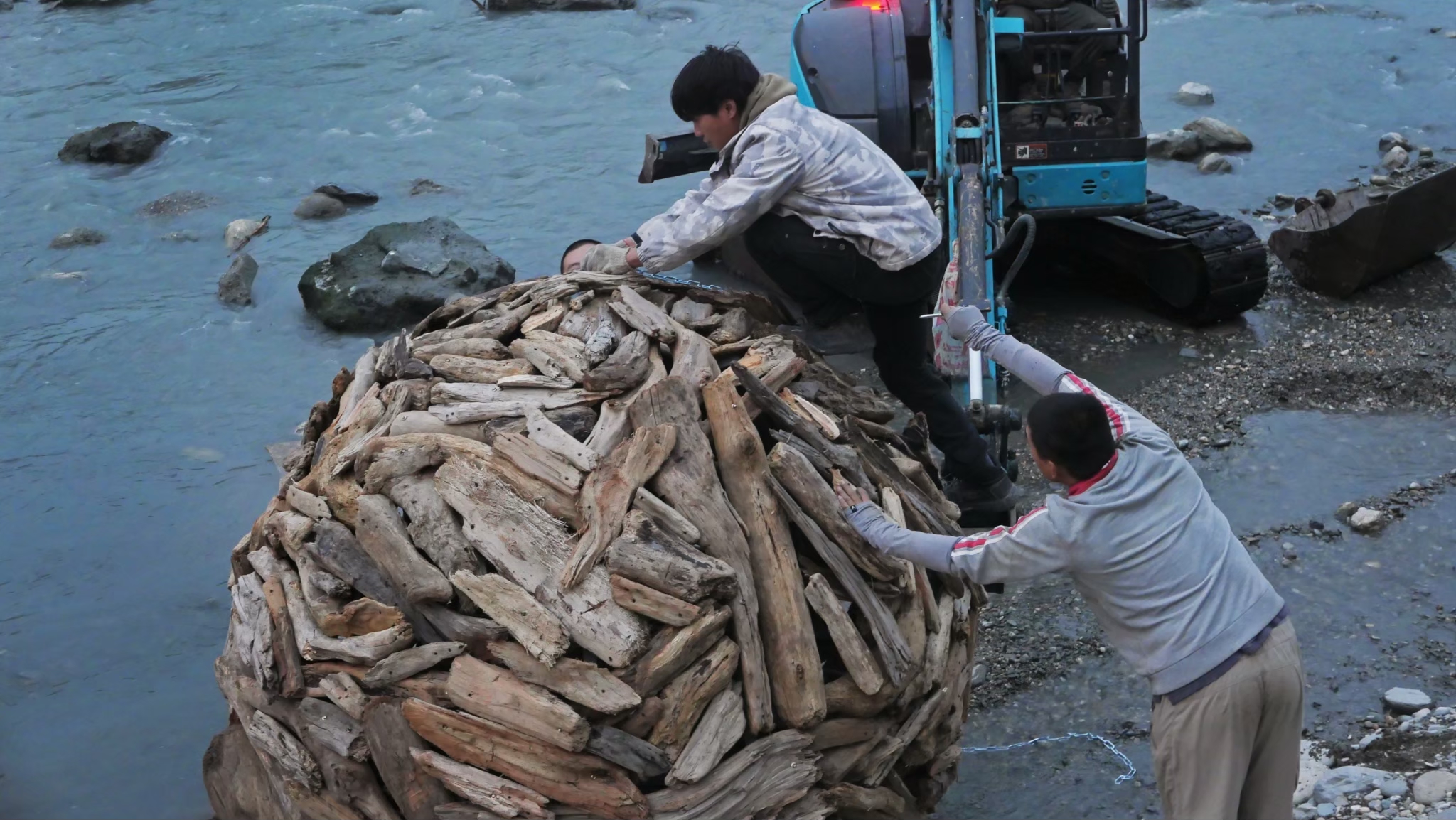
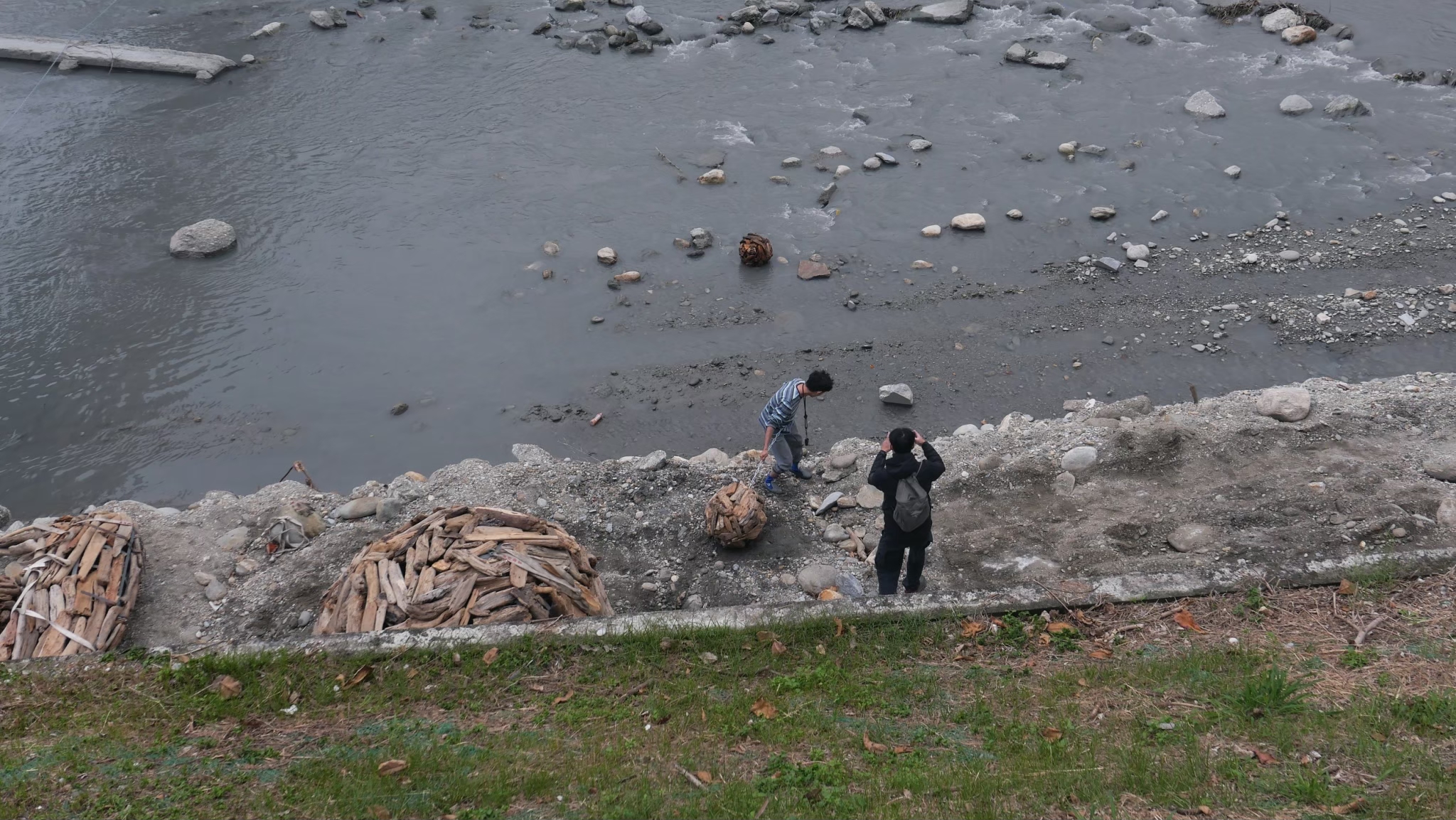
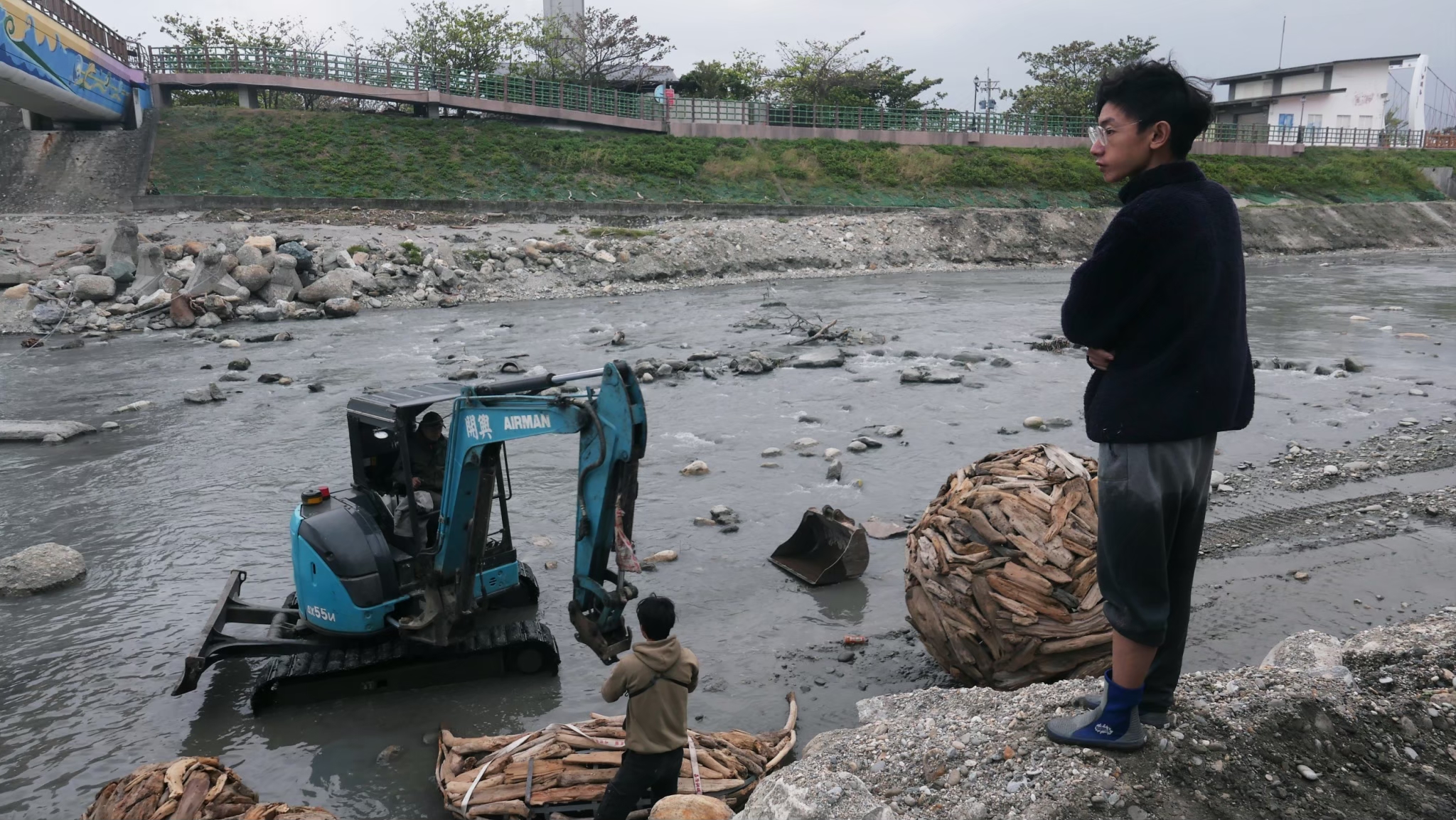
The work consists of spherical forms constructed from collected driftwood and placed directly within the estuarine waters. Rather than removing driftwood from its environment and transforming it into a static sculptural object, the installation returns the material to its inherent state—floating on water. The driftwood continues to move with the currents, tides, and changing water levels, remaining part of the landscape from which it originated.
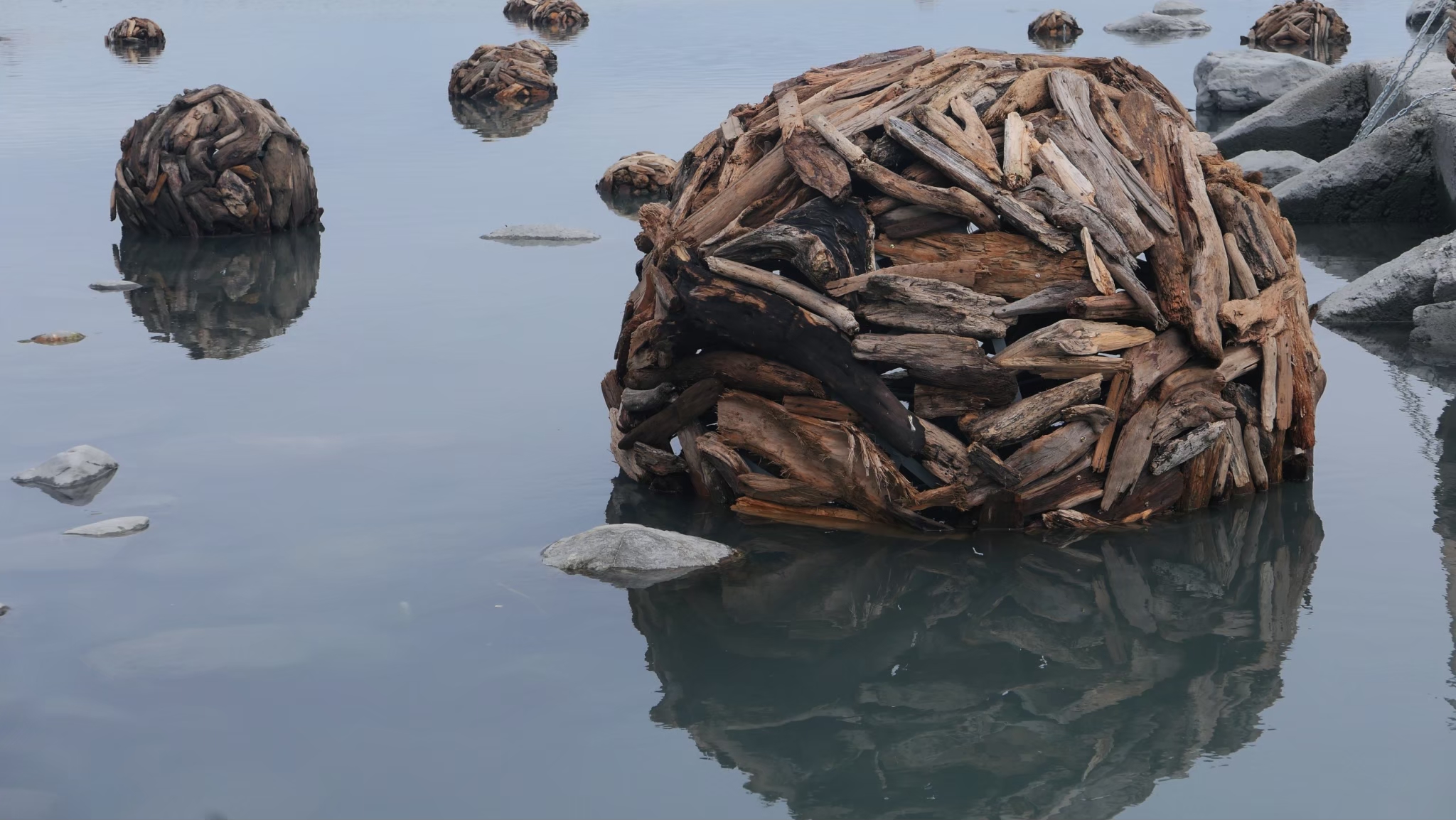
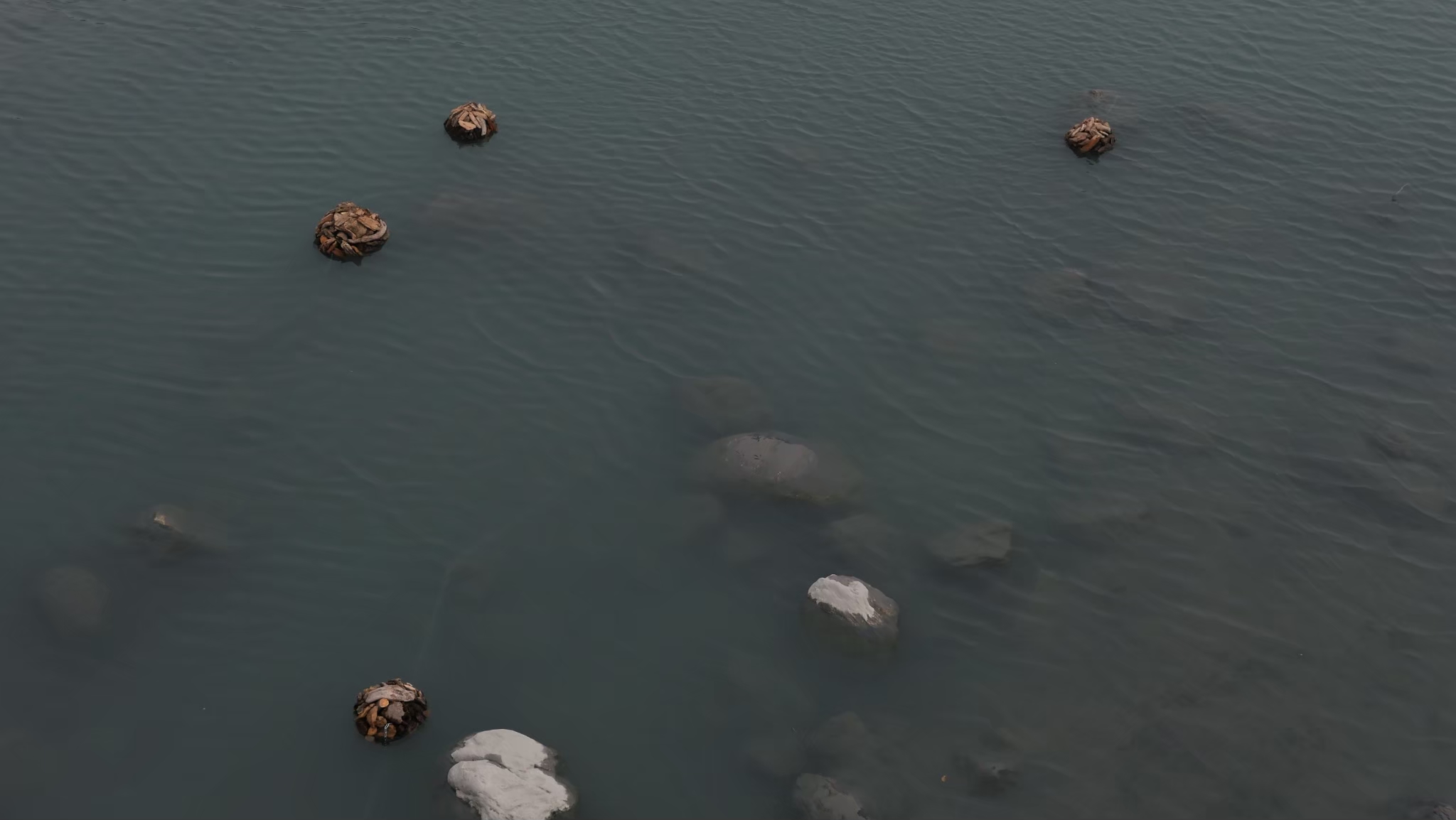
The spheres are never fixed in a single appearance. As the tide rises and falls, their visibility, reflections, and spatial relationships constantly shift. Some are almost fully exposed during low tide, while others become partially submerged as the water rises. The work therefore has no definitive form; it is continually reshaped by the rhythms of the estuary.
The Ji'an River functions as a natural passage that carries trees from the mountains toward the ocean. This ongoing movement is rarely perceived as a whole. By gathering driftwood into spherical forms, the installation renders this invisible process visible, allowing the river's continuous act of transporting, accumulating, and dispersing material to become a sculptural experience.
The Chinese title, Garden—Full Moon and Last Quarter Moon, refers to the lunar phases that govern the tides, while the English title, We Are in Cycle, expands this idea beyond the site itself. Together, they reflect a landscape in perpetual transformation, where rivers, oceans, the moon, and driftwood participate in the same continuous cycle. Rather than representing nature, the installation allows natural forces to shape the work over time, making change itself an essential part of the sculpture.


《花園——滿月與下弦月》設置於花蓮吉安溪,又稱七腳川溪的出海口。這裡是河流與海洋交會的邊界,也是山林中的木頭經由溪流沖刷、搬運,最終進入海洋的通道。
作品以收集而來的漂流木組成大小不一的球體,散置於出海口的水域之中。藝術家之所以選擇漂流木,是希望讓材料重新回到其漂流的狀態。漂流木不再只是被撿拾、搬離水域並轉化為雕塑的材料,而是再次回到河海交界,漂浮於水面,延續它被水流帶動的特質。
球體沒有固定不變的觀看形式。受到月球引力與潮汐變化的影響,水位在漲潮與退潮之間升降,漂流木球露出水面的比例、彼此之間的距離,以及倒映於水中的形態也隨之改變。有時球體大部分浮現於水面,有時則被上升的潮水包覆。作品因此不是靜止的雕塑,而是一座由河流、海洋、月相與時間共同調整的花園。
吉安溪將木頭由山林推向海洋的過程,原本分散在不同的時間與地點,難以被完整觀看。藝術家藉由漂流木球的聚集與漂浮,將這段移動的歷程轉化為可見的地景:木頭從山中離開,沿溪流向下,被水反覆沖擊、搬運,最後抵達出海口。球體凝聚了這段行進的軌跡,也在潮汐中繼續移動。
「滿月」與「下弦月」既指向月相的循環,也對應潮汐、水位與作品形態的變化。這座花園沒有固定的生長狀態,而是在顯現與隱沒、聚集與分散、停留與漂流之間不斷轉換。作品將自然視為持續運作的力量:河流搬運木頭,海洋承接河流,月球牽引潮汐,而球體則暫時顯現於這些循環交會的時刻。
我們身處循環之中。