
Endless
無極
2024
Site-specific installation
Earth, mirror-finished stainless steel, reinforced concrete


Light belongs to the surface, yet it also enters the underground. It mediates between time and space, allowing history to become memory, and memory to become the substance of dreams.
Endless takes its title from the historical Wuji Cableway in Jinguashi. Derived from the English word Endless, it originally referred to the continuously circulating cable system that transported ore through the mountain. To me, it also describes a movement that never truly begins or ends—a circulation of landscape, memory, and time.
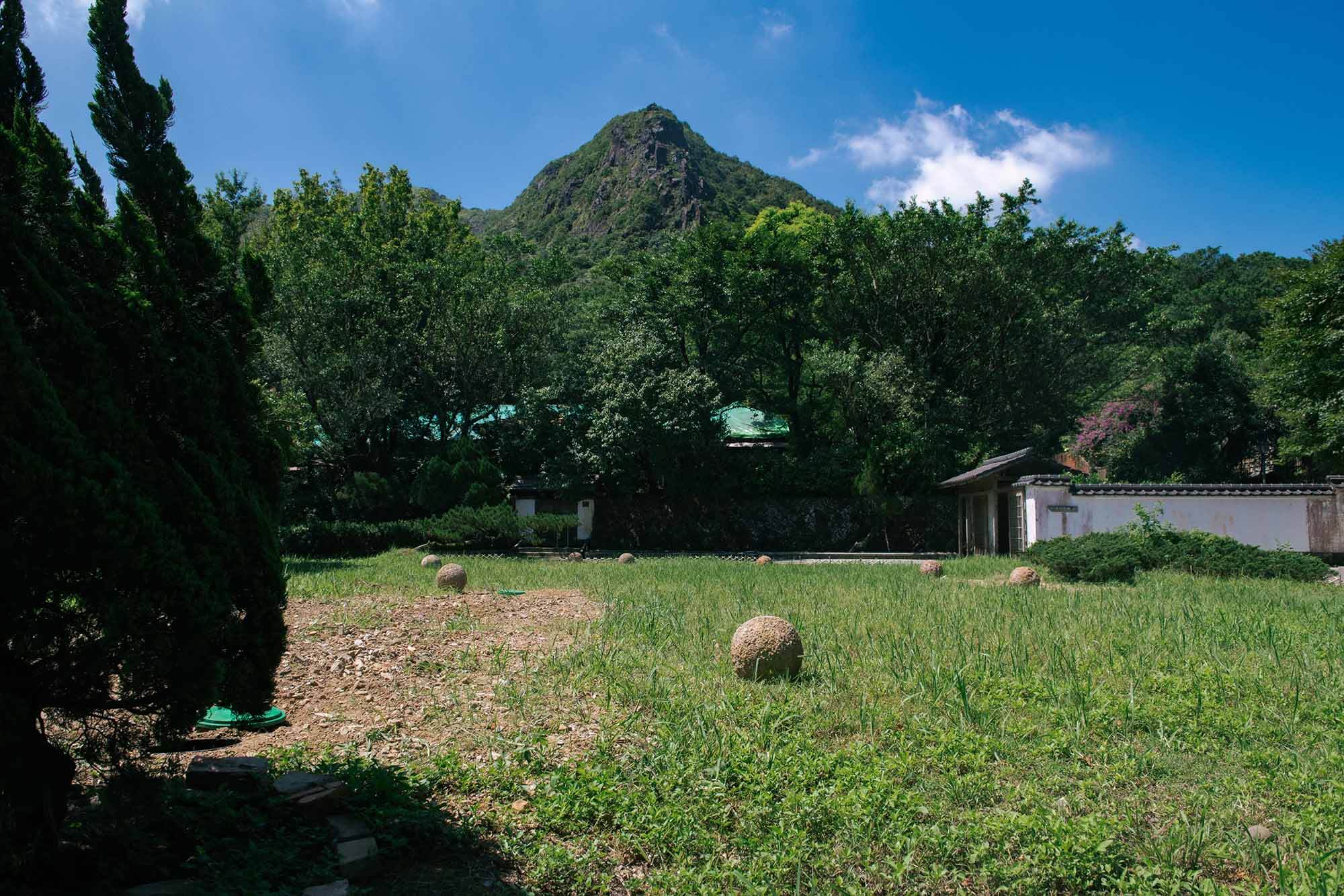
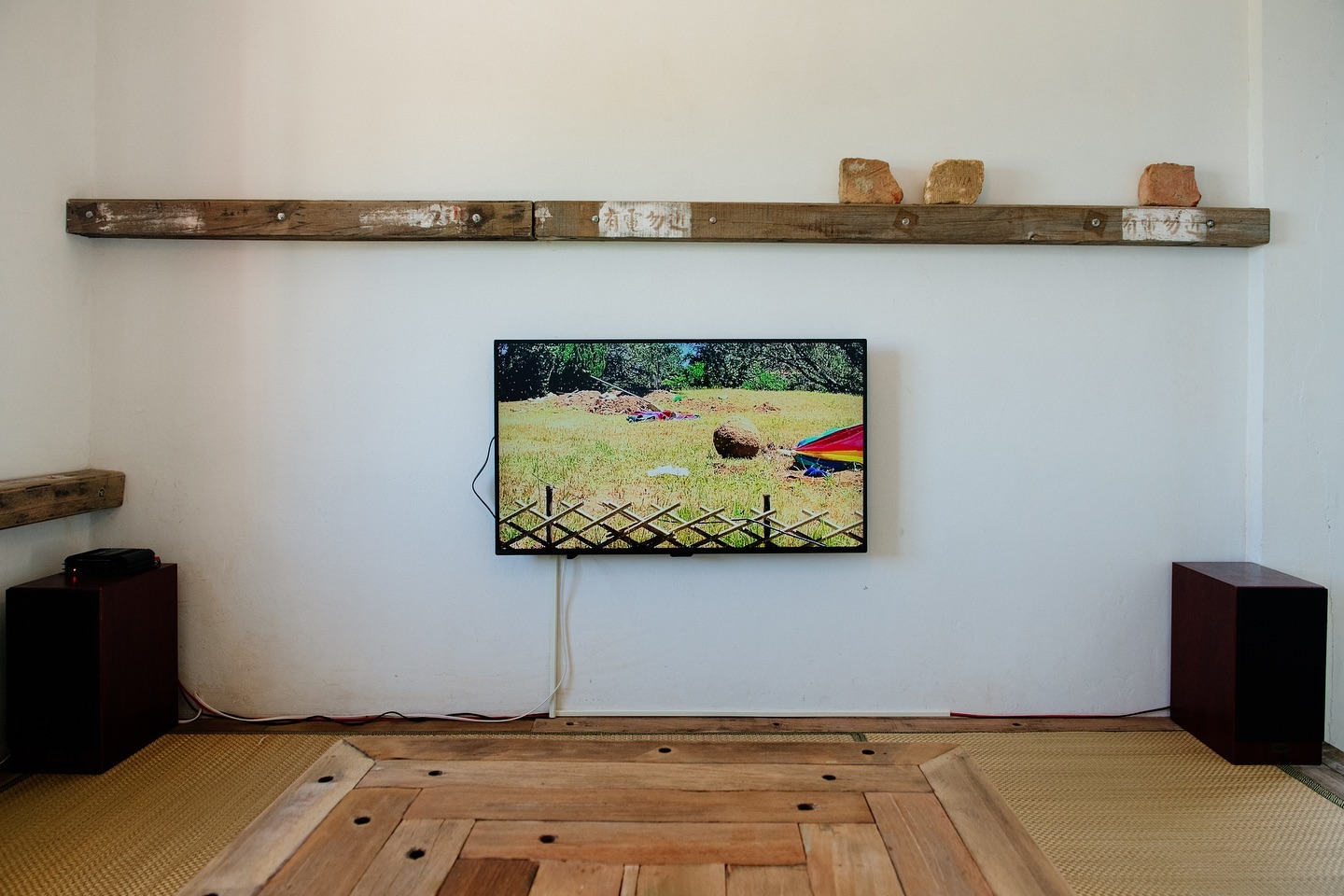
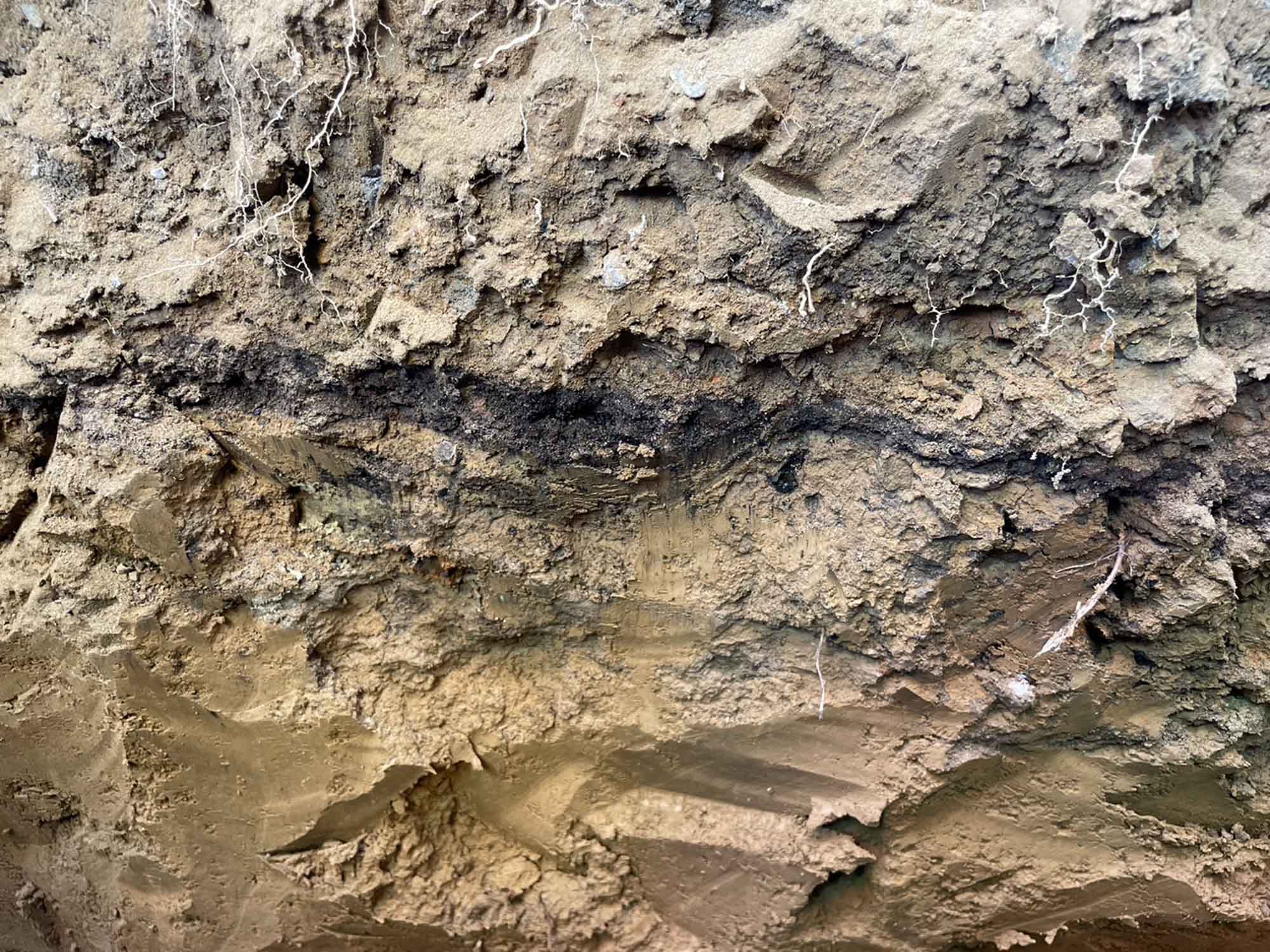
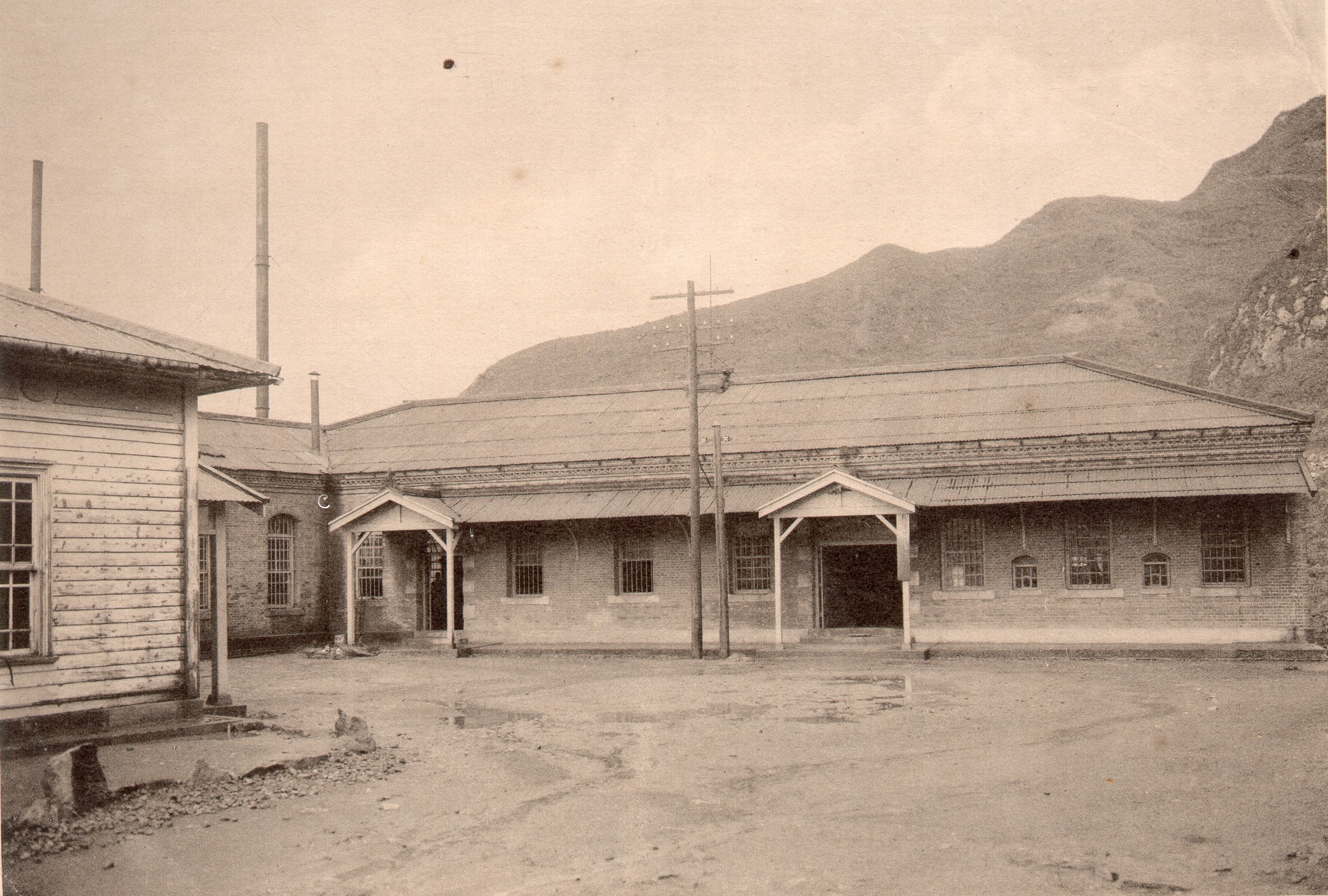
The work was installed on the lawn in front of the Prince's Guest House, where the mining office once stood. During the excavation, fragments of concrete, bricks, and ceramic tiles slowly emerged from beneath the ground. Digging the foundation of the work often felt like mining and archaeology at the same time. Every layer of earth revealed another layer of the landscape.
A local elder returned to the site with me. Standing on the empty lawn, he pointed toward the ground, describing the corridors, the toilets, and the building that had disappeared decades ago. Through his words, an invisible architecture gradually appeared. The landscape I was standing on became inhabited by another time.
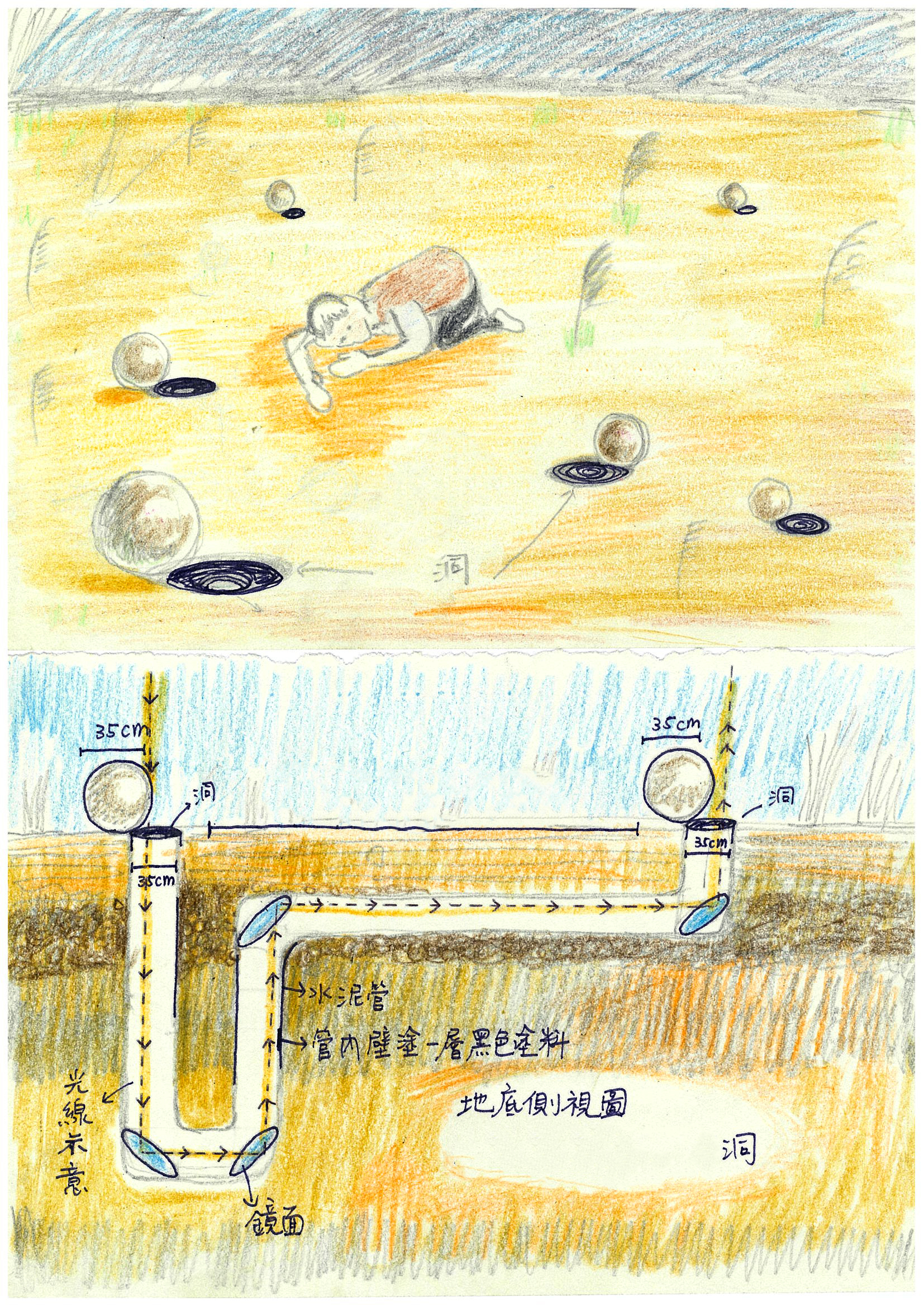
At the center of the work is a mirrored underground passage. Looking through the opening, the viewer does not see darkness, but the sky reflected from the opposite end of the tunnel. Like a periscope, the passage connects two distant spaces, making the underground appear to open toward another world.
I have never believed that the underground is empty.
When ore is removed, what remains is not simply a void. It is filled with light, darkness, echoes, moisture, air, pressure, memory, and time. Excavation does not reveal the past; it reveals that the past has never completely disappeared.
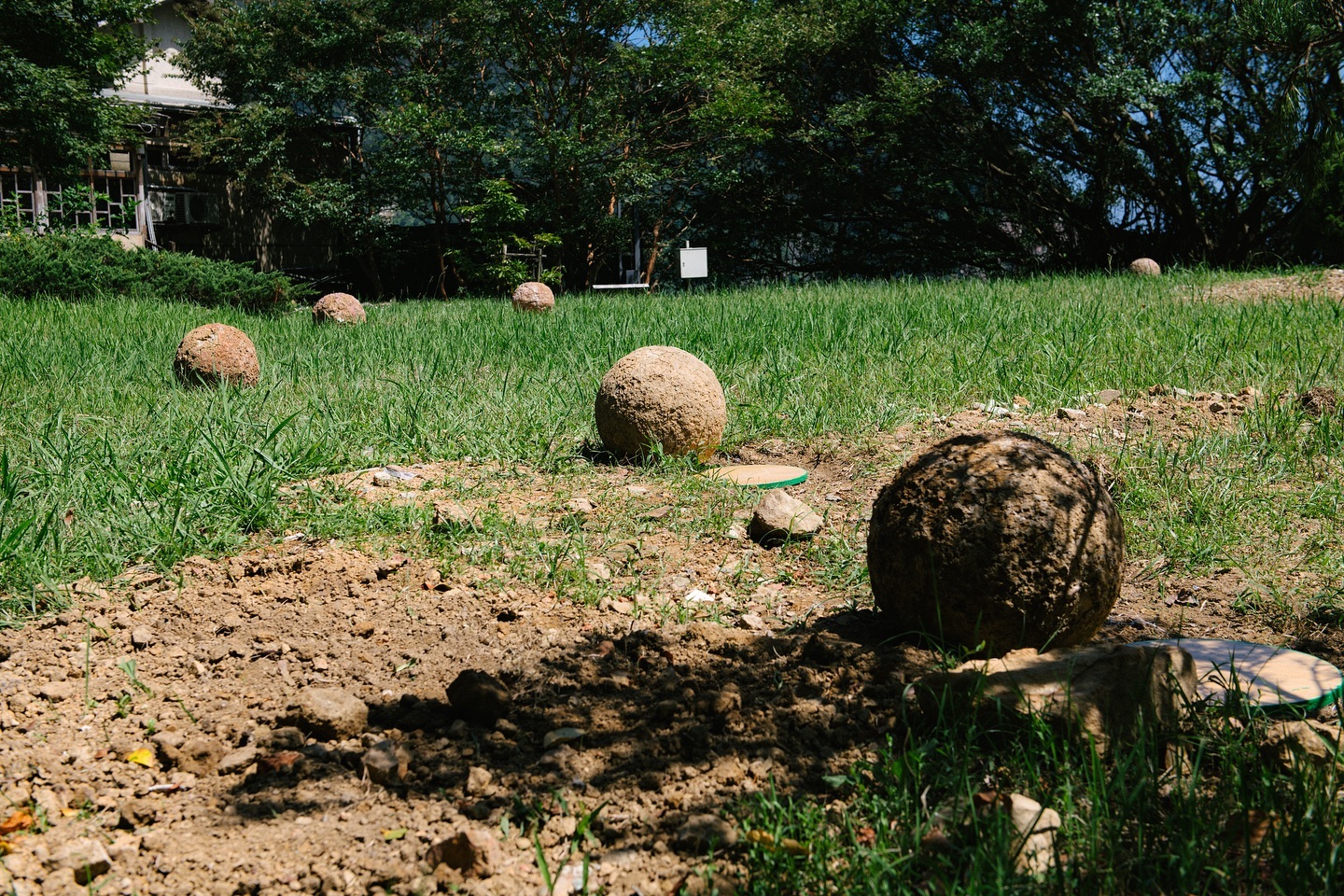
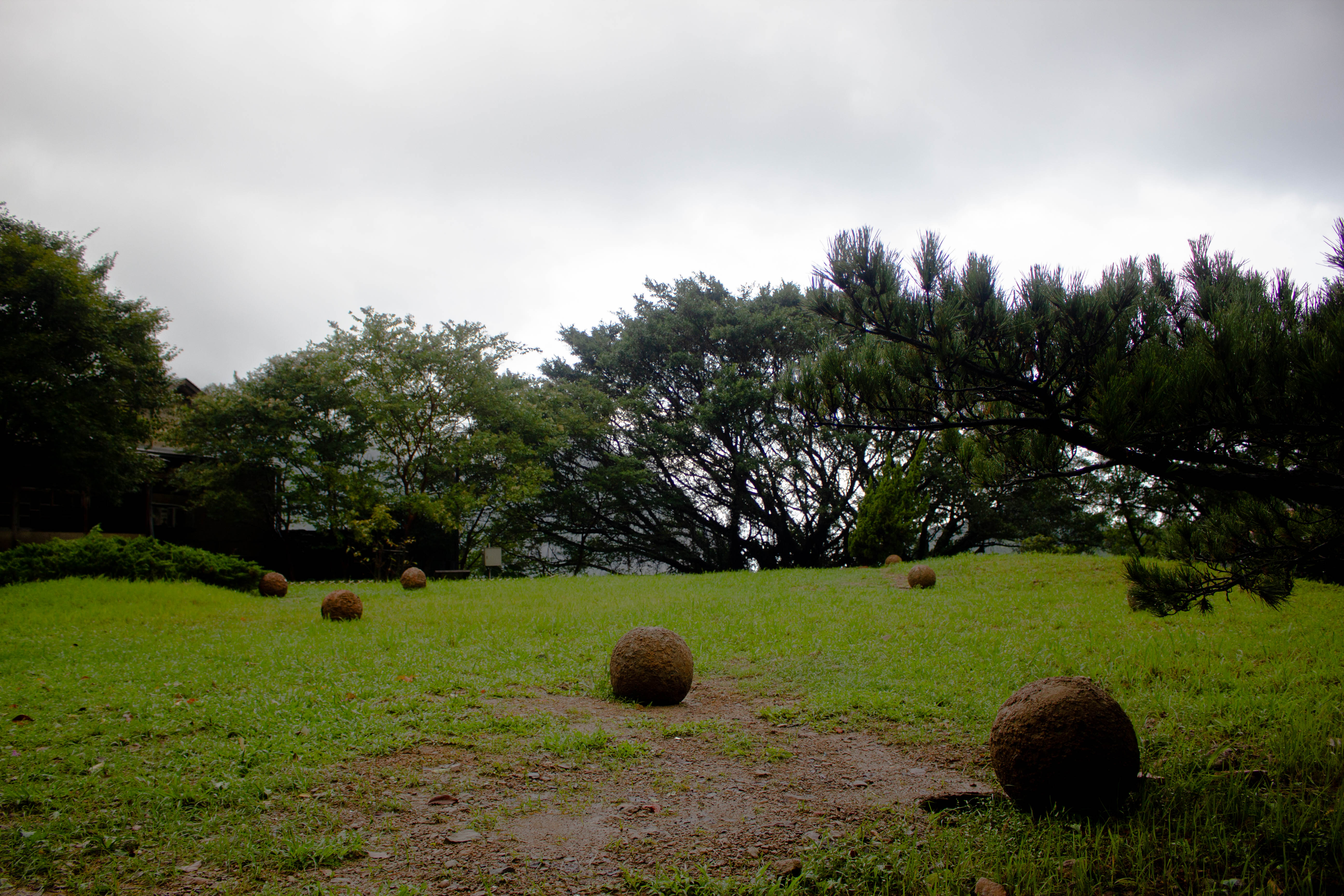
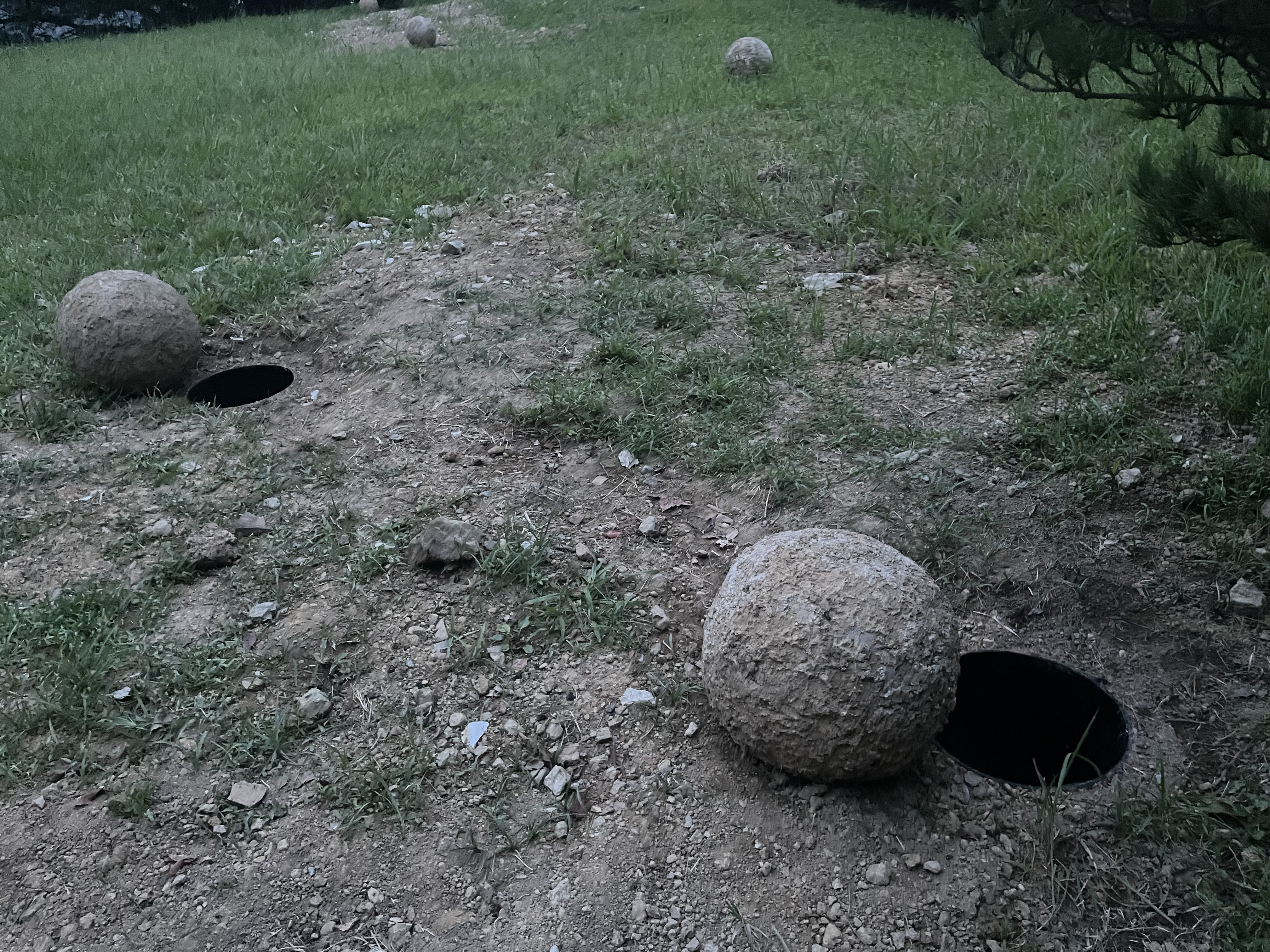
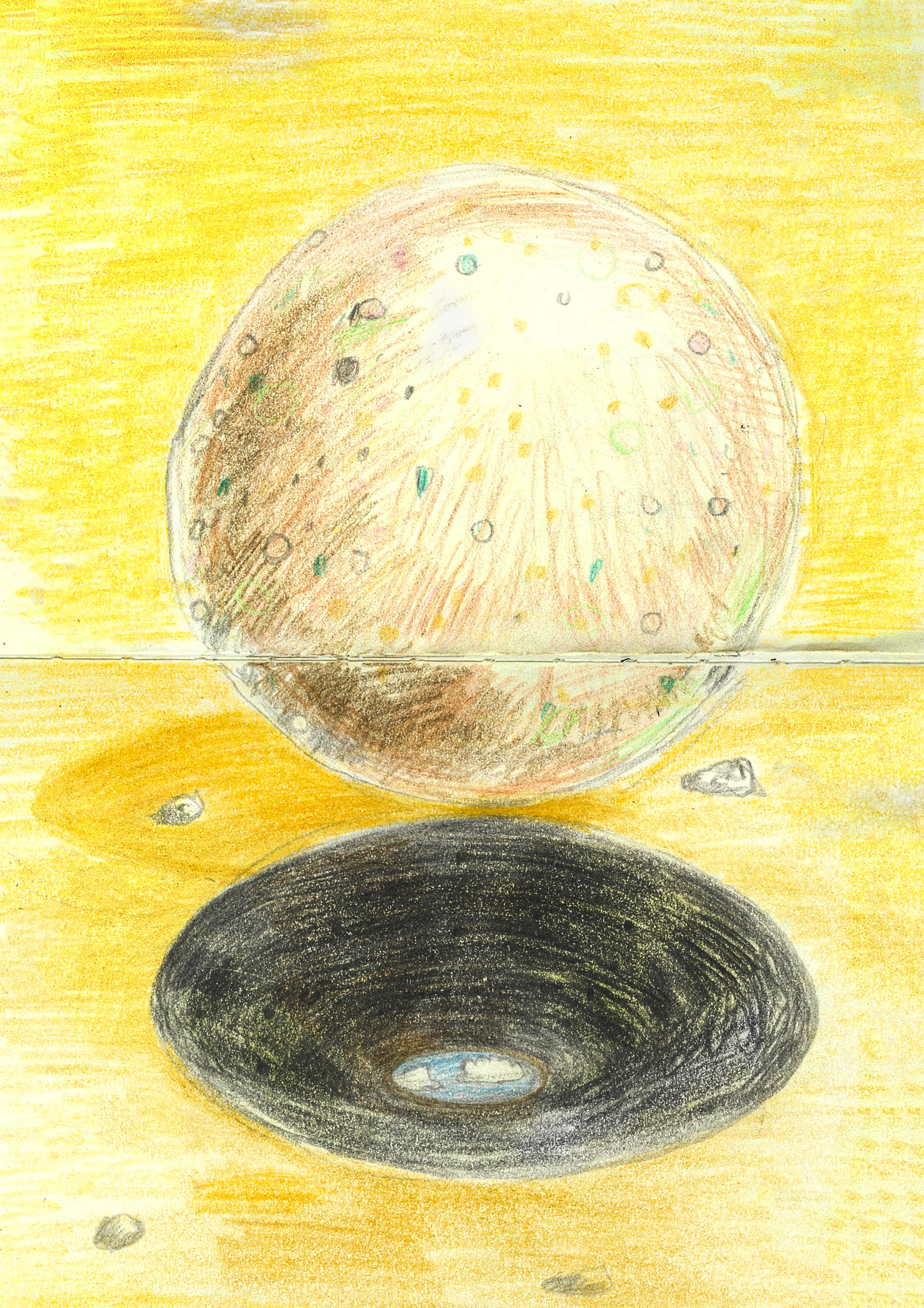
The earth removed from the excavation was shaped into a sphere and placed beside the opening. The sphere and the hole describe the same body in two different states. The hole is the three-dimensional shadow of the sphere. One exists above the ground; the other beneath it. One is matter; the other is space.
By removing a part of the earth, the underground becomes the sky. The inside becomes the outside. What appears empty becomes another form of existence. The passage becomes a ventilation shaft through which different spaces, different times, and different memories continue to breathe together.


光屬於地表,但它也會沿著通道進入地下。光是時間與空間的中間人,讓歷史成為記憶,而記憶,又成為我們做夢的養分。
《無極》的名稱來自金瓜石歷史上的無極索道。它源自英文 Endless,原本指的是以環狀鋼索持續循環運轉的礦業運輸系統。對我而言,它也意味著一種沒有真正開始,也沒有真正結束的流動——地景、記憶與時間彼此循環。
作品設置於太子賓館前的草坪。這裡曾經是礦場辦公室所在地。開挖的過程中,我陸續挖出了水泥塊、磚頭,以及帶有日治時期紋樣的磁磚。那段時間,我經常覺得自己同時在挖礦,也同時在考古。每一次移開泥土,都像是在揭開另一層地景。
創作期間,一位經歷過礦業年代的耆老陪著我走過這片草地。他指著地面,告訴我哪裡曾經是走廊、哪裡是廁所,人們如何在這棟建築裡工作與生活。那些已經消失的建築,透過他的口述,再次出現在眼前。我所站立的地方,也因此同時存在著另一個時間。
作品的核心是一條埋藏於地下的鏡面通道。當人從洞口望去,看見的不是黑暗,而是通道另一端反射而來的天空。它像一座潛望鏡,把兩個原本互不相連的空間接在一起,讓地下彷彿通往另一個世界。
我始終相信,地底從來不是空的。

礦石被移走之後,留下的不只是坑道,而是光、黑暗、回音、空氣、水氣、地壓、記憶與時間共同存在的地方。挖掘並不是把過去挖出來,而是讓人發現,過去從未真正消失。
開挖所取出的土壤,被塑造成一顆球體,放置於洞口旁。球體與洞,是同一個形體的兩種存在方式。洞不是球體留下的缺口,而是球體的立體影子。 一個存在於地表,一個存在於地下;一個是物質,一個是空間。
當地底成為天空,裡面成為外面,虛與實便不再對立。洞穴不只是通道,而是一個讓不同空間、不同時間、不同記憶共同呼吸的通風口。
_mp4.jpg)


Process & Materiality
過程與物質性
2024
Field Research & Studio Documentation
Digital photography, Found objects, Soil samples

Light belongs to the surface, yet it also enters the underground. It mediates between time and space, allowing history to become memory, and memory to become the substance of dreams.
Endless takes its title from the historical Wuji Cableway in Jinguashi. Derived from the English word Endless, it originally referred to the continuously circulating cable system that transported ore through the mountain. To me, it also describes a movement that never truly begins or ends—a circulation of landscape, memory, and time.
The work was installed on the lawn in front of the Prince's Guest House, where the mining office once stood. During the excavation, fragments of concrete, bricks, and ceramic tiles slowly emerged from beneath the ground. Digging the foundation of the work often felt like mining and archaeology at the same time. Every layer of earth revealed another layer of the landscape.
A local elder returned to the site with me. Standing on the empty lawn, he pointed toward the ground, describing the corridors, the toilets, and the building that had disappeared decades ago. Through his words, an invisible architecture gradually appeared. The landscape I was standing on became inhabited by another time.
At the center of the work is a mirrored underground passage. Looking through the opening, the viewer does not see darkness, but the sky reflected from the opposite end of the tunnel. Like a periscope, the passage connects two distant spaces, making the underground appear to open toward another world.
I have never believed that the underground is empty.
When ore is removed, what remains is not simply a void. It is filled with light, darkness, echoes, moisture, air, pressure, memory, and time. Excavation does not reveal the past; it reveals that the past has never completely disappeared.
The earth removed from the excavation was shaped into a sphere and placed beside the opening. The sphere and the hole describe the same body in two different states. The hole is the three-dimensional shadow of the sphere. One exists above the ground; the other beneath it. One is matter; the other is space.
By removing a part of the earth, the underground becomes the sky. The inside becomes the outside. What appears empty becomes another form of existence. The passage becomes a ventilation shaft through which different spaces, different times, and different memories continue to breathe together.
光屬於地表,但它也會沿著通道進入地下。光是時間與空間的中間人,讓歷史成為記憶,而記憶,又成為我們做夢的養分。
《無極》的名稱來自金瓜石歷史上的無極索道。它源自英文 Endless,原本指的是以環狀鋼索持續循環運轉的礦業運輸系統。對我而言,它也意味著一種沒有真正開始,也沒有真正結束的流動——地景、記憶與時間彼此循環。
作品設置於太子賓館前的草坪。這裡曾經是礦場辦公室所在地。開挖的過程中,我陸續挖出了水泥塊、磚頭,以及帶有日治時期紋樣的磁磚。那段時間,我經常覺得自己同時在挖礦,也同時在考古。每一次移開泥土,都像是在揭開另一層地景。
創作期間,一位經歷過礦業年代的耆老陪著我走過這片草地。他指著地面,告訴我哪裡曾經是走廊、哪裡是廁所,人們如何在這棟建築裡工作與生活。那些已經消失的建築,透過他的口述,再次出現在眼前。我所站立的地方,也因此同時存在著另一個時間。
作品的核心是一條埋藏於地下的鏡面通道。當人從洞口望去,看見的不是黑暗,而是通道另一端反射而來的天空。它像一座潛望鏡,把兩個原本互不相連的空間接在一起,讓地下彷彿通往另一個世界。
我始終相信,地底從來不是空的。