Layer by Layer
一層層:山丘、集散地、漁網、漁獲、鳥群、港口
2018
Durational performance and site-responsive mixed-media installation with expanded polystyrene (EPS) fish boxes, concrete, and plants
Variable dimensions/1 month


Keelung is a city shaped by constant movement.
Cargo, fish, fishing nets, birds, and the people passing through the harbor all exist here only temporarily. They arrive, leave behind subtle traces, and move on. Like a vast distribution hub, the city continuously accumulates its own history through cycles of gathering and dispersal.
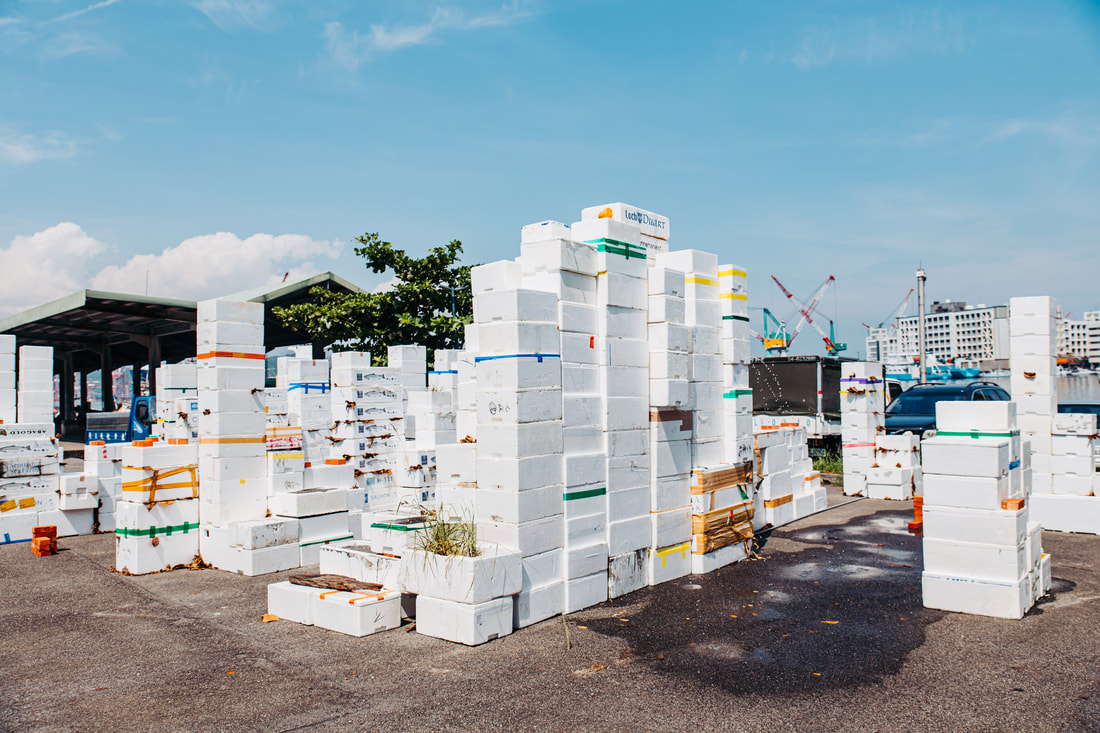
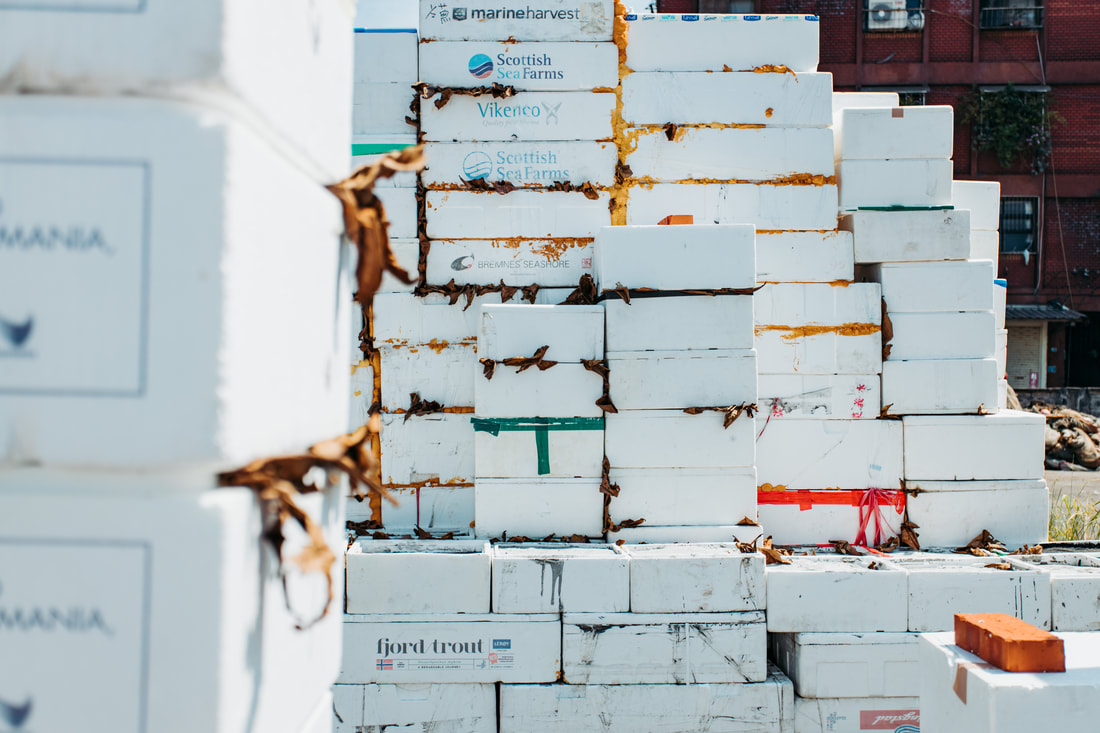
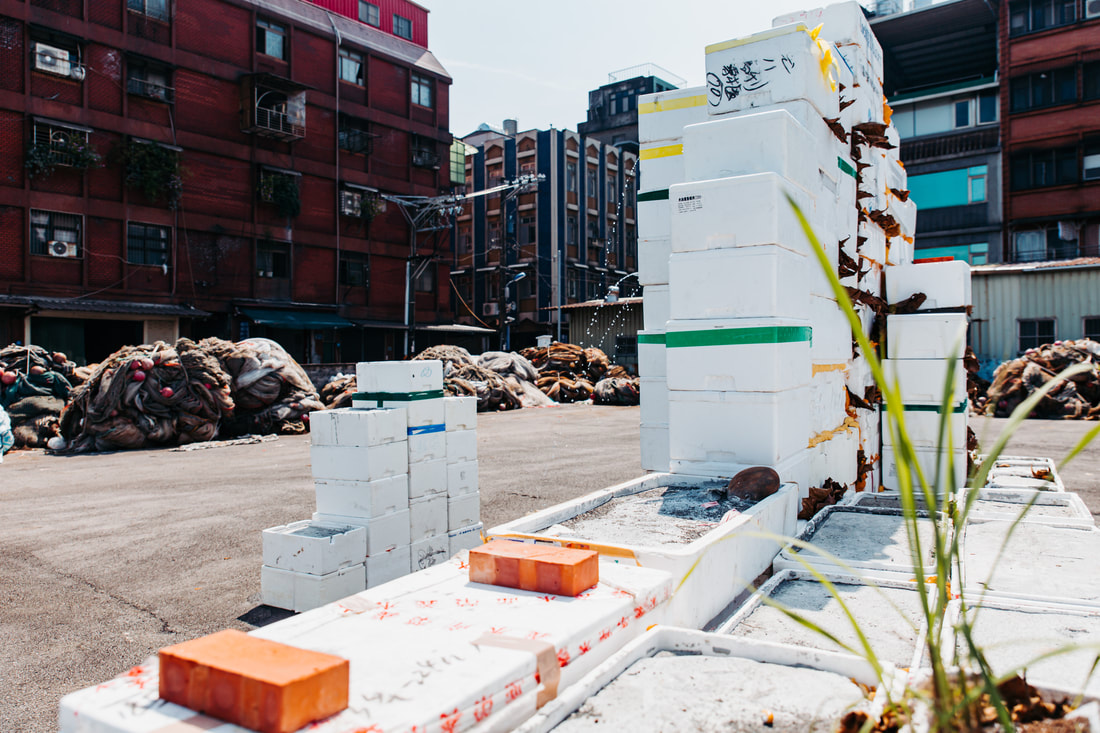
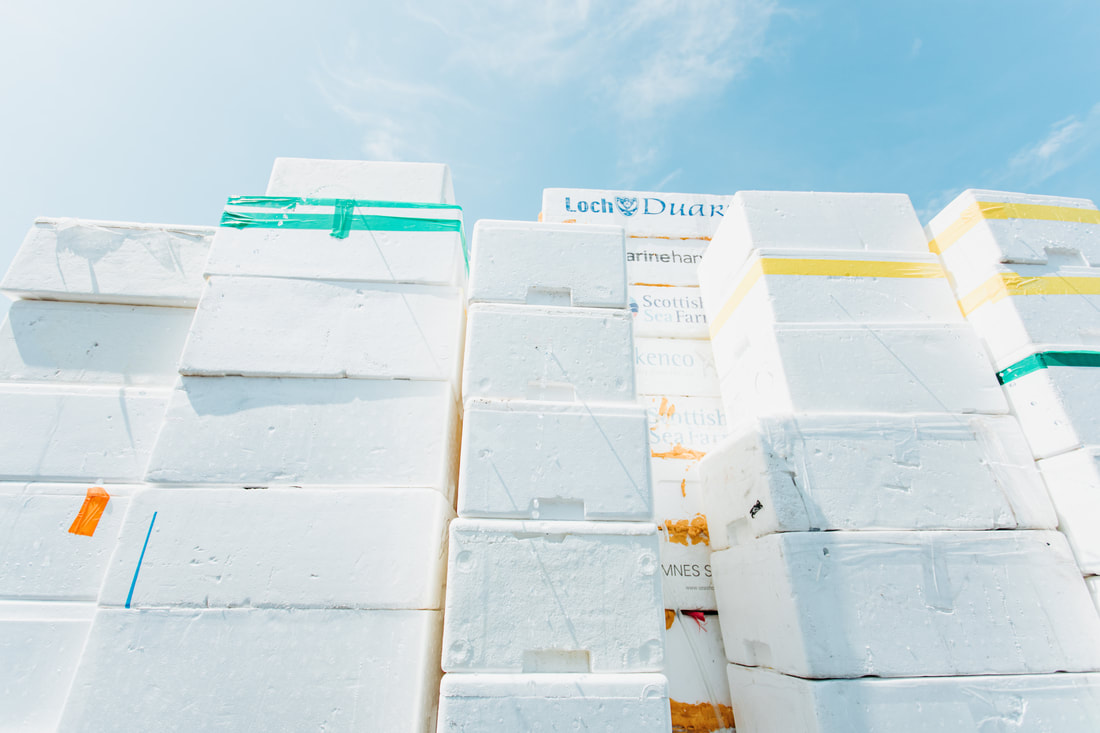
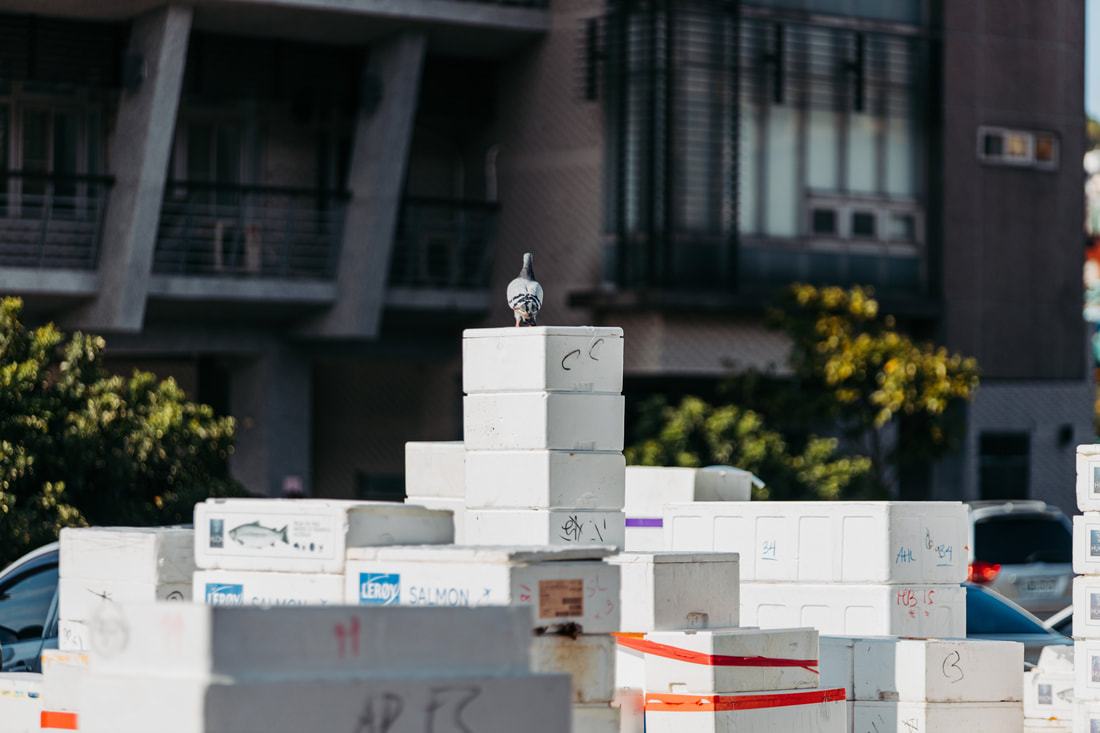
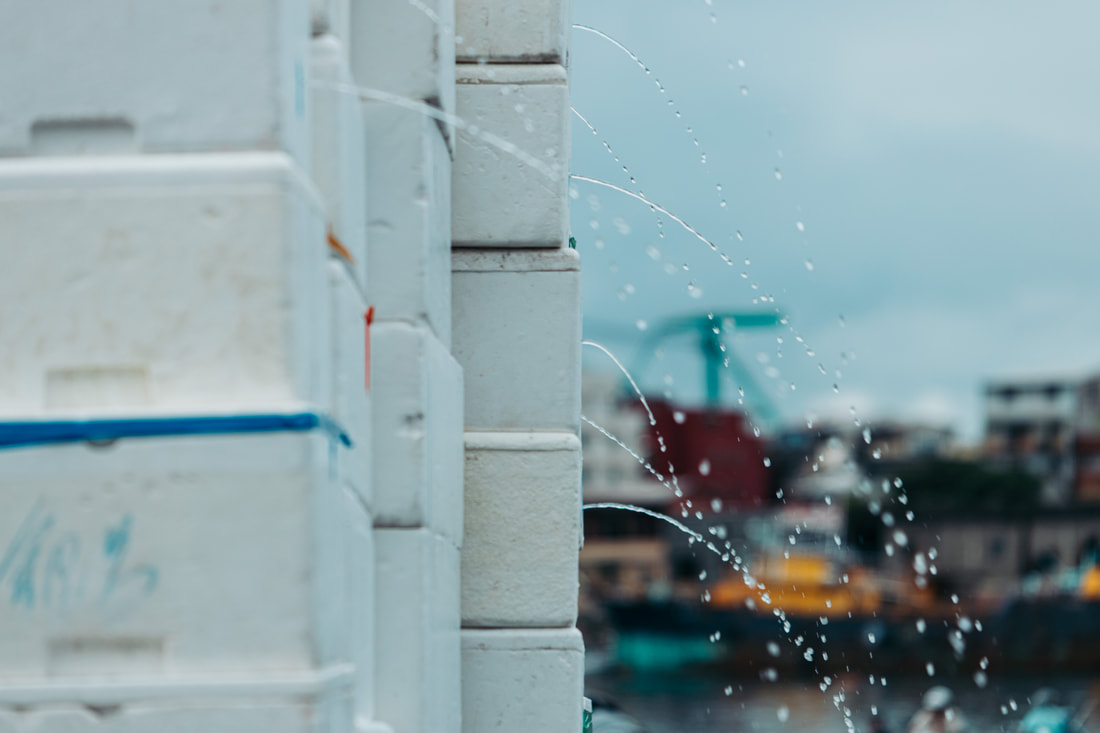
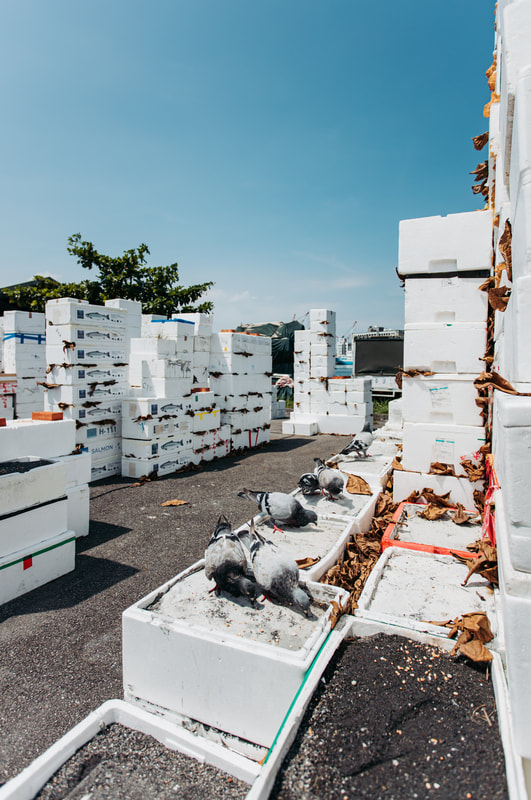
The installation is constructed primarily from expanded polystyrene (EPS) fish boxes commonly found in local fish markets. Originally used to transport seafood, each box bears printed names of fish species, commercial markings, and traces of previous use. Some of the boxes are filled with concrete, transforming these lightweight, temporary containers into objects of weight while preserving rainwater marks, pigeon footprints, and other traces formed naturally during the construction process. These unpredictable imprints resemble archaeological remnants, preserving fragments of events that once occurred but have gradually faded from memory.
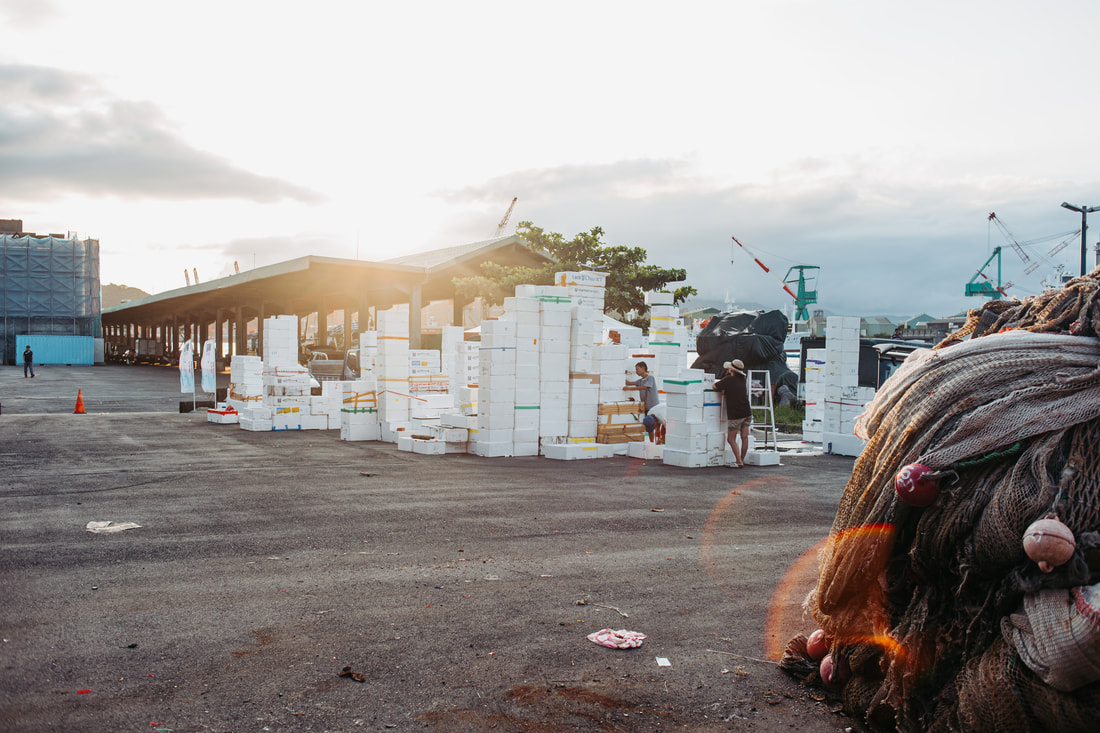
Rather than relying on conventional construction methods, the work is built through a manual and additive process. After filling each EPS fish box with concrete, I carried and stacked every unit by hand, allowing the installation to gradually emerge through repeated acts of lifting, transporting, and assembling. In this process, my body functions simultaneously as builder and transporter, and the work takes shape through accumulated physical labor. This slow and repetitive method of construction echoes the formation of archaeological sites and ancient settlements, which are not created in a single moment but gradually built through countless acts of labor, habitation, and accumulation over time.
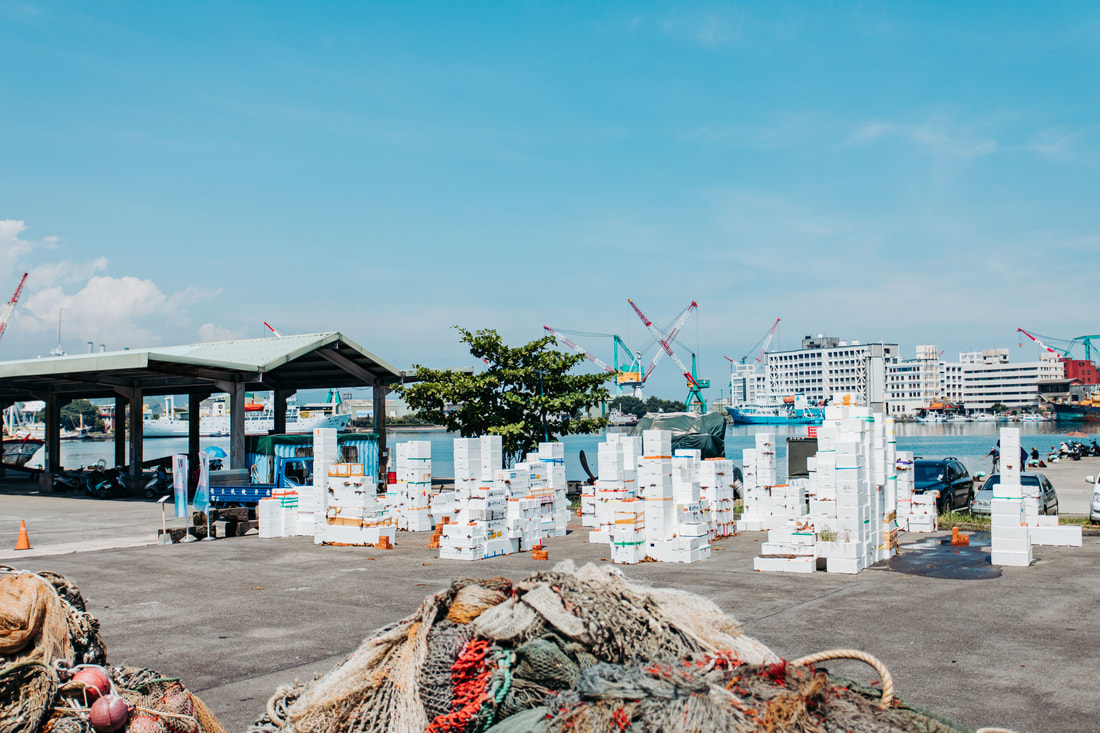
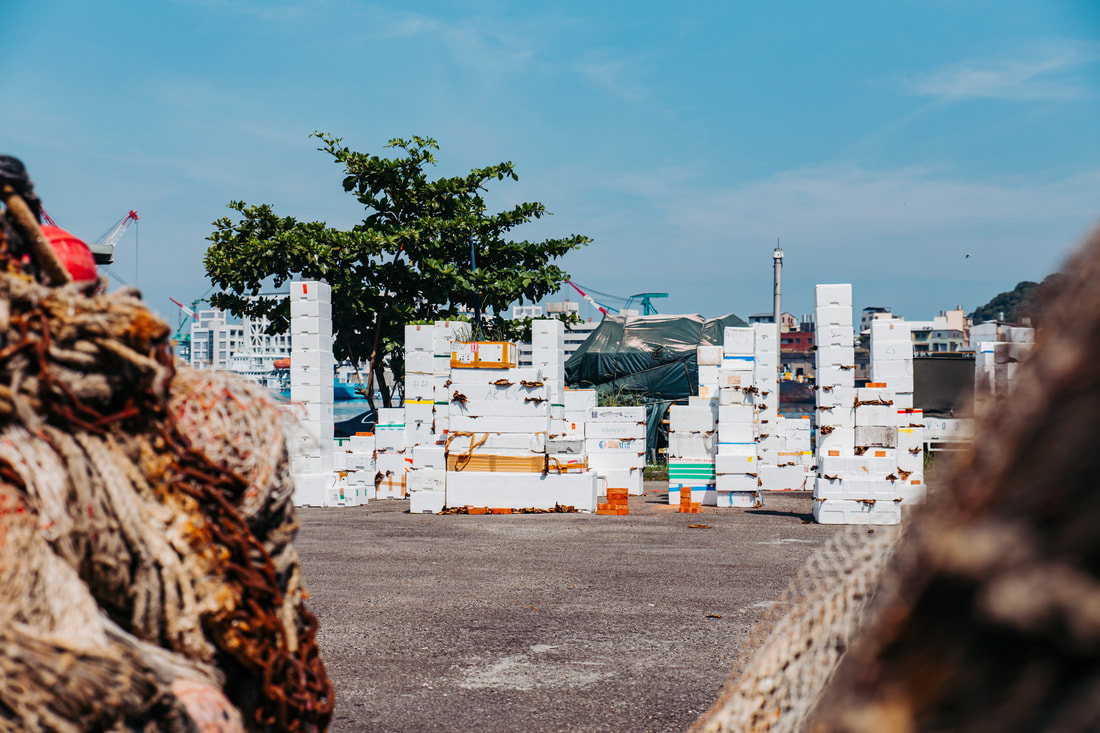
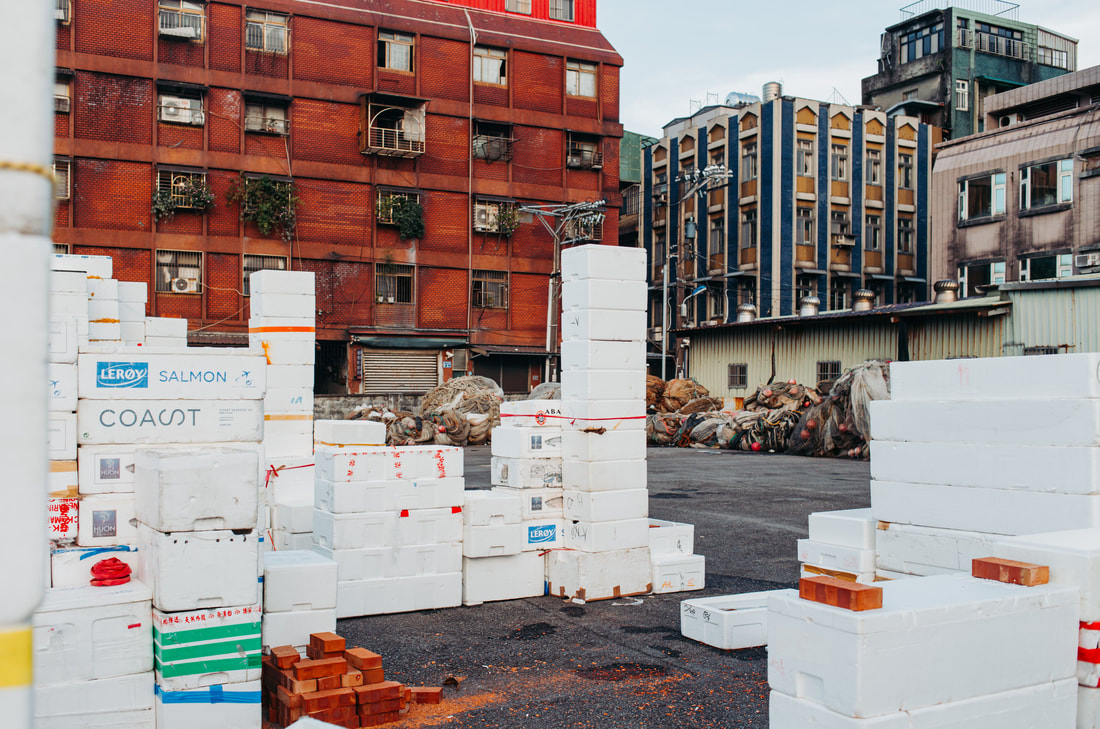
The completed installation forms a landscape situated somewhere between a city, an archaeological site, and a fish market. From a distance, it resembles stacks of cargo waiting to be unloaded at the harbor. Up close, it begins to read like a three-dimensional architectural drawing of a city under construction. Composed of EPS boxes, concrete, and plants, the work simultaneously evokes architecture, ruins, and archaeological remains, allowing different layers of time to coexist within a single space.
Rather than recreating Zhengbin Fishing Harbor, Layer by Layer reflects on how a port city gradually constructs its history through the circulation, accumulation, and temporary presence of materials. What appears to be transient ultimately becomes part of the city's collective memory. Likewise, every act of carrying and stacking becomes both a gesture of construction and a way of understanding the city through the body.

《一層層》
基隆是一座由不斷流動所構成的城市。
港口的貨物、魚獲、漁網、鳥群,以及來來去去的人們,都只是暫時停留於此,留下些微痕跡之後,又再次離開。城市像一座巨大的集散地,在持續聚集與消散之間,一層層累積自己的歷史。
作品以魚市場常見的保麗龍箱為主要材料。這些箱子原本用來運送漁獲,每一個箱體都保留著曾經裝載魚種的文字、品牌與使用痕跡。我將部分箱體灌入水泥,使原本輕盈、短暫的容器獲得重量,並保留雨水、鴿子腳印,以及施工過程中自然形成的各種痕跡。這些無法預期的印記,如同考古現場中的遺留物,紀錄著某一段曾經發生卻逐漸被遺忘的時間。
整件作品並非依靠既定的施工方式完成,而是透過一種徒手、加法式的建造過程逐漸形成。我將灌入水泥的保麗龍箱一箱一箱搬運、堆疊,讓空間在身體反覆移動、搬運與累積的行為中慢慢生長。這樣的建造方式,讓我的身體既是搬運者,也是建築者,而作品也在一次次重複的勞動之中逐漸顯現。這種緩慢而持續的堆積過程,呼應了考古遺址與古代聚落的形成方式——它們並非一次完成,而是在漫長的時間裡,透過無數次人們的勞動、堆疊與生活痕跡,不斷累積而成。
作品最終形成一座介於城市、遺址與魚市場之間的景觀。遠看,它像是一座等待卸貨的港口;靠近觀看,則更像是一張正在被建造的城市設計圖。由保麗龍、水泥與植物構成的結構,同時指向建築、廢墟與考古遺址,也讓不同時間層次在同一個空間中彼此重疊。
《一層層》並非試圖再現正濱漁港,而是透過材料的搬運、堆疊與停放,重新思考一座港口城市如何在持續流動之中,緩慢建構自己的歷史。那些看似短暫的停留,最終都成為城市記憶的一部分;而每一次搬運、每一次堆疊,也都成為城市形成過程中,一次微小卻真實的累積。