Climbing a Stone Mountain
爬一座石頭山
Land of Tectonic Plates / Fracture Is the Beginning of Wholeness
Hualien County Cultural Affairs Bureau, 2025


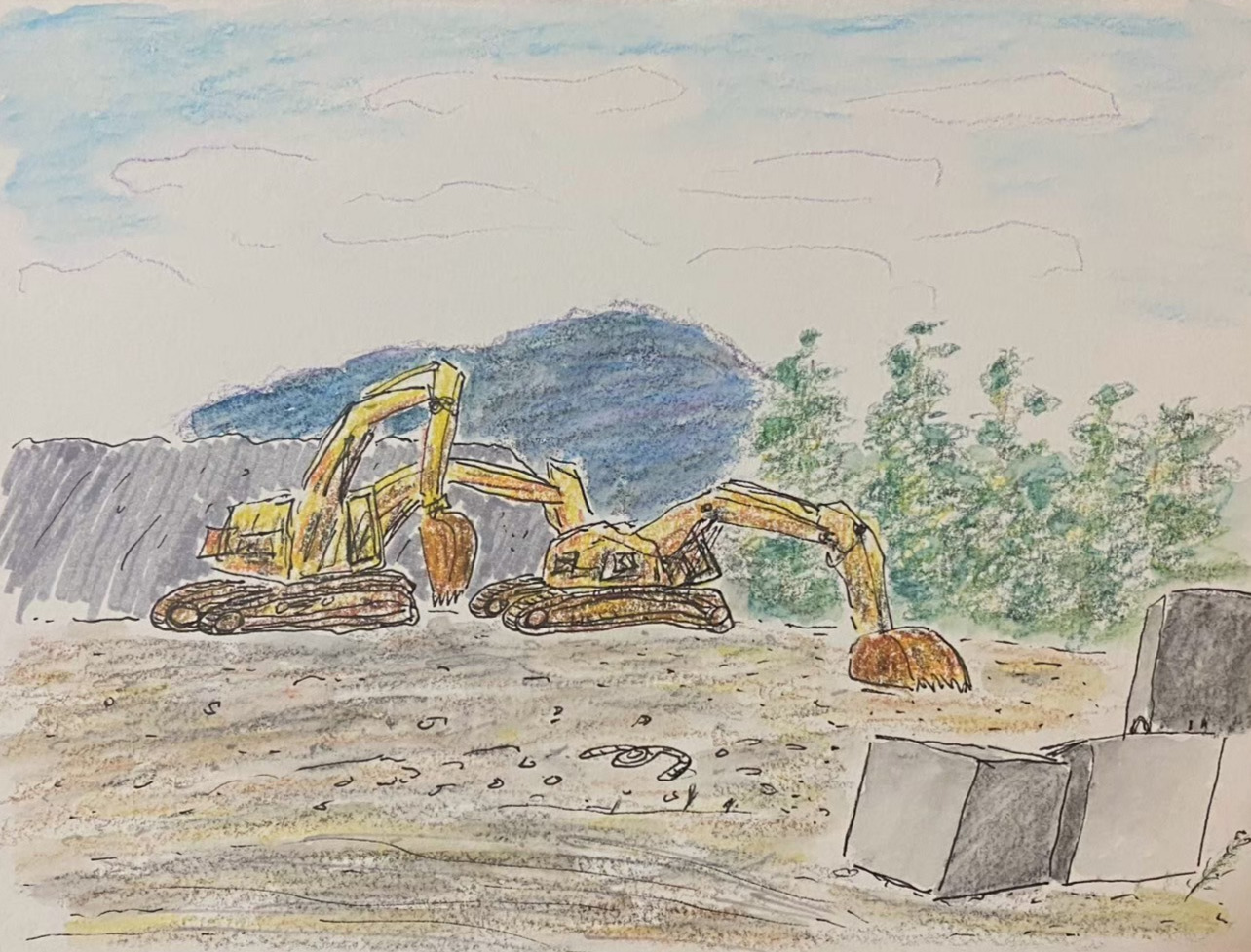
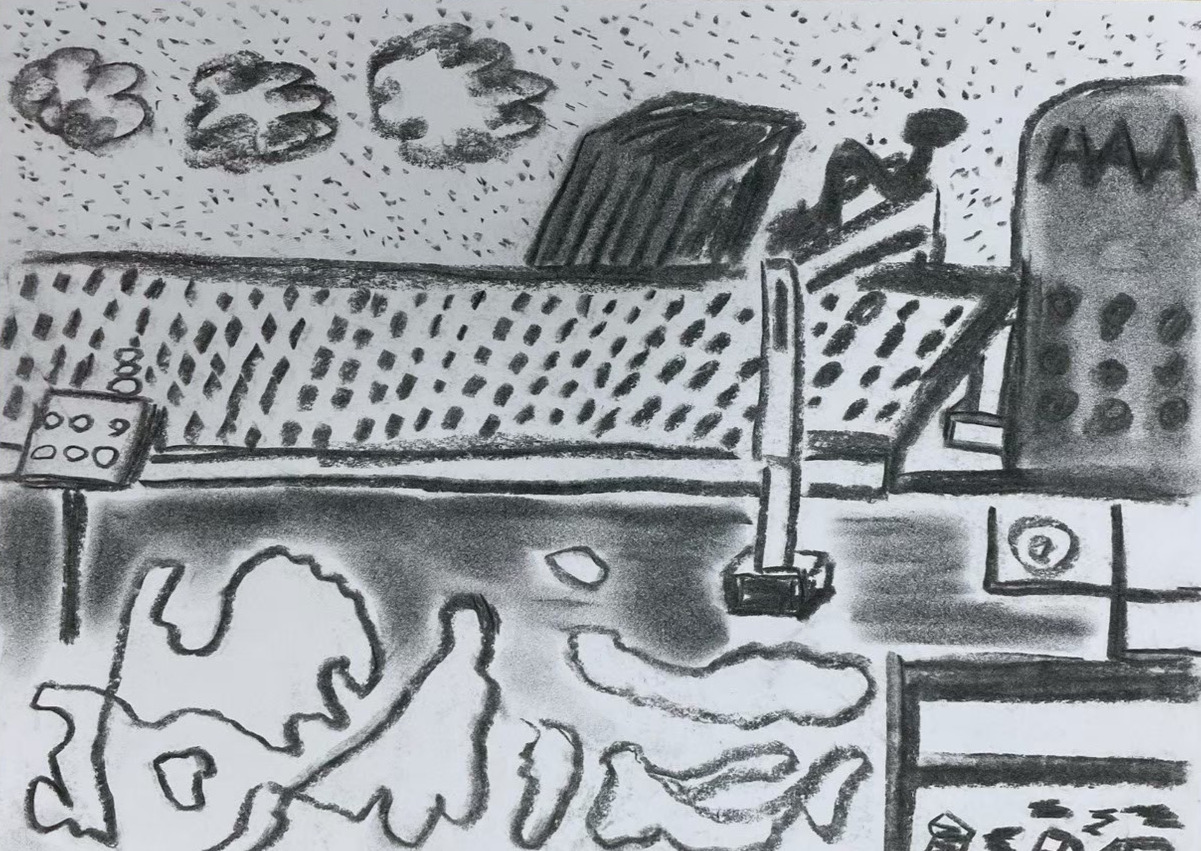
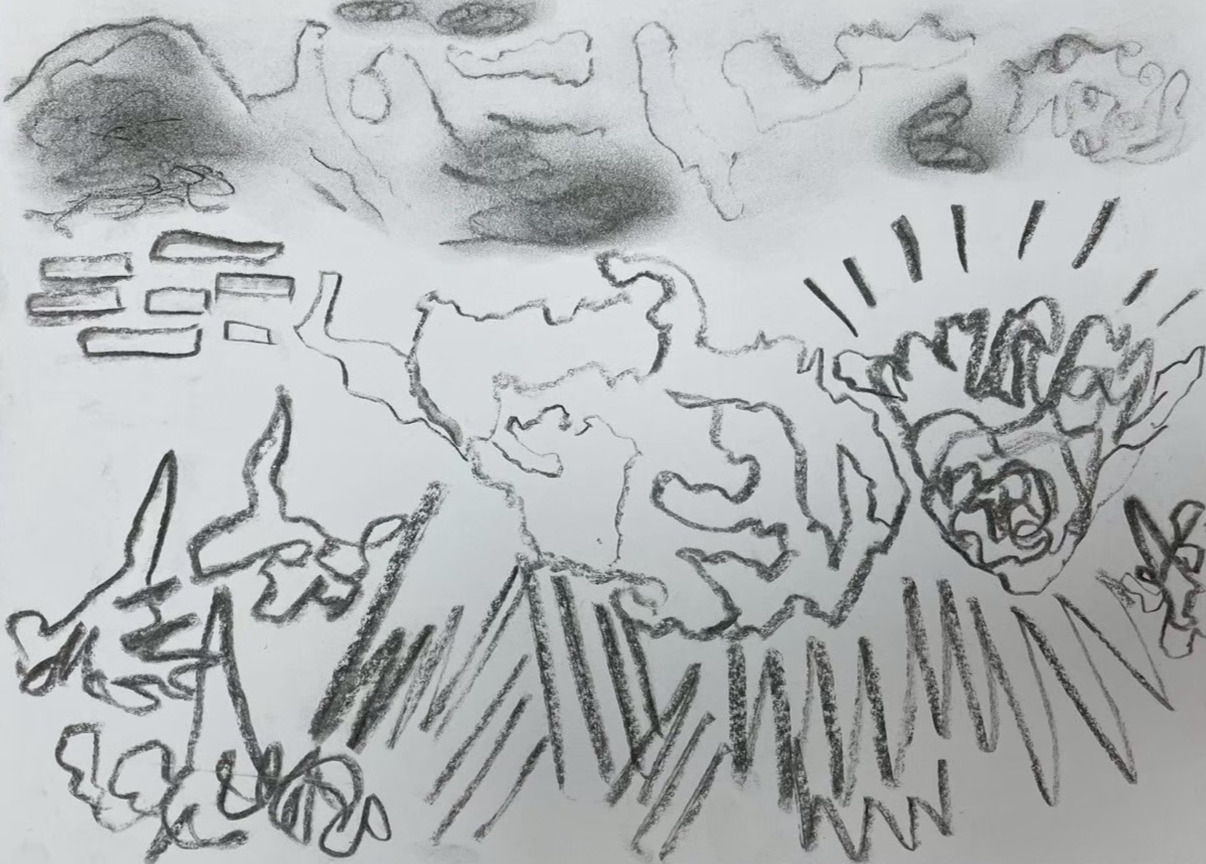
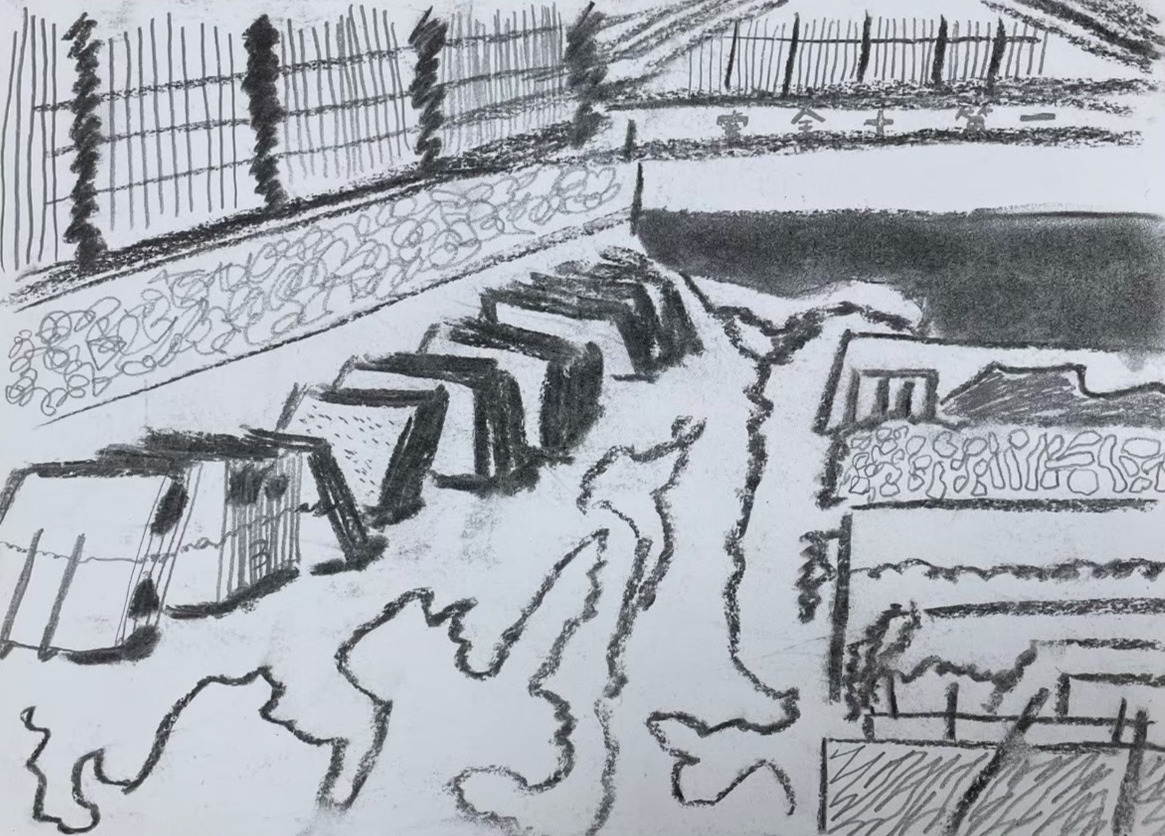
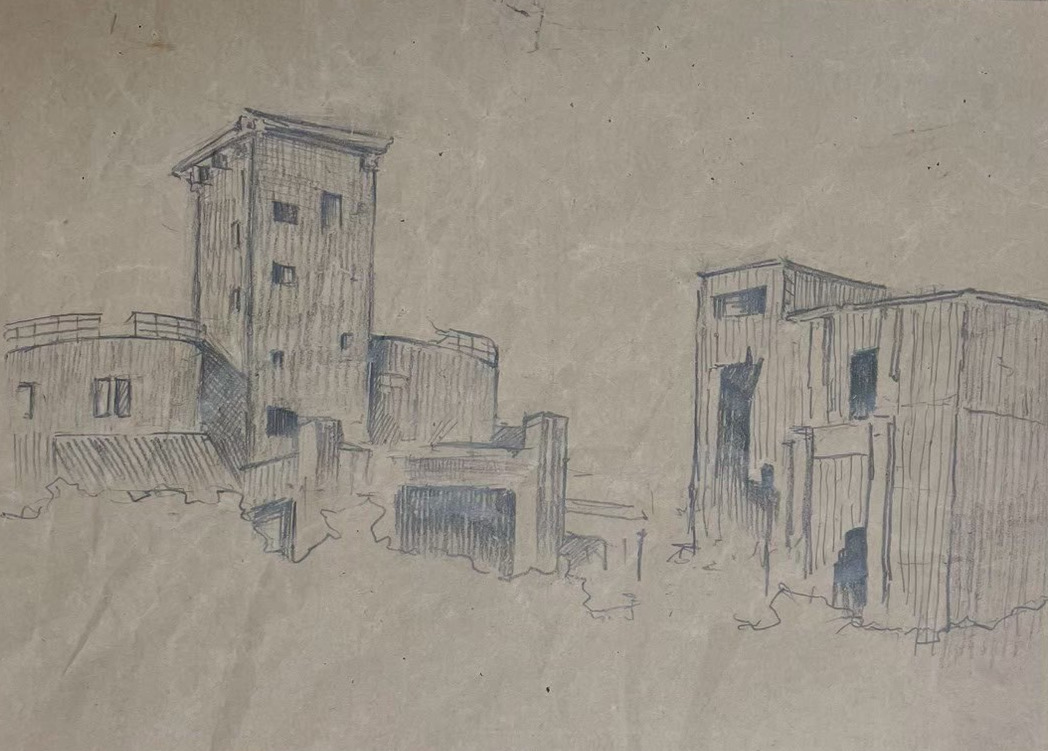
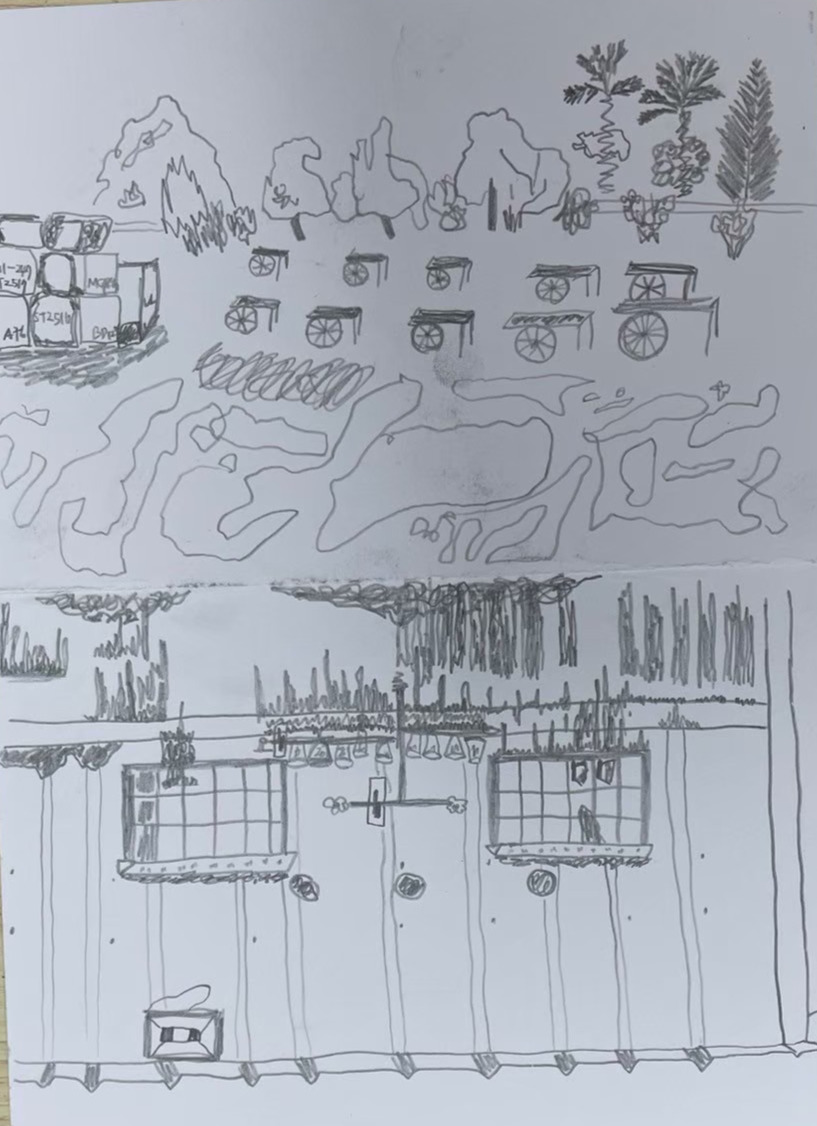
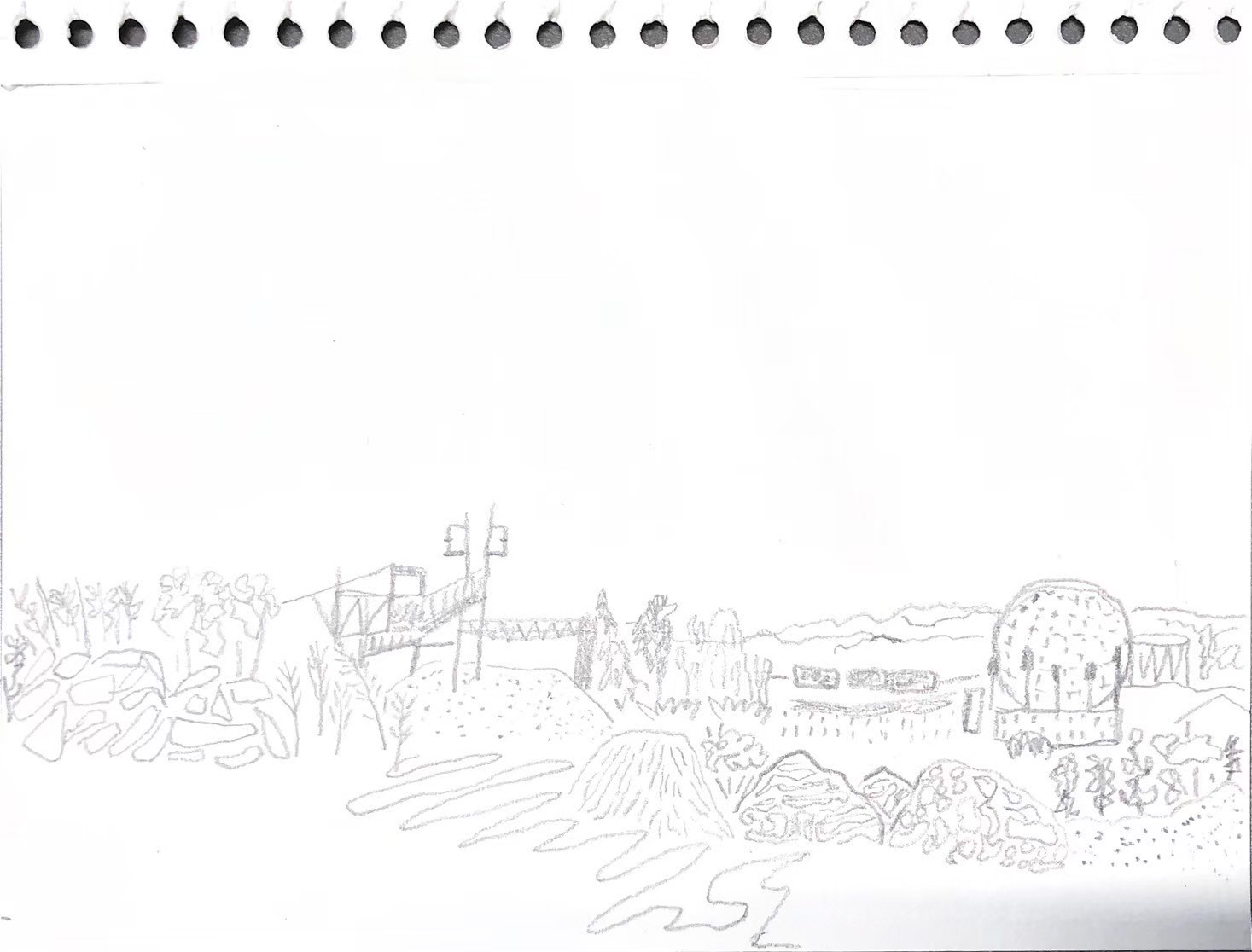
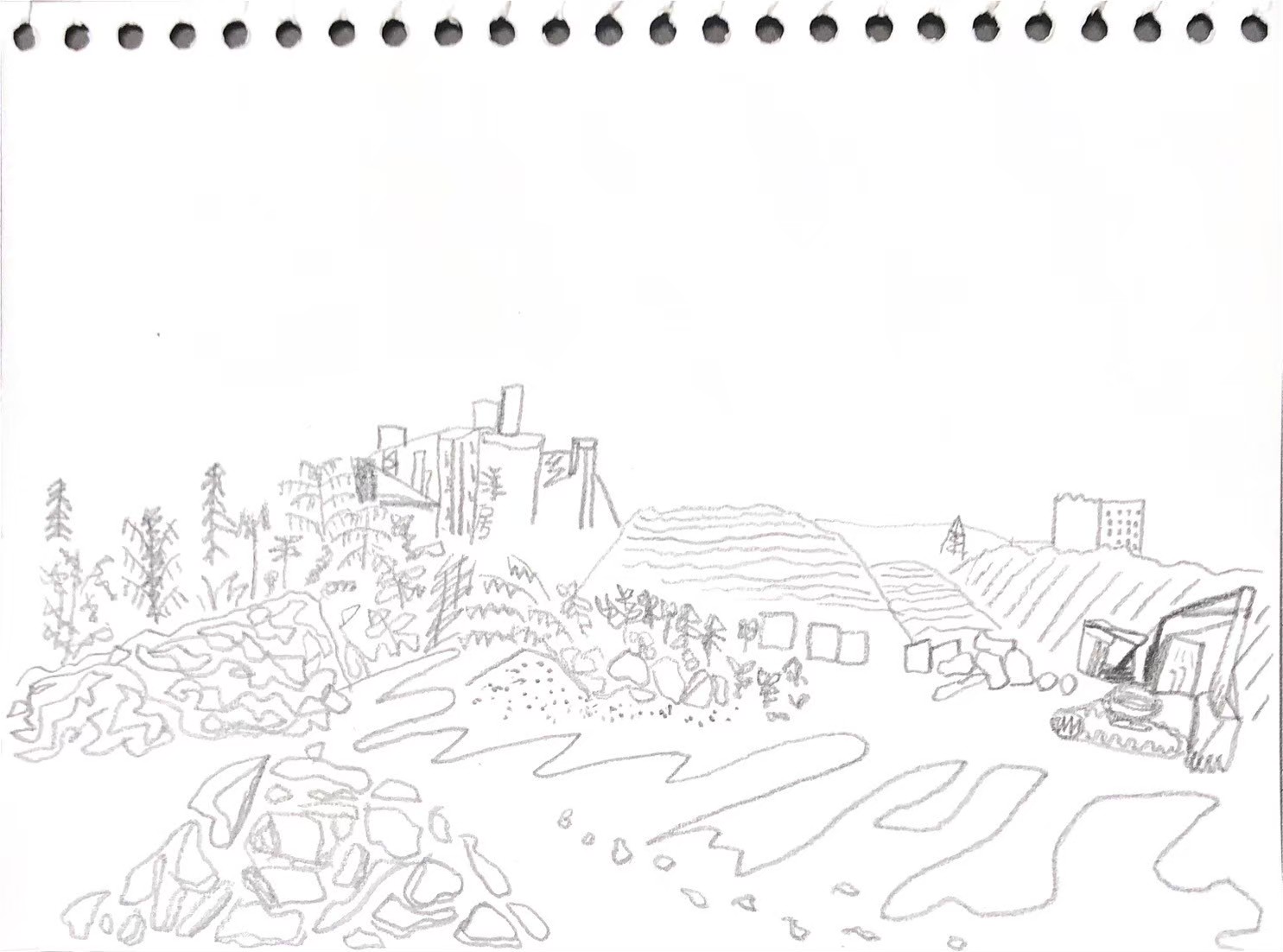
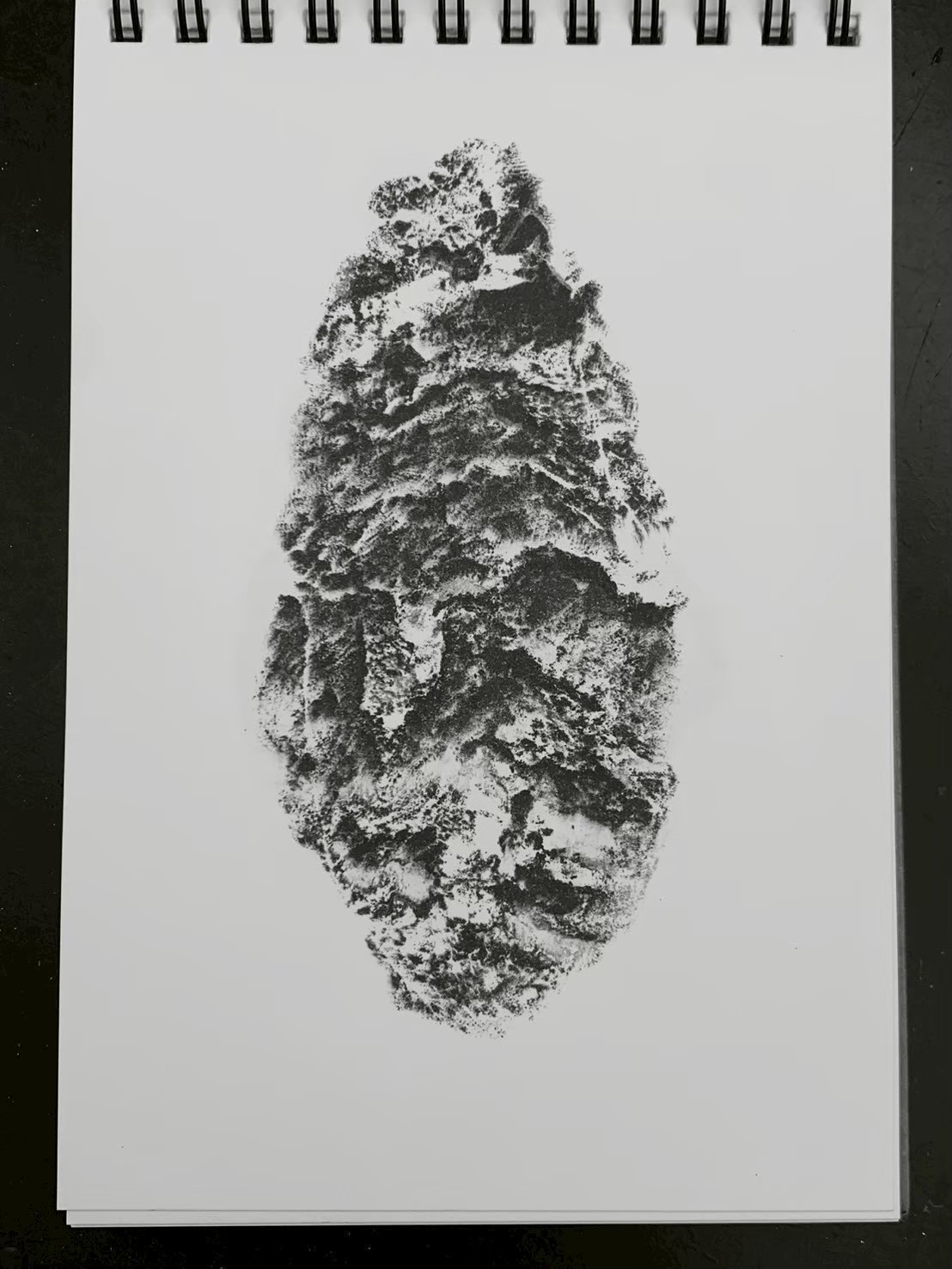
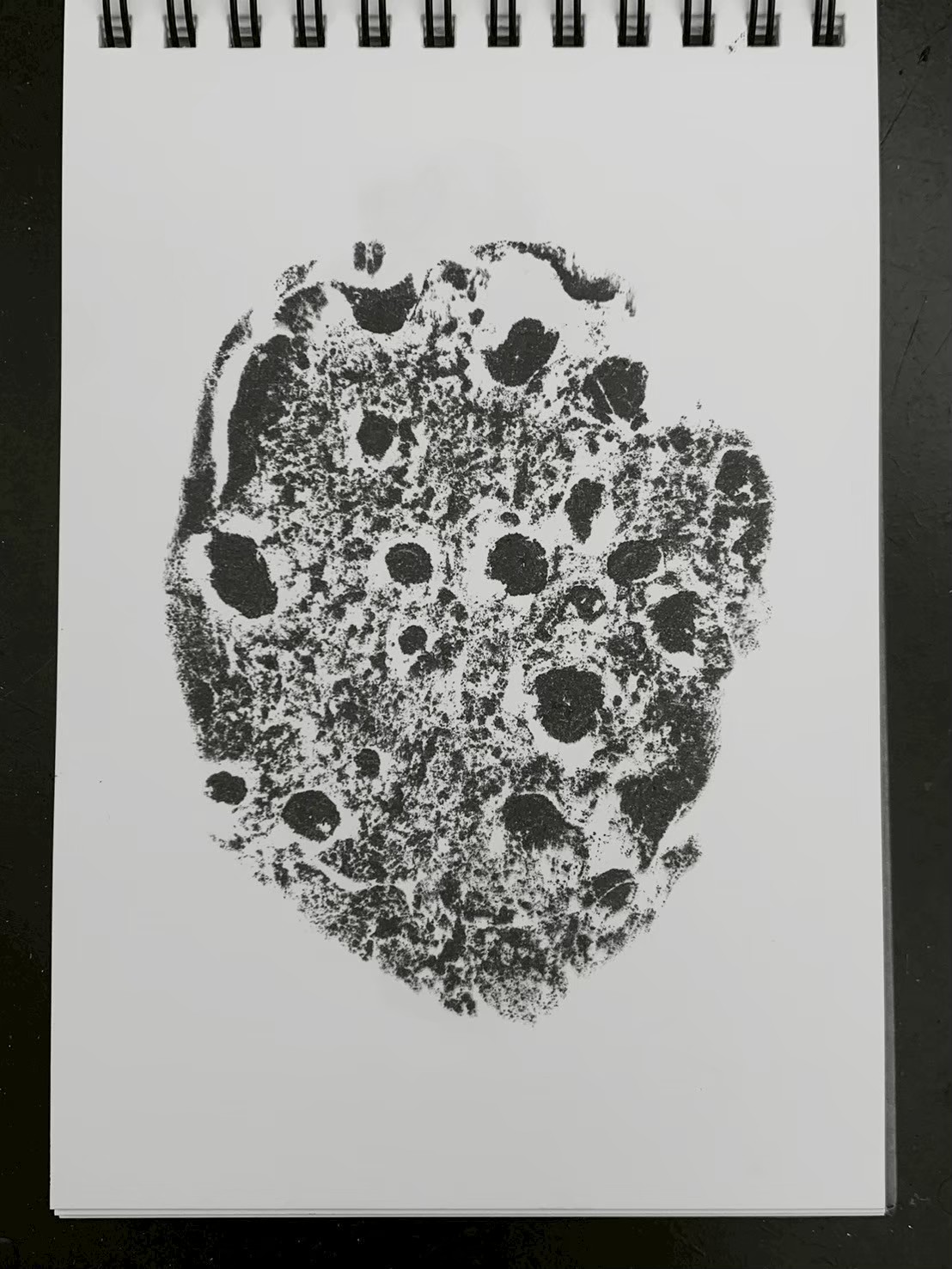
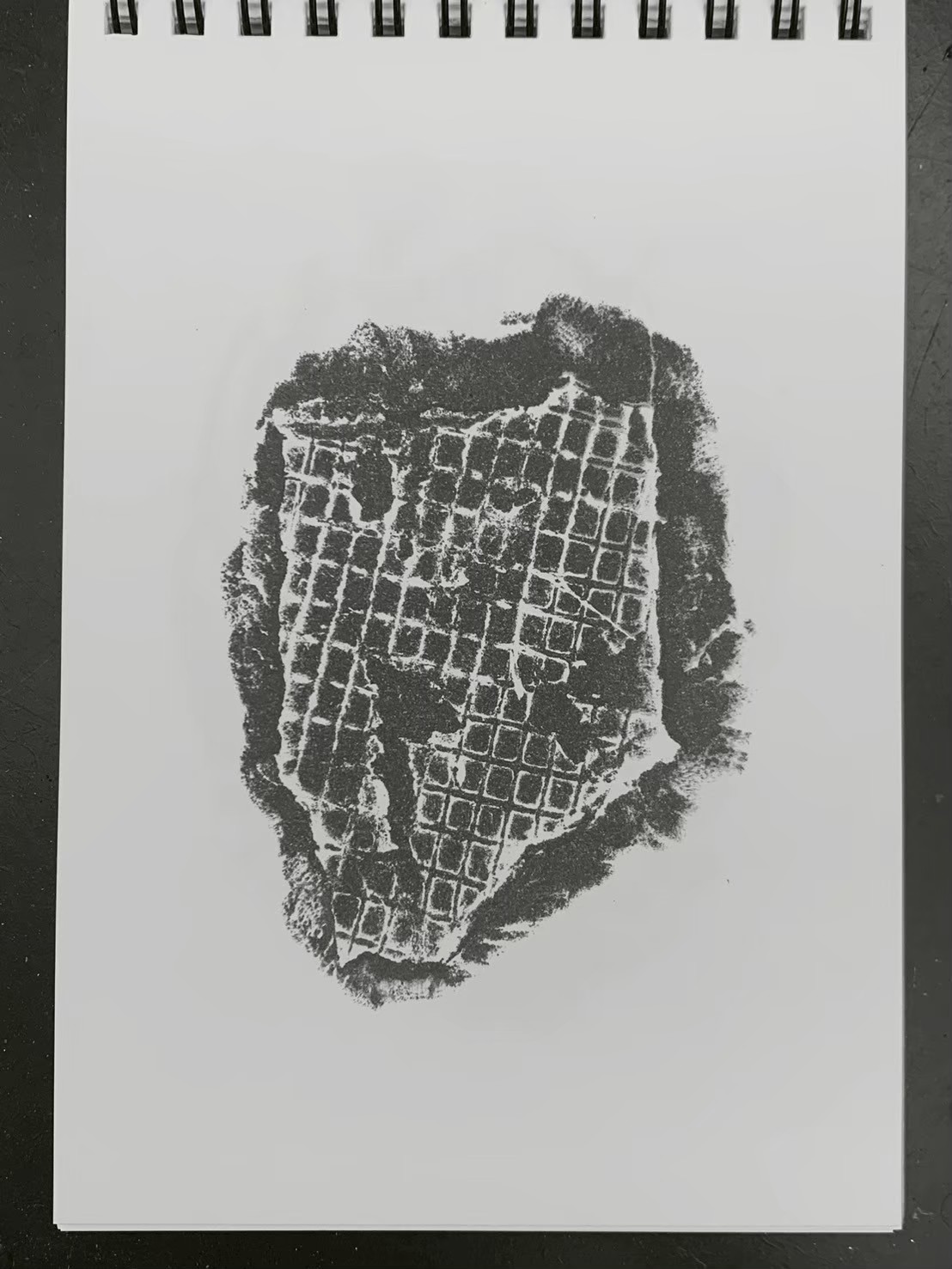
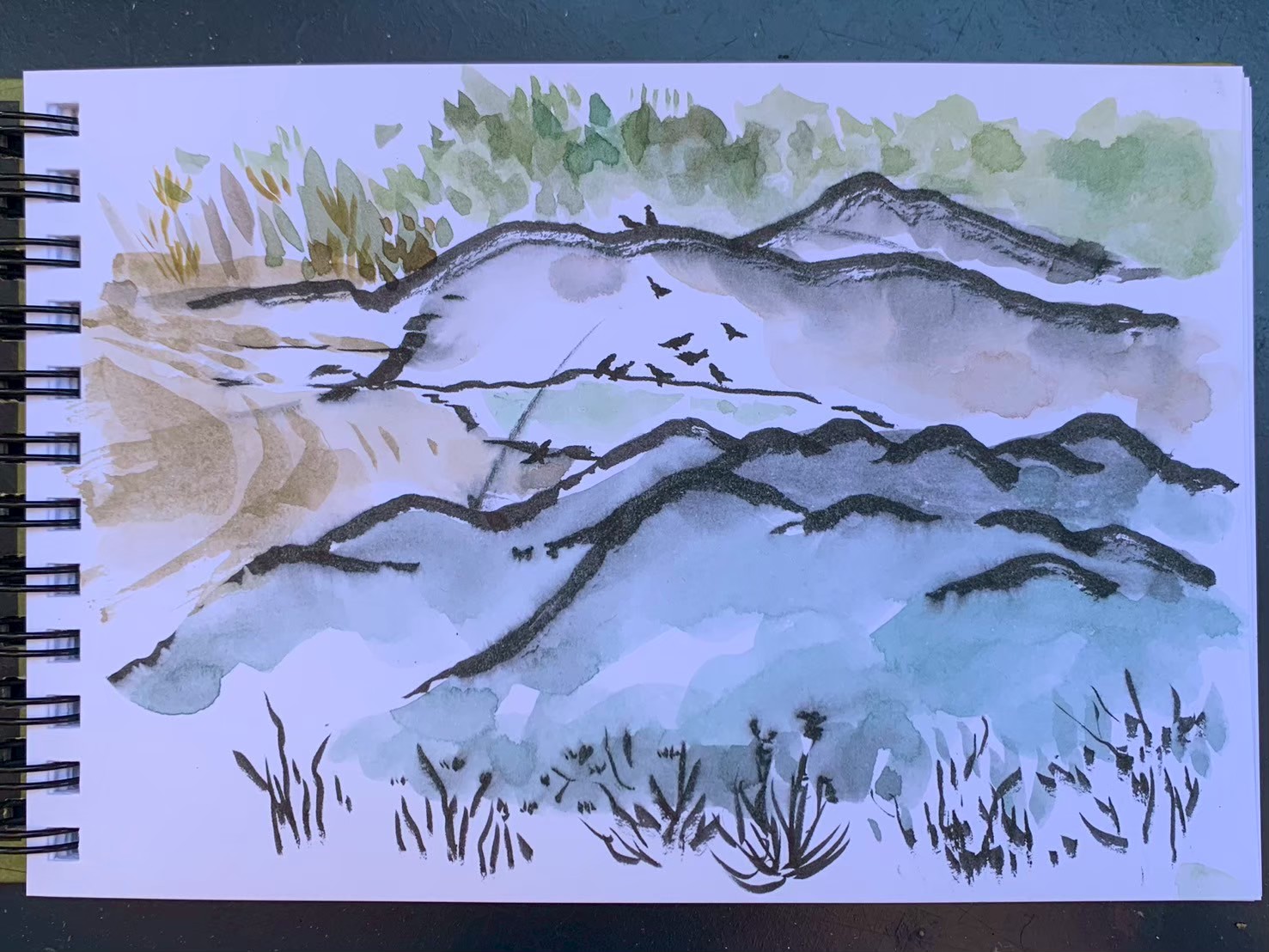
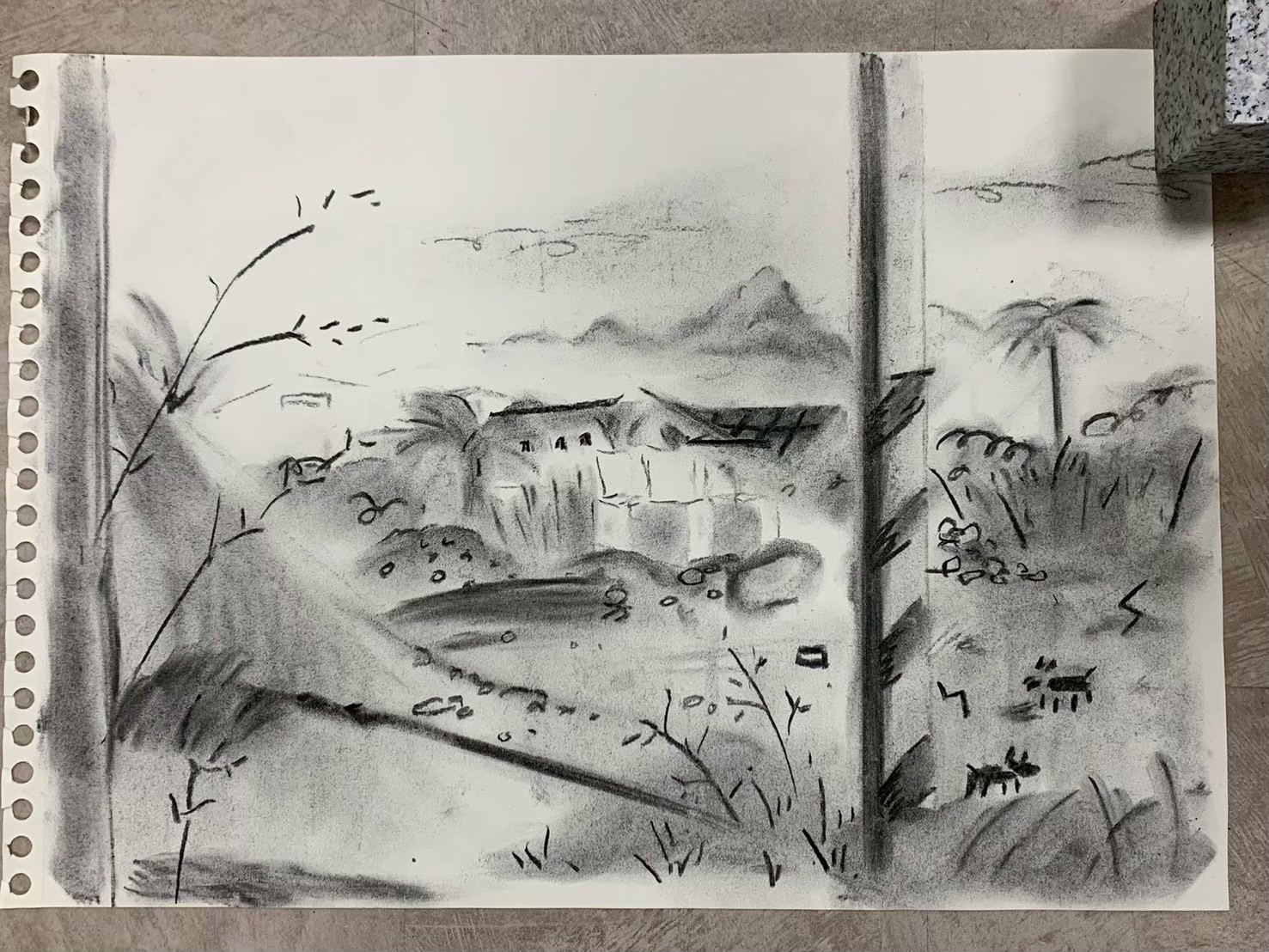
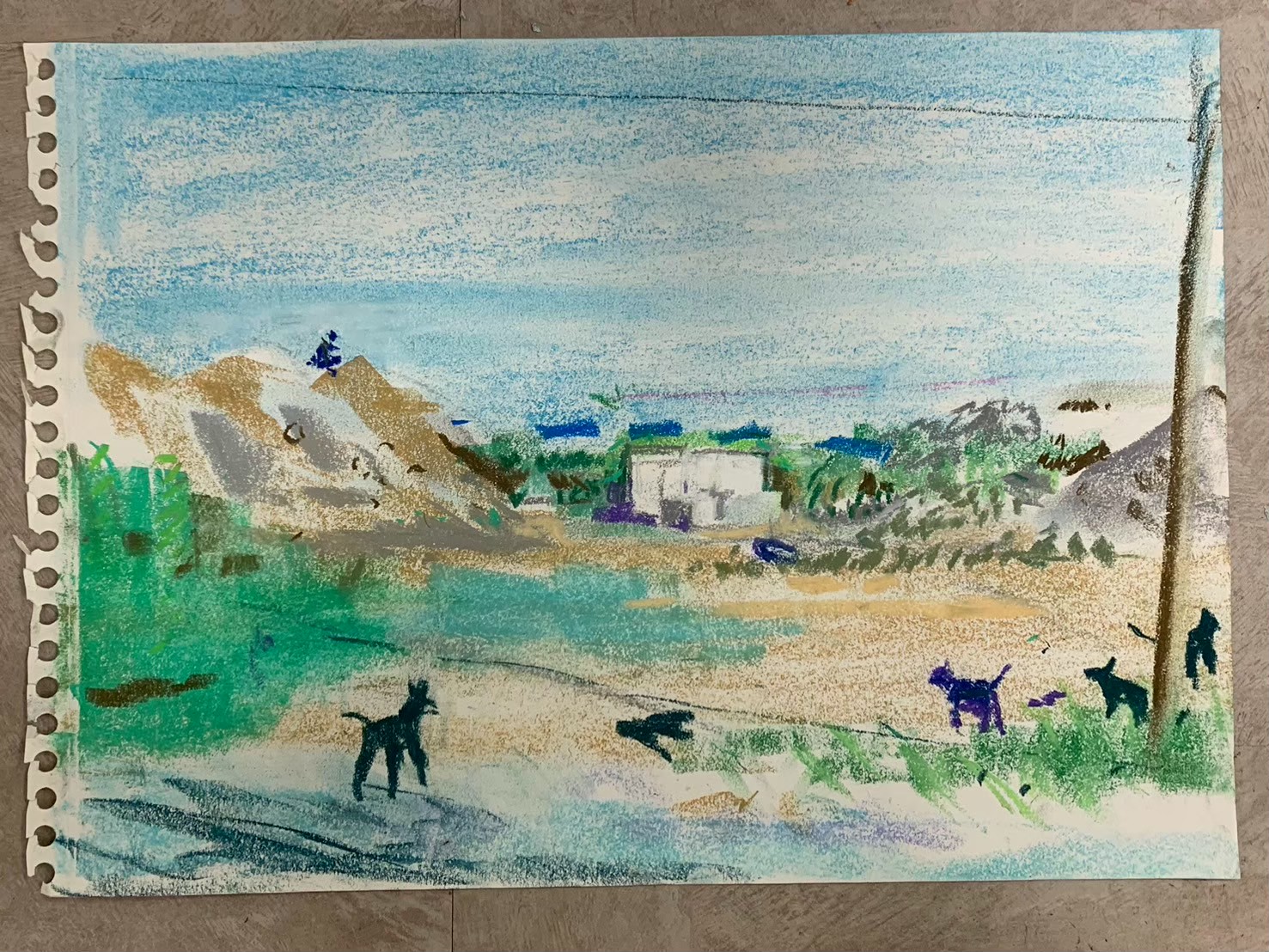
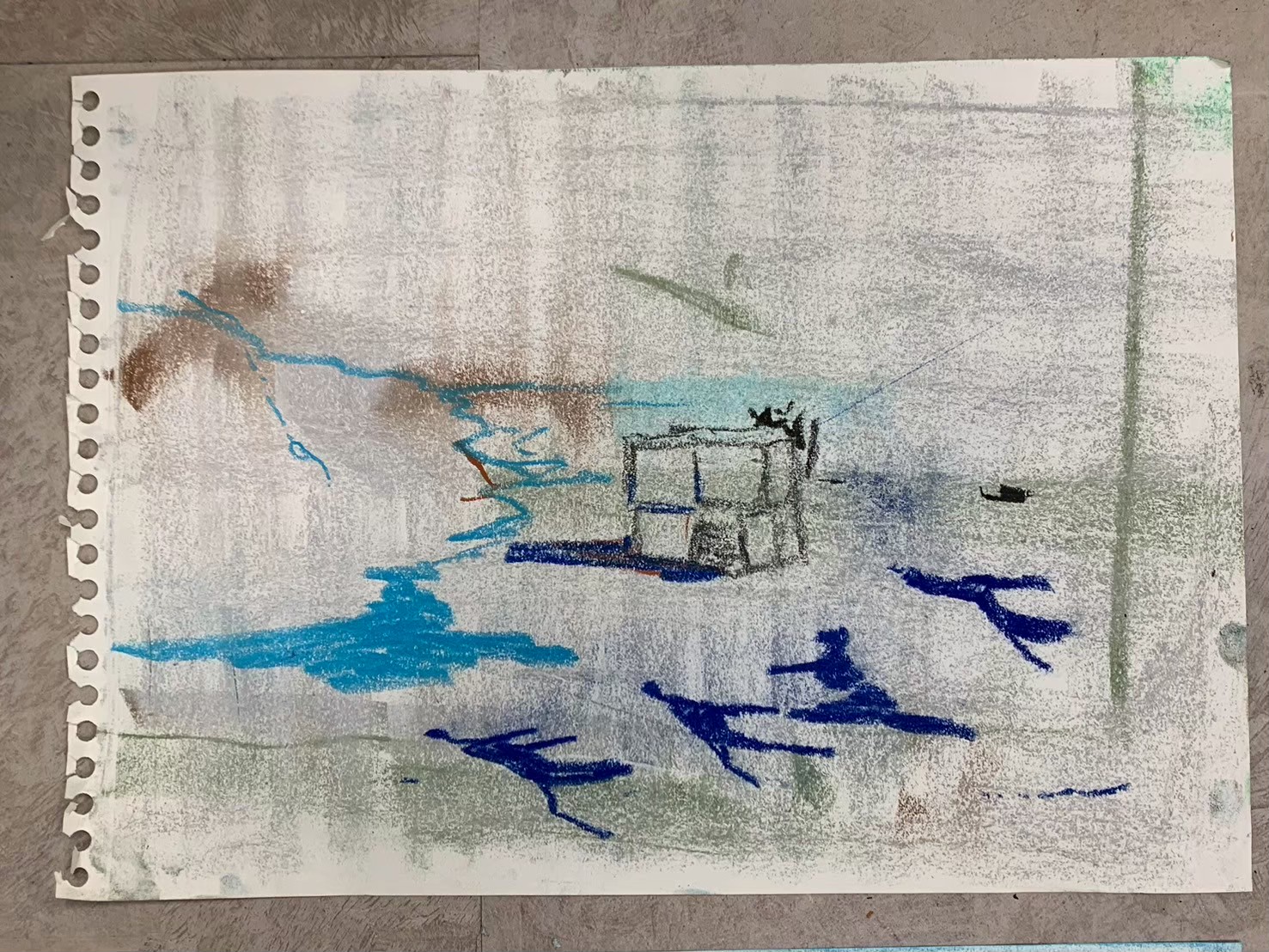
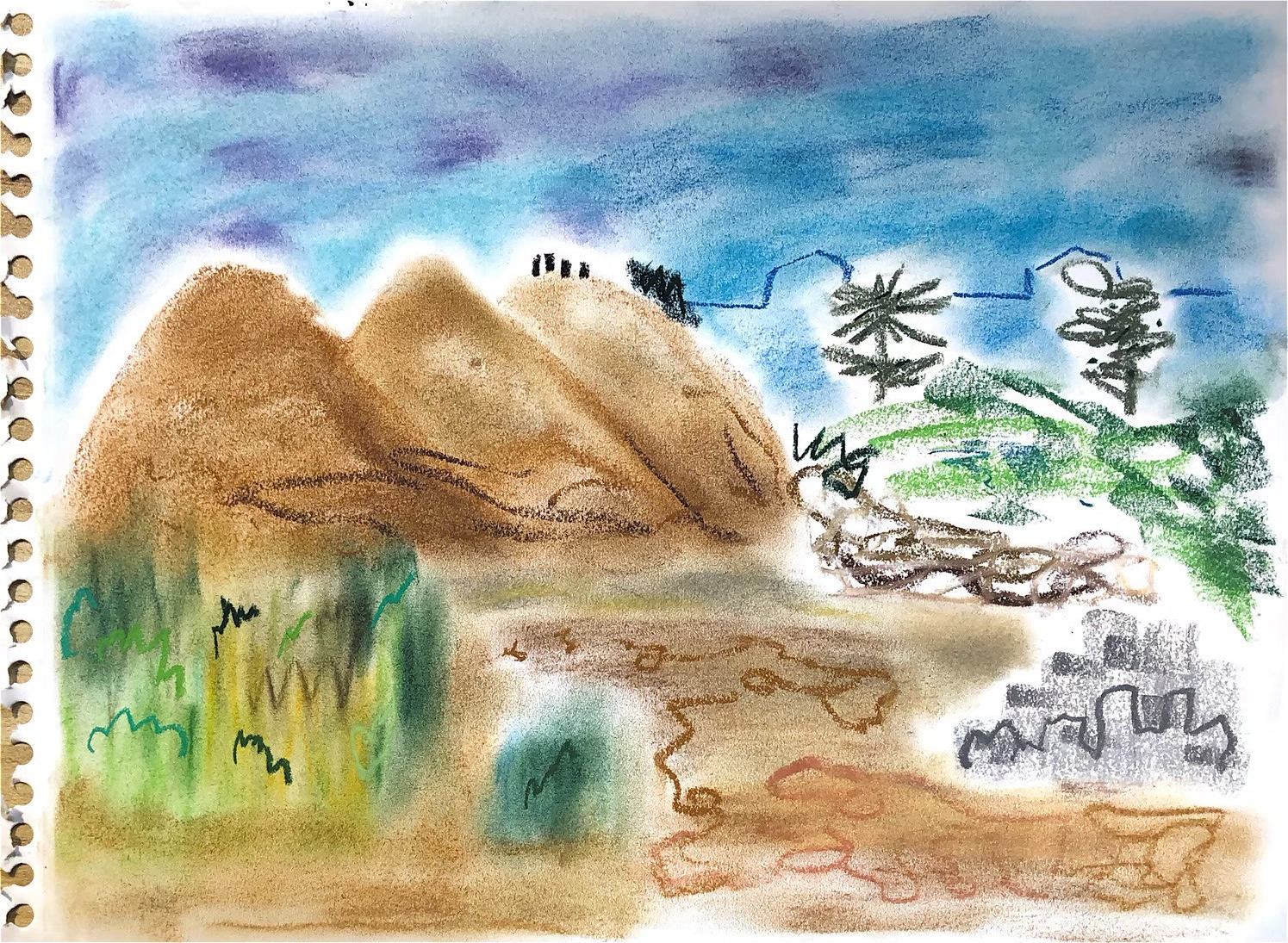
Following the 2024 Hualien earthquake, the local stone industry was profoundly affected. Large quantities of broken stone were gathered and piled into newly formed sites created in the aftermath of the disaster. Living in Hualien, we often see trucks transporting stone along the roads, yet rarely do we fully understand the relationships between these stones, the land, the people, and the industry. Climbing a Stone Mountain continues the Earthquake Sketching Group's practice of entering sites through the body. This time, we visited stone waste yards and stone-processing factories to sketch on site.
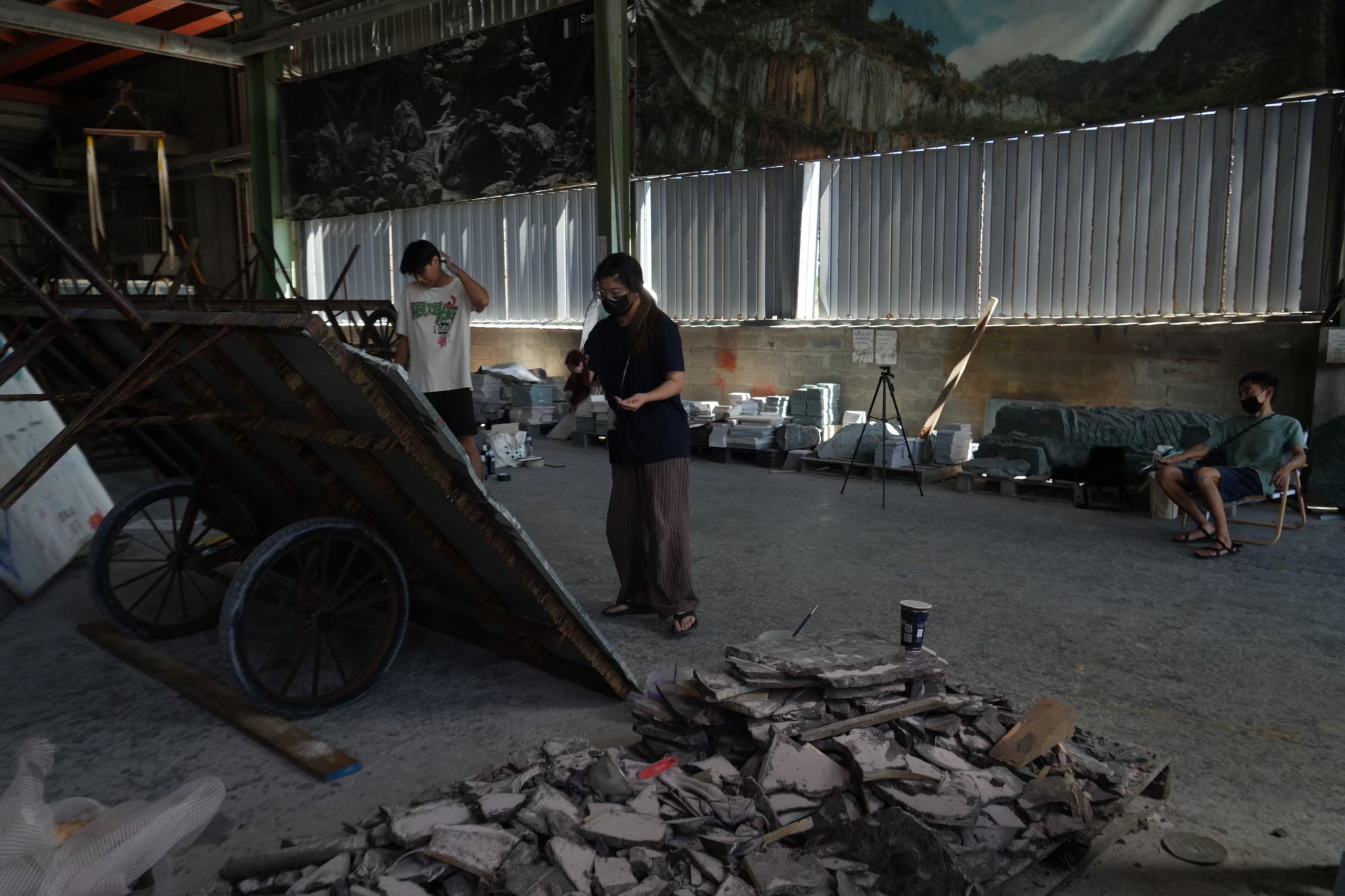
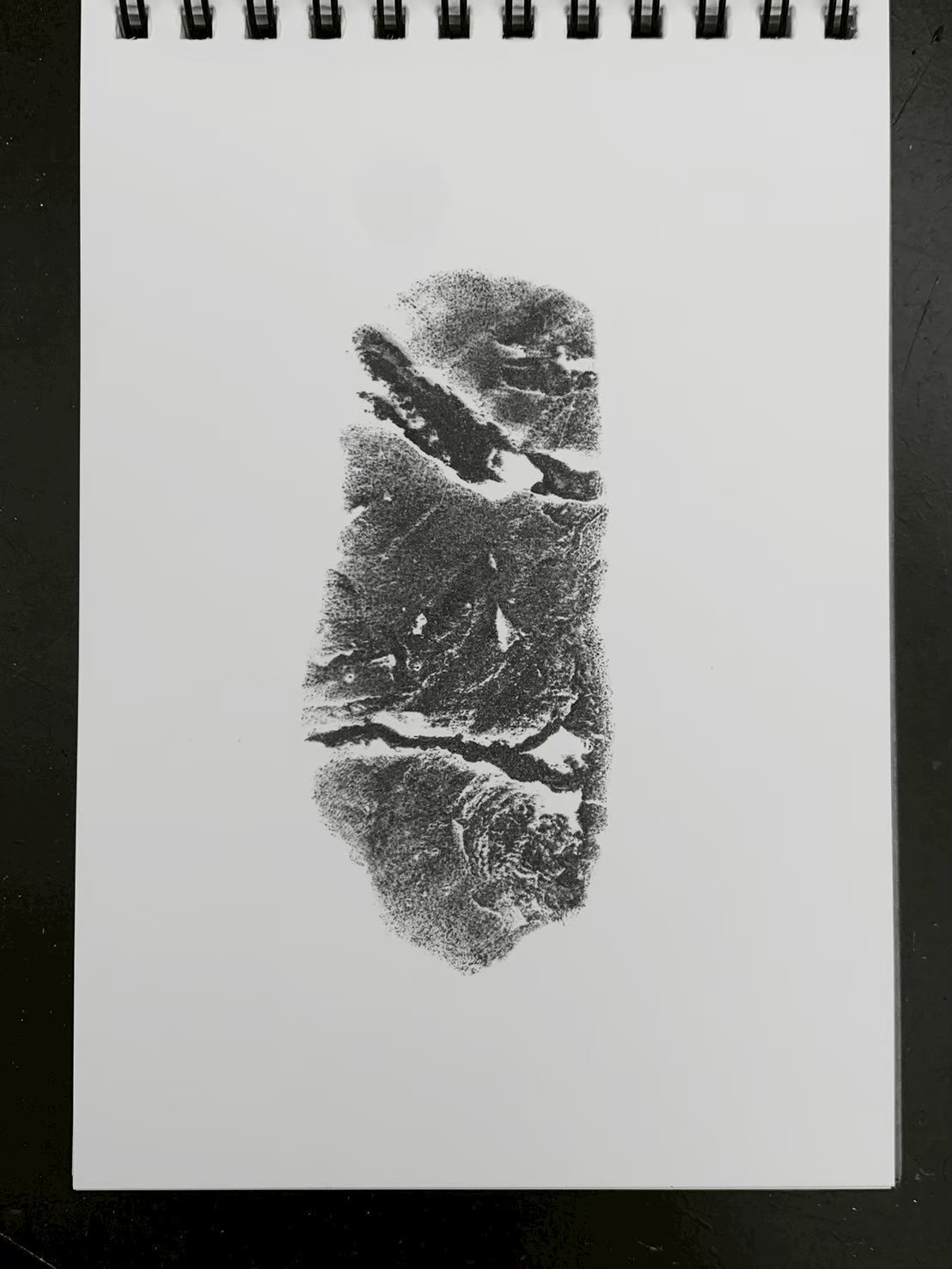
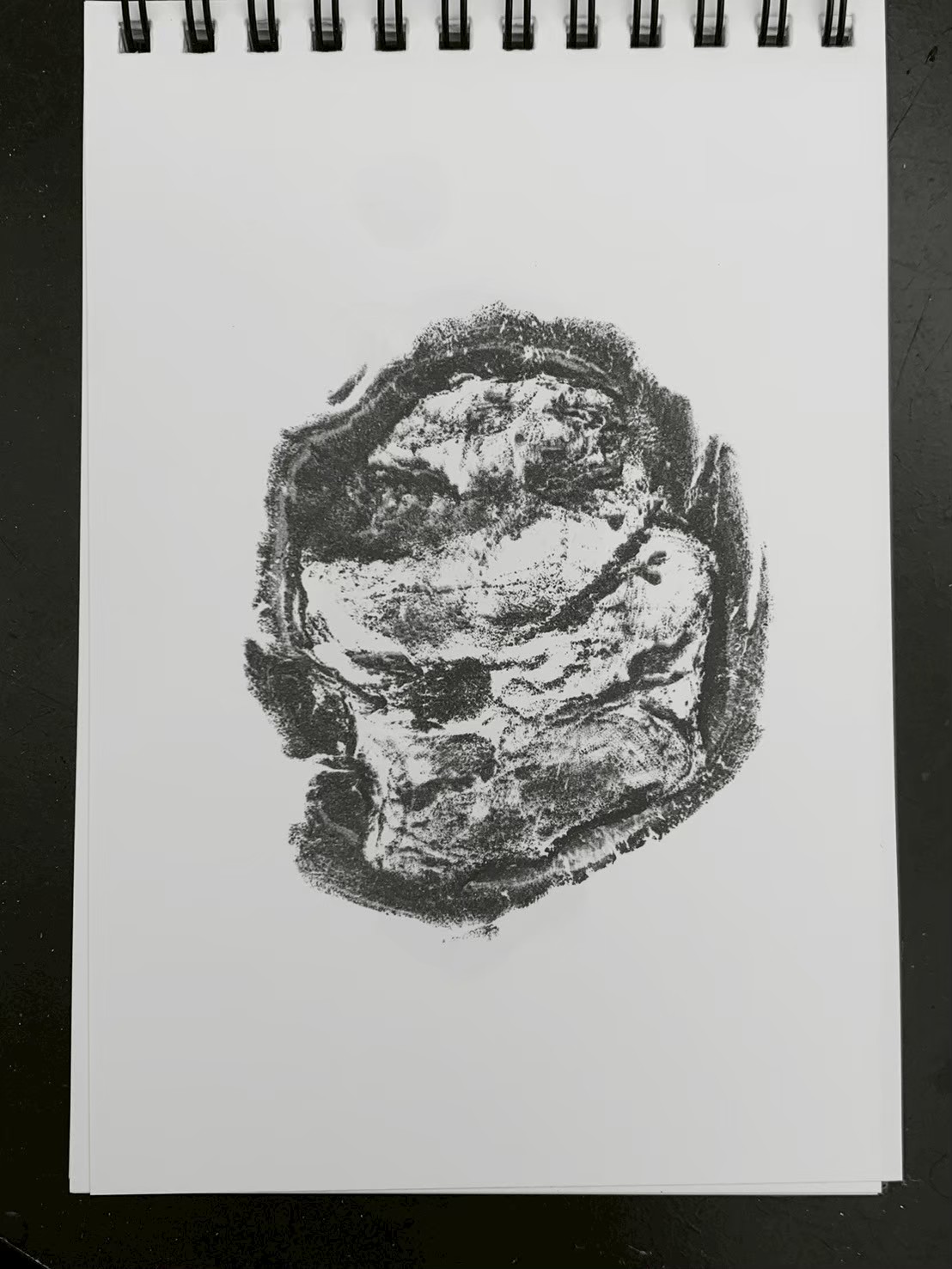
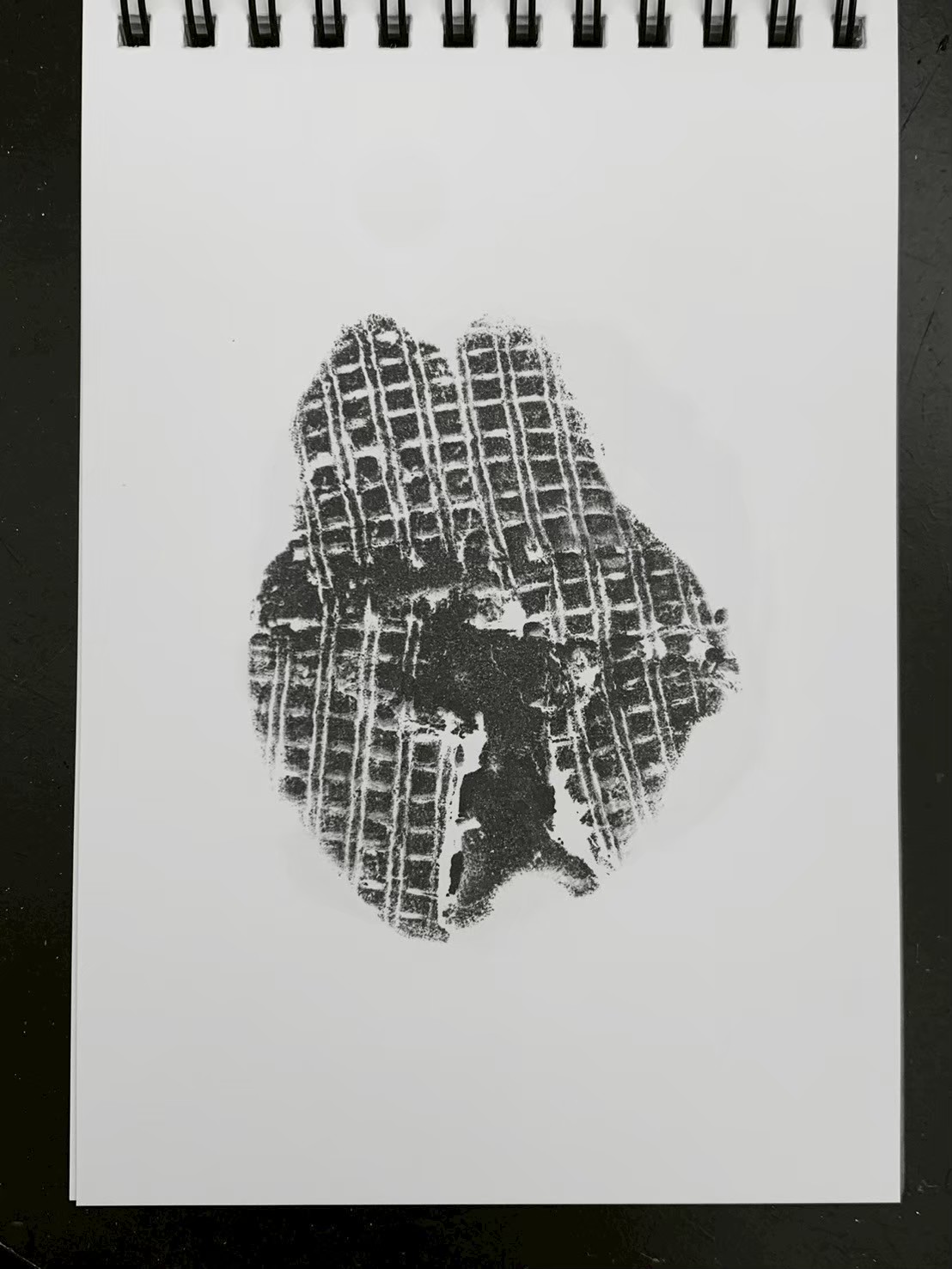
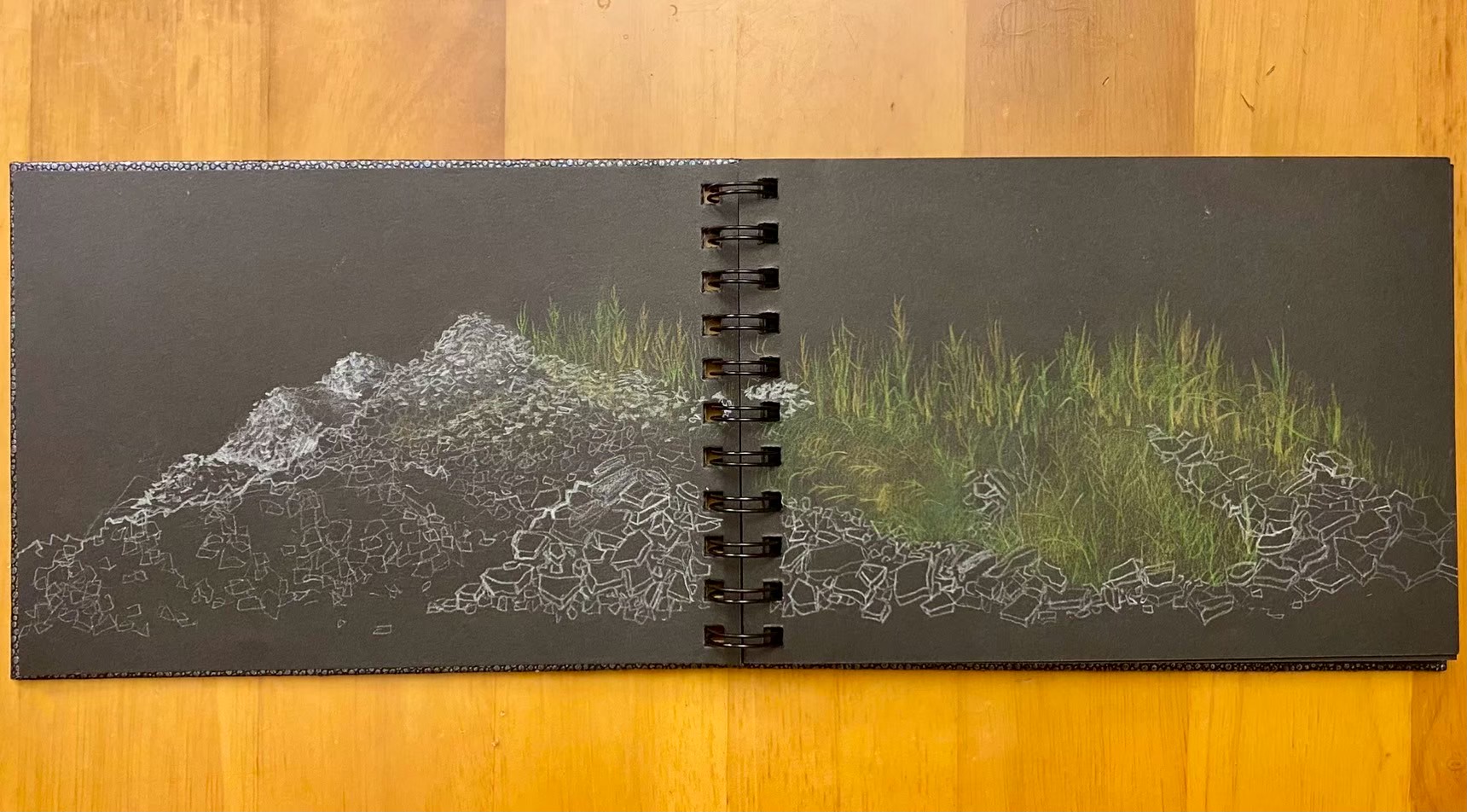
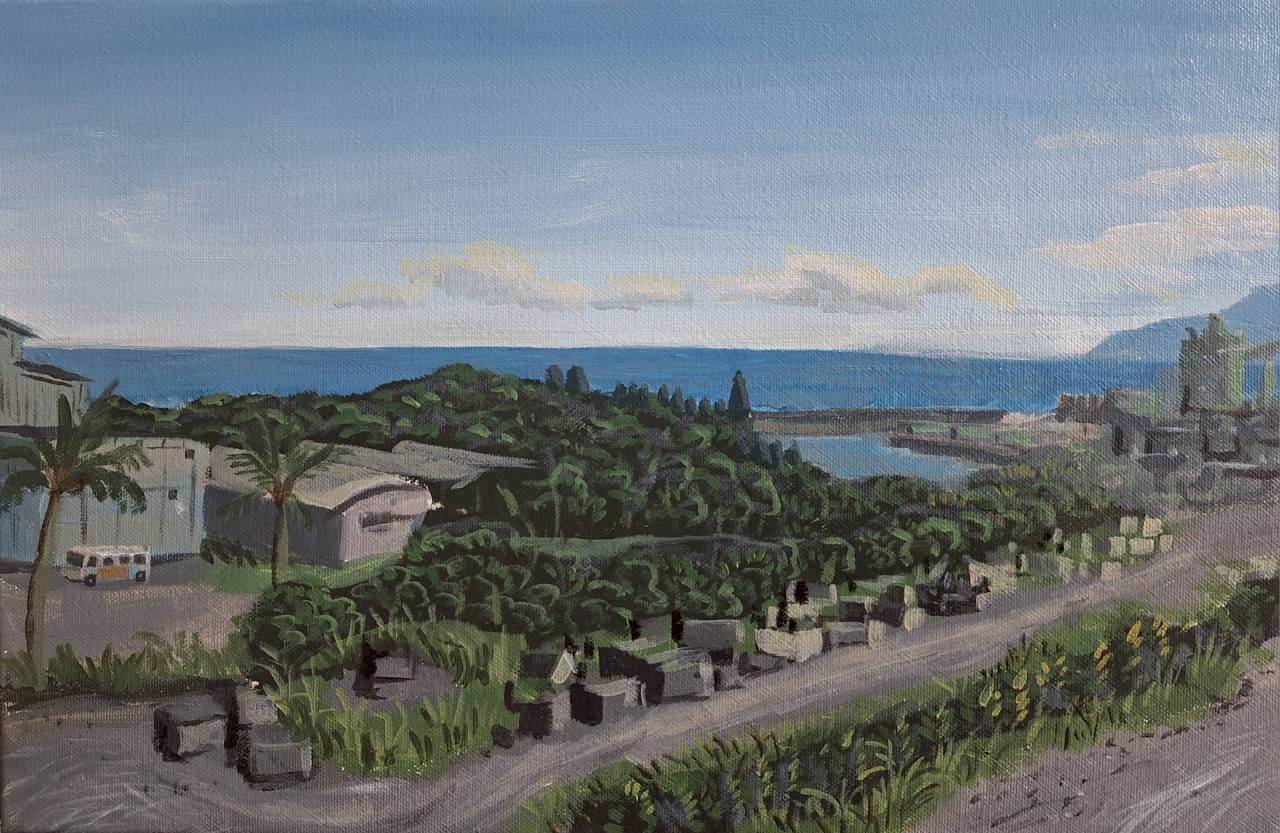
At the stone waste yard, the discarded stones originated from different countries and quarries. After being extracted, transported, and processed, they were shattered by the earthquake and accumulated together, forming mountain-like piles of stone. Among them, the green serpentinite came from the mountains of Hualien. As we approached these stones, we began to imagine where they had originally belonged and the journeys they had undergone. Walking and climbing among the piles, we attempted to identify their textures and origins, recording our observations through drawing.
During this process, we discovered that what initially appeared to be an abandoned industrial site had already become a new ecosystem. Mosquitofish swam in pools of water between the stone piles, birds arrived to feed, and frog tracks appeared across the muddy ground. Life continued to emerge within this landscape, shaped jointly by the earthquake and the stone industry.
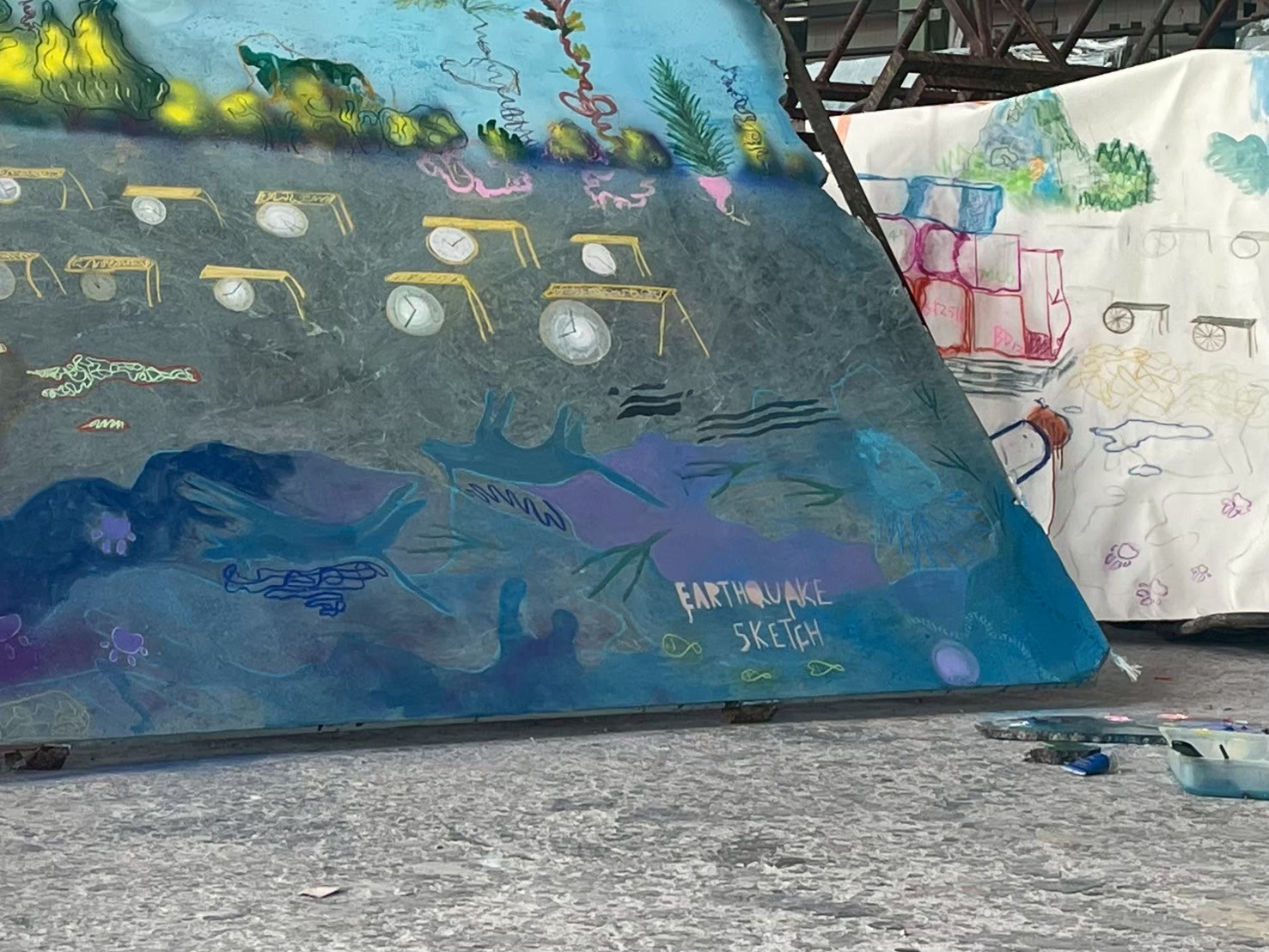
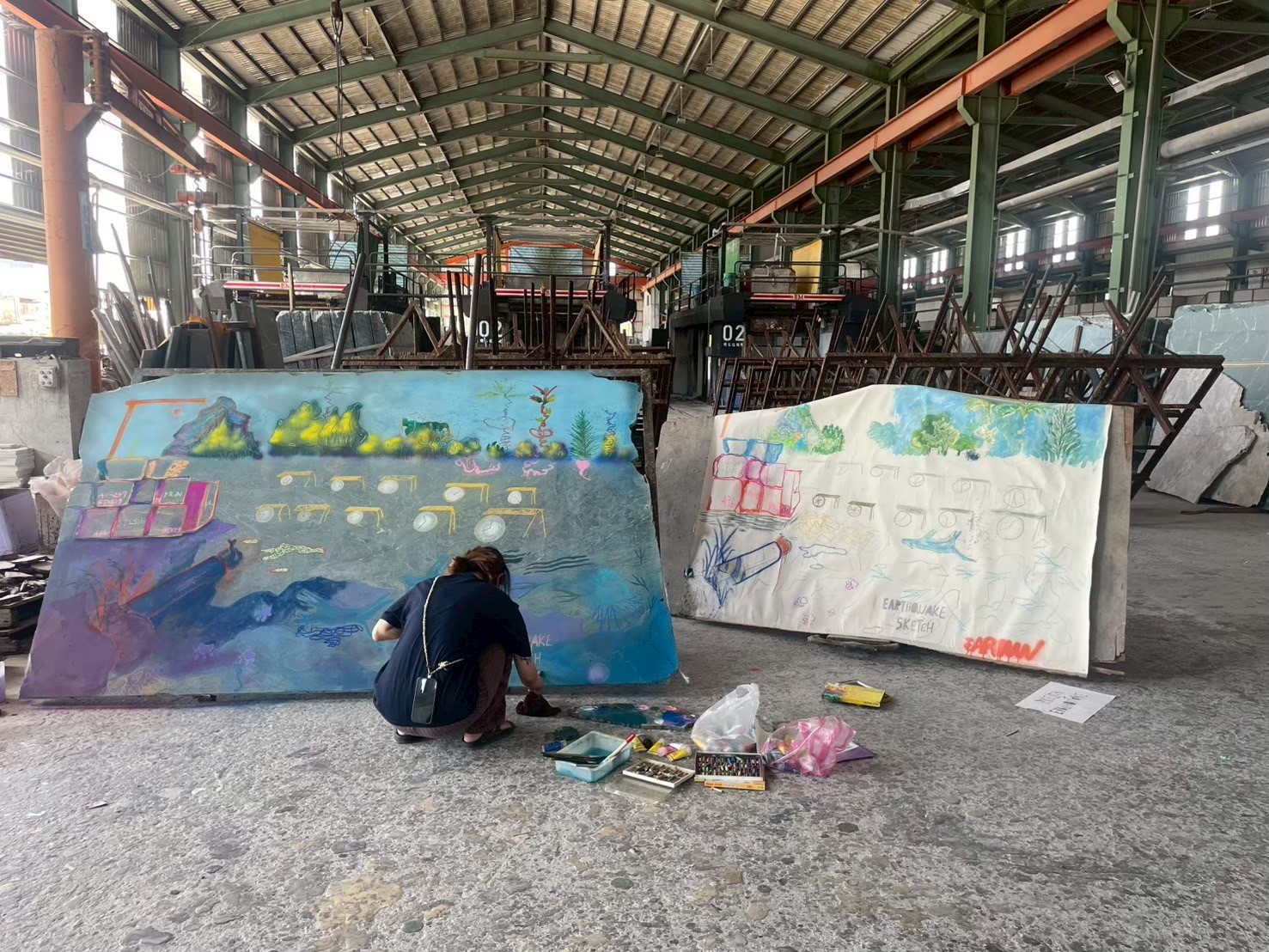
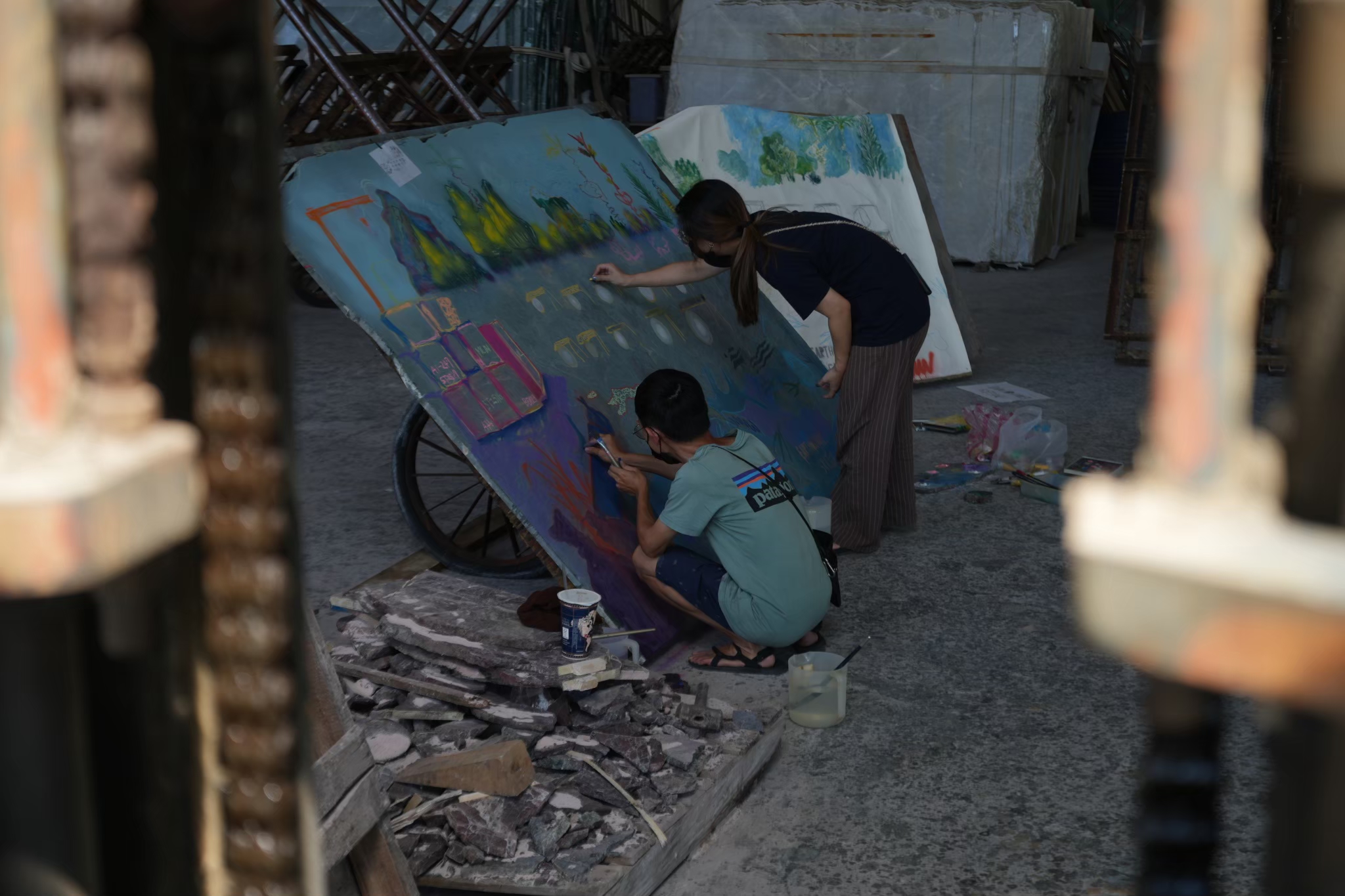
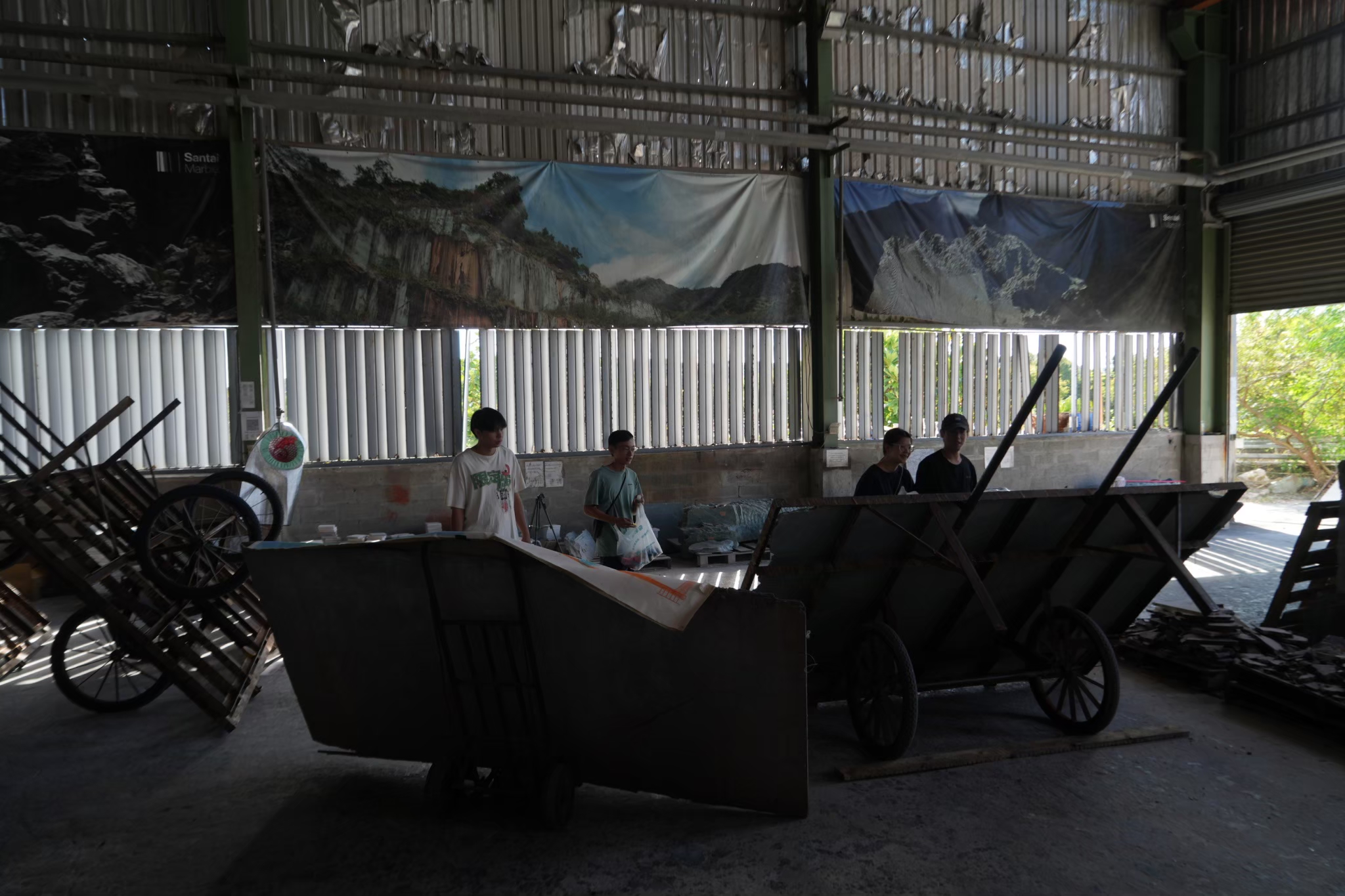
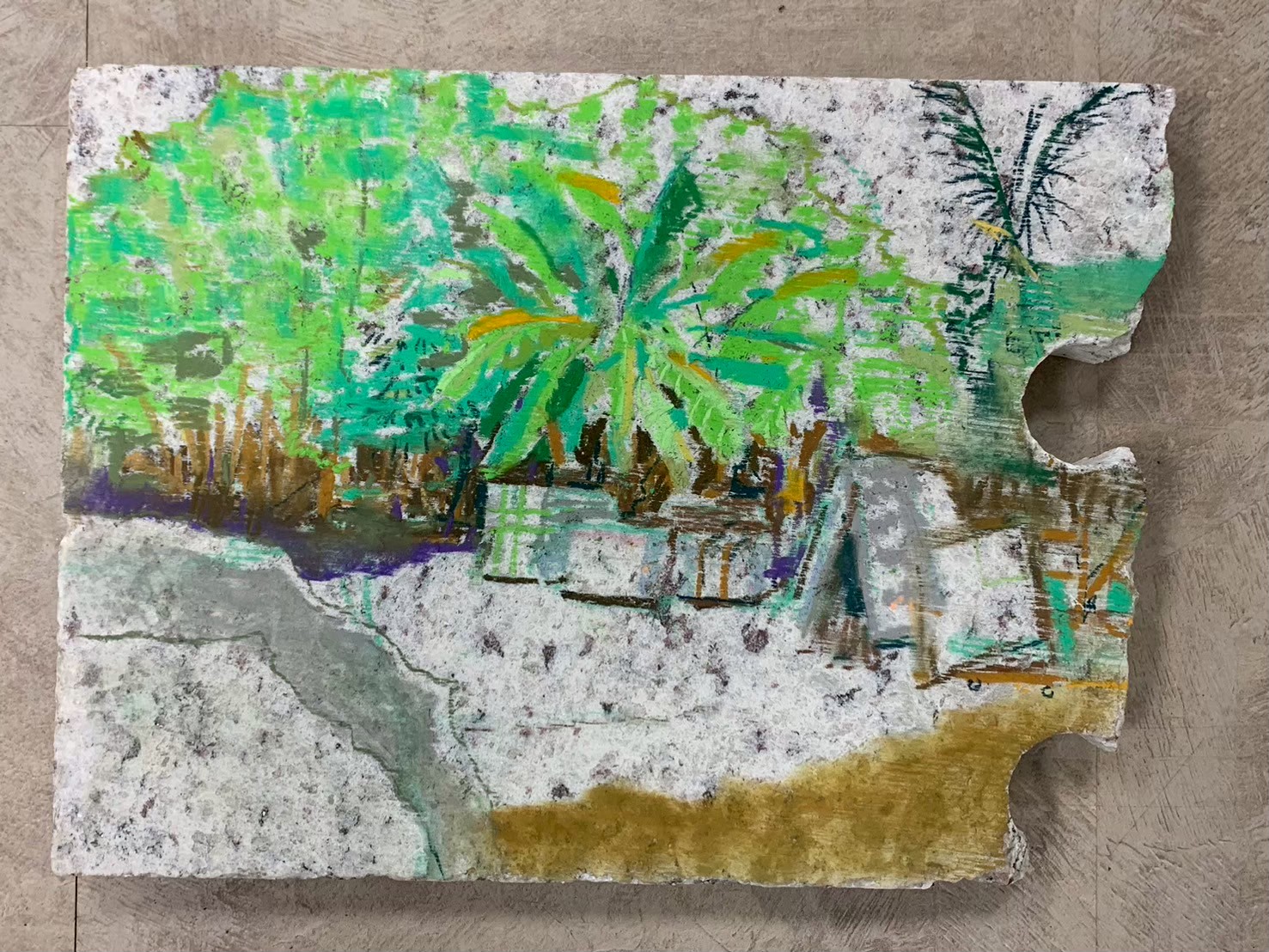
We later entered a stone-processing factory, where we used serpentinite slabs as painting surfaces to depict the landscapes we had encountered in the stone waste yard. Adopting the marking methods commonly used in stone production, we drew directly onto the stone with

2024年大地震後,花蓮石材產業受到重大的影響,大量破碎石材被集中堆放於震後形成的場域。居住在花蓮,我們經常看見載運石材的卡車穿梭於道路之間,卻很少真正理解這些石頭與土地、人與產業之間的關係。《爬一座石頭山》延續寫生團以身體進入現場的創作方式,來到震後石材碎料堆棄場與石材加工廠,進行寫生。
在石材碎料堆棄的現場,有些石材來自不同國家與礦區,經過開採、運輸與加工後,由於地震它們碎裂、混雜堆積於此,重新聚集成一座座如山般的石堆。其中綠色的蛇紋岩,則來自花蓮的山脈,當我們靠近這些石頭,也開始想像它們原本所在的位置,以及它們經歷的旅程。我們在這些石頭之間行走、攀爬,試著辨認它們的紋理與來源,並以寫生留下觀看的痕跡。過程中我們發現原本看似荒置的空間,已然形成一個新的生態:石堆間水窪中的大肚魚、前來捕食的鳥類、泥灘上青蛙的足跡,生命在這片由地震與產業共同形成的地景中持續發生。
之後我們進入石材加工廠,在大型機具與石材製作空間中,以蛇紋岩石板作為畫布,描繪我們在碎石材堆棄場所經歷的景象。我們沿用石材加工現場標記石材的方式,以噴漆與粉筆在石板上留下記號。而展覽現場保留了行動中的物件與紀錄:大型石板、寫生作品、攝影,以及記錄整個過程的錄像。