Nancy and Jackie
《南希與傑克》
Intaglio print, photography
109 × 158 cm
Year
2015

The Net of Tides is a project that attempts to capture the tide.
The work takes the fixed fishing net as its point of departure. Unlike a conventional fishing net that catches fish or shellfish, this invisible net collects the continual movement of tides and the ecological changes they produce. Only the floating buoys remain visible, while the "net" itself exists through the relationships between gravity, seawater, living organisms, and time.
The spheres are constructed from discarded expanded polystyrene collected along the coast of Xiangshan and covered with oyster shells, seashells, and fiberglass. Although they appear heavy, they remain buoyant. During high tide, they drift across the sea like temporary islands, carrying fragments of the seabed onto the water's surface. During low tide, they settle across the tidal flats, revealing another landscape where crabs, shellfish, birds, and people continuously reshape the shoreline.
Rather than producing a static installation, the work relies on the changing rhythms of the tide. The arrangement of the spheres is never fixed. Each tidal cycle reorganizes their positions, while marine organisms gradually inhabit their surfaces. The installation is therefore co-authored by gravity, the moon, tidal currents, living organisms, and time.
Rather than capturing the sea itself, The Net of Tides attempts to make visible the invisible forces that continually shape the coastal landscape. The work proposes that a place is not defined by fixed boundaries, but by the continuous interactions between celestial forces, ecological systems, materials, and human activity.

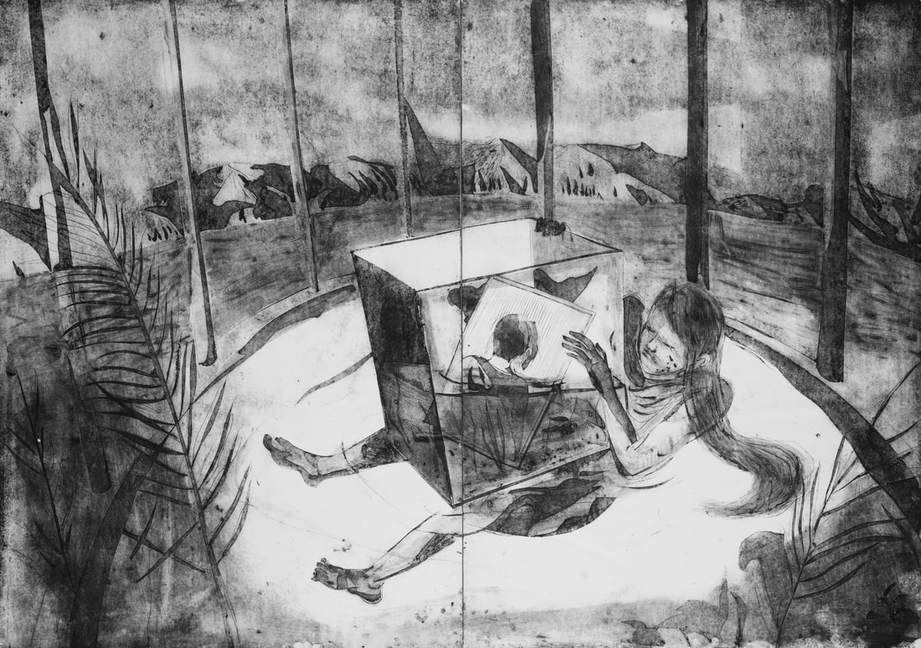
《南希與傑克》源自一次寫生活動,但創作的對象並非眼前的景物,而是空間所喚起的記憶與想像。我試圖重新思考「寫生」的意義:它是否只能描繪眼睛所看見的事物?又或者,真正被描繪的其實是觀看者在面對一個地方時,內心所產生的感知與想像。
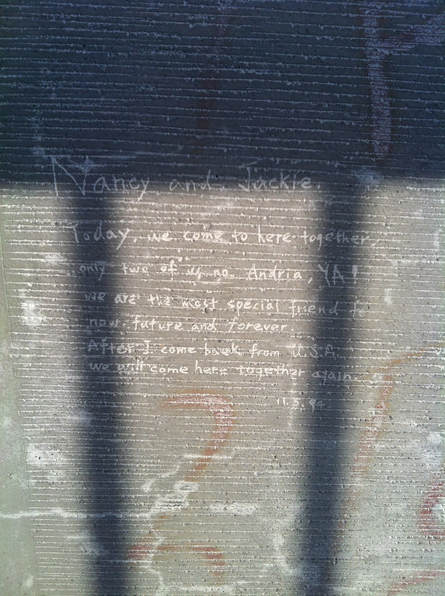
一次走訪廢墟時,我在一面斑駁的牆上發現一段手寫文字:
Nancy and Jack. Today, we come to here together, only two of us now... We are the most special friends for now, future and forever. After I come from U.S.A., we will come here together again.
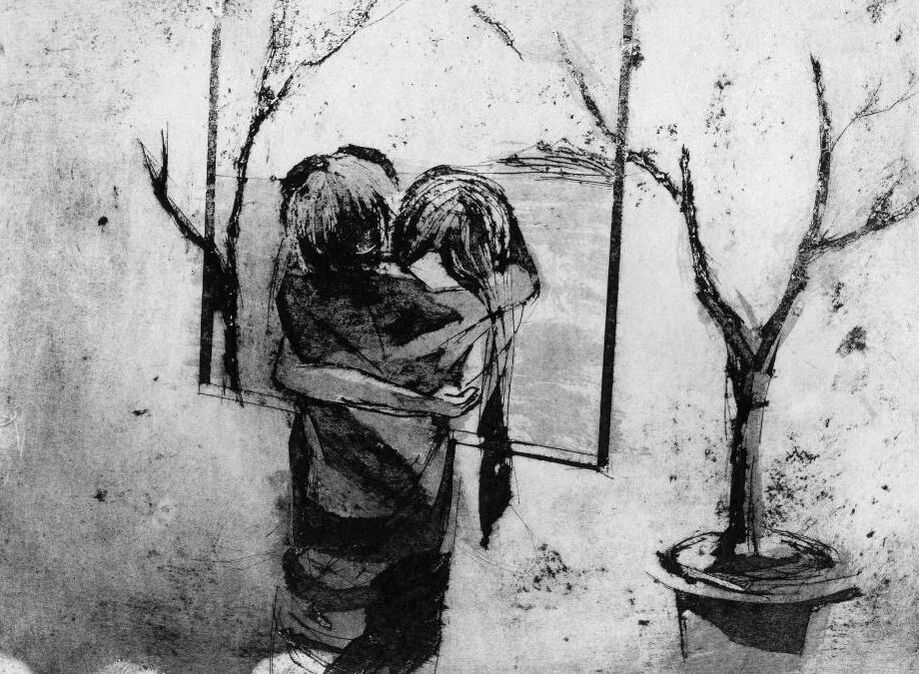
這段語句像是一封沒有收件人的信,也是一段留存在空間中的約定。從內容可以推測,其中一人即將前往美國,兩人相約未來重返此地。然而,我所遇見的並不是他們,而是他們離開之後仍殘留在空間中的情感痕跡。這段文字既是愛情的見證,也隱含著離別與等待的時間性。
作品因此並未試圖重現這段故事,而是將它視為一個想像的起點。那些真實存在於現場的景物,反而退居為觸發記憶的媒介;真正被描繪的,是我站在那個空間時,因這段文字而生成的心理景象與敘事。風景不再只是被觀看的對象,而是一種引發想像的裝置。
《南希與傑克》也重新定義了寫生的方式。畫面並非忠實再現眼前所見,而是描繪觀看者與場域相遇之後,在記憶、情感與想像之間所形成的內在風景。對我而言,寫生並不只是描繪一個地方,更是在描繪一個地方如何被感知、如何被記住,以及如何在觀看者的內心持續延伸成另一段未曾發生、卻始終存在的故事。