top of page

A Forest Without Leaves
沒有葉子的森林
2025 台北當代藝術館《安全室》聯展
Safe Room
Group Exhibition, Museum of Contemporary Art Taipei (MOCA Taipei), 2025


We began to realize that the changes brought about by the earthquake existed not only in collapsed buildings and altered landscapes, but had also entered the bodies of those who live here. We did not know exactly what had changed, so we chose once again to approach these questions through our bodies.
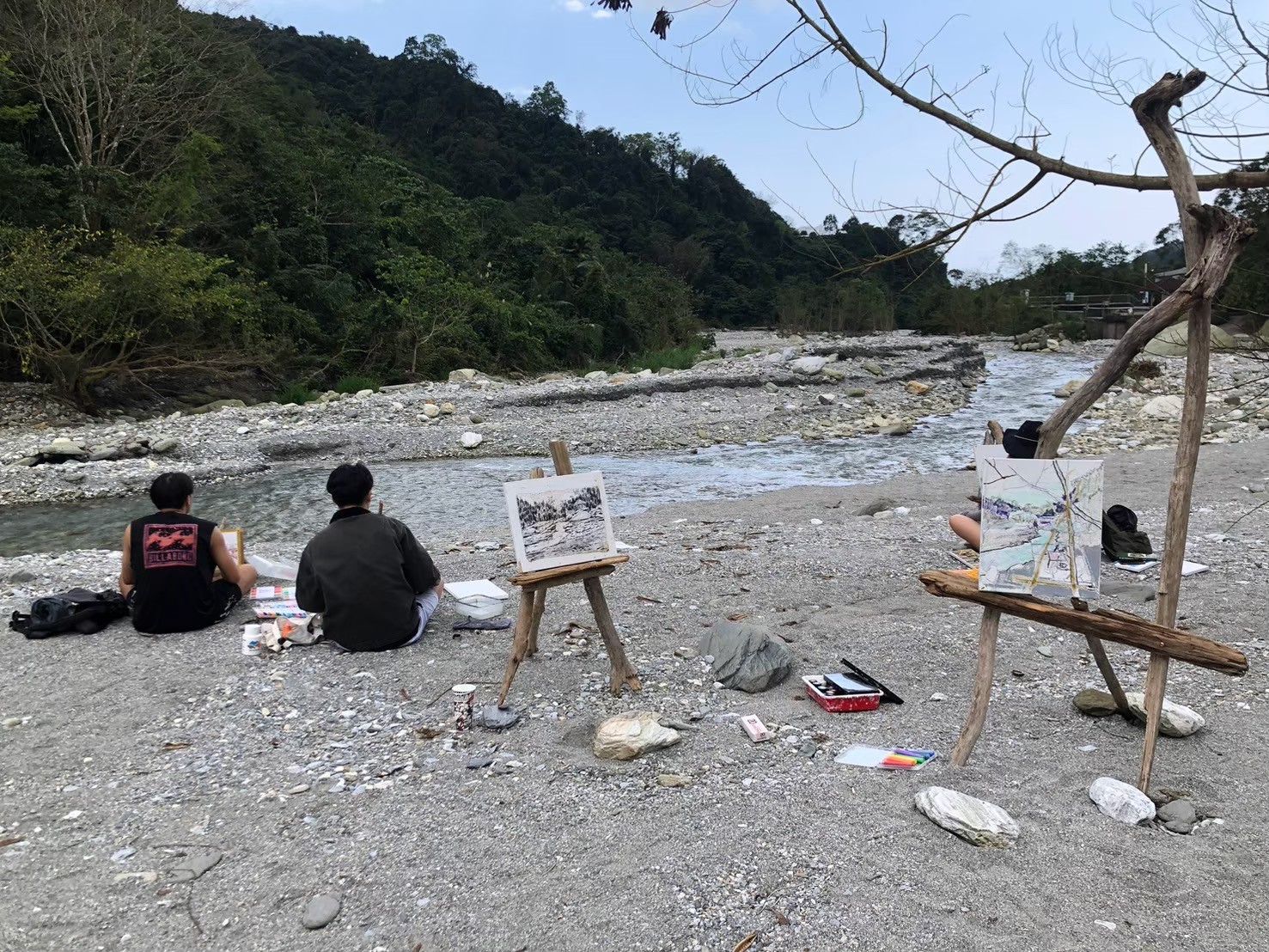
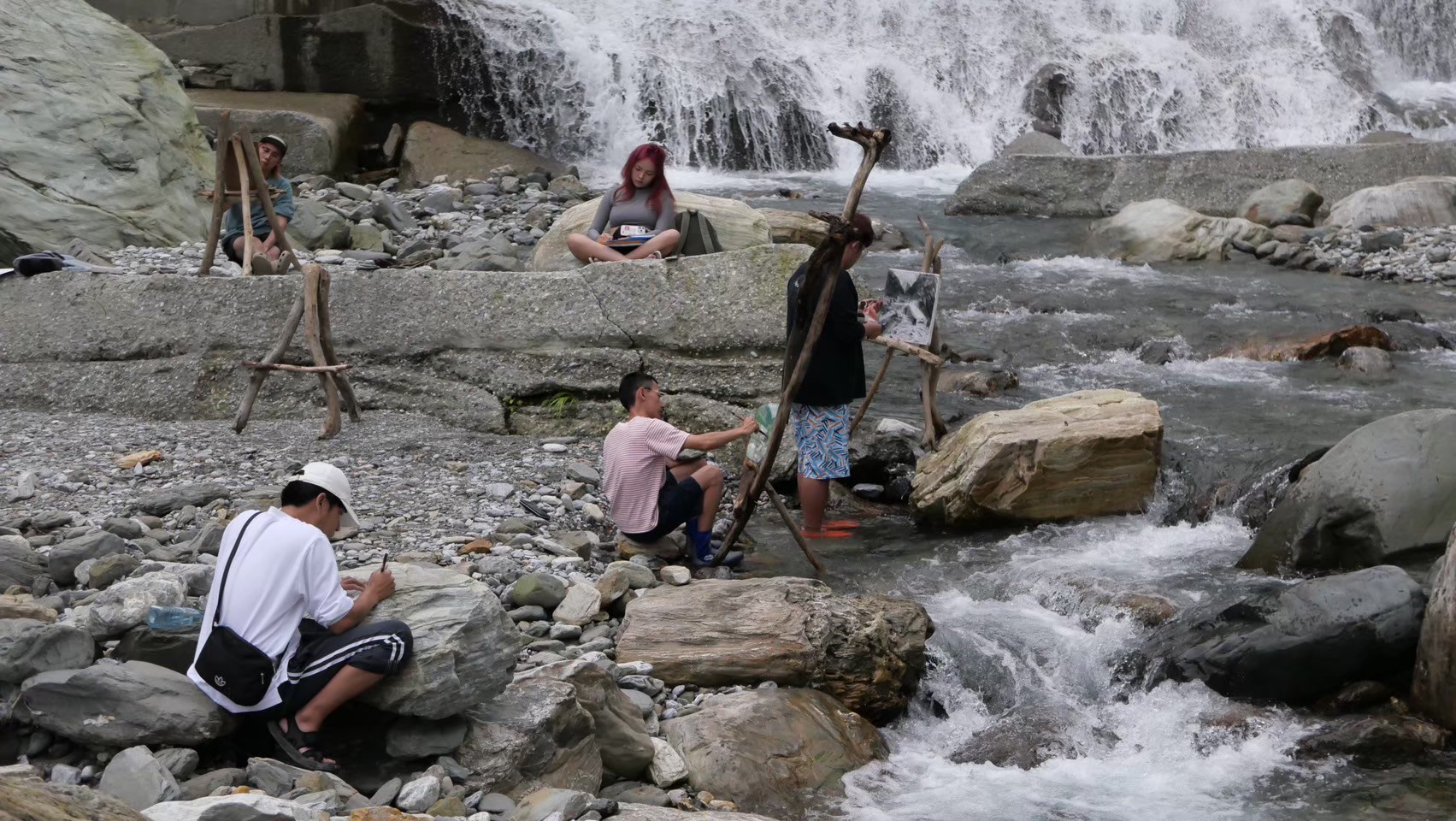
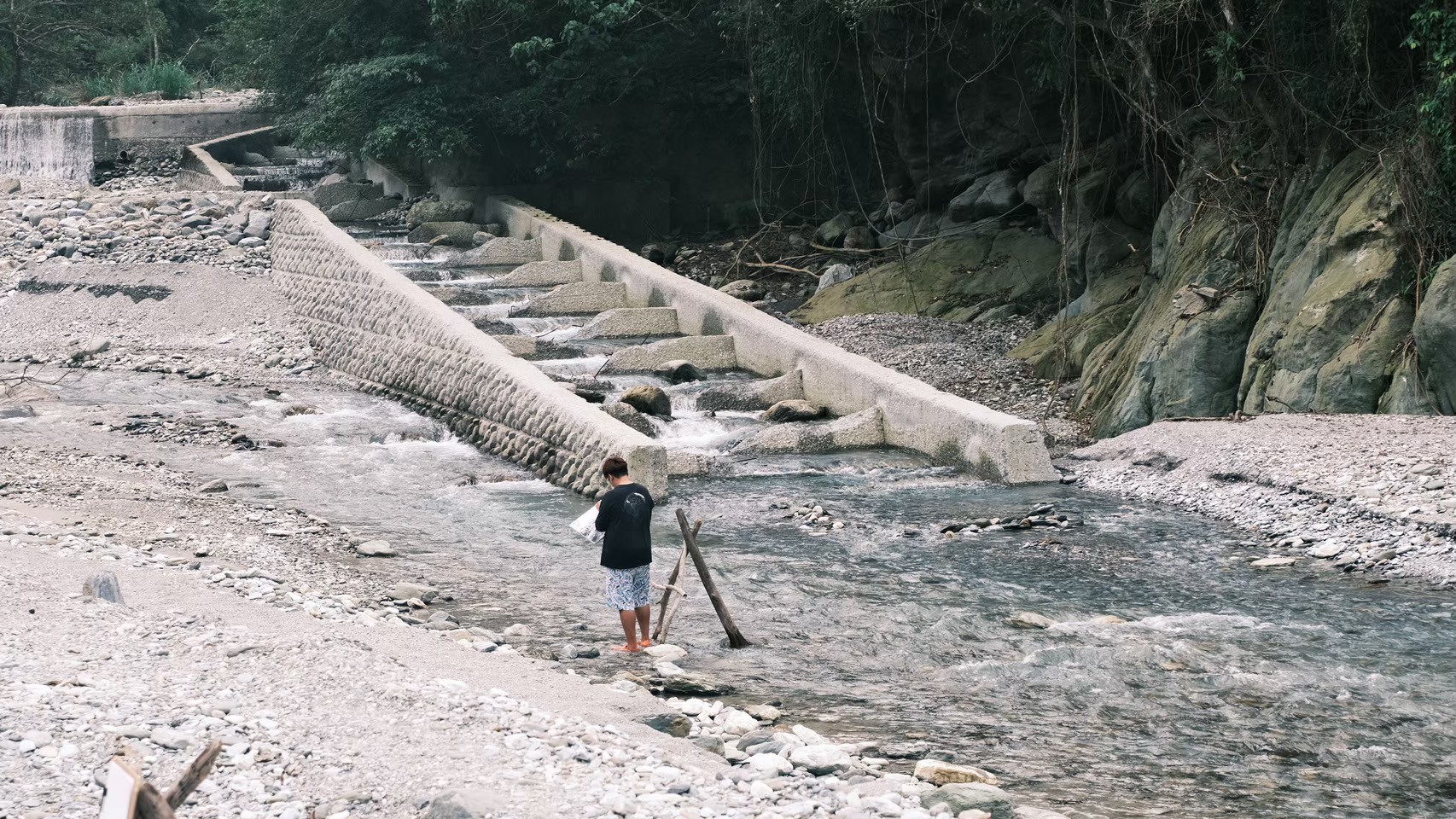
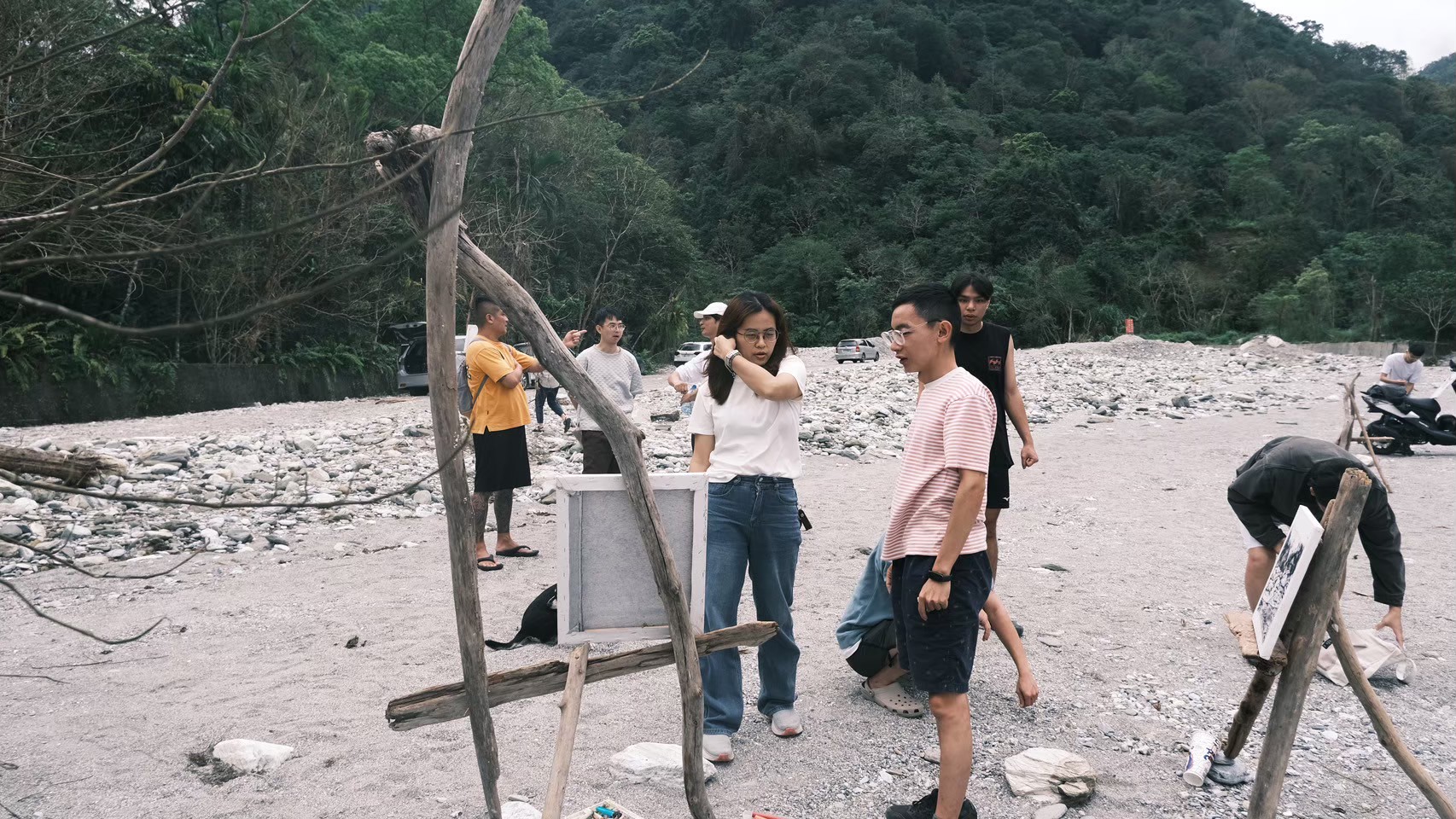
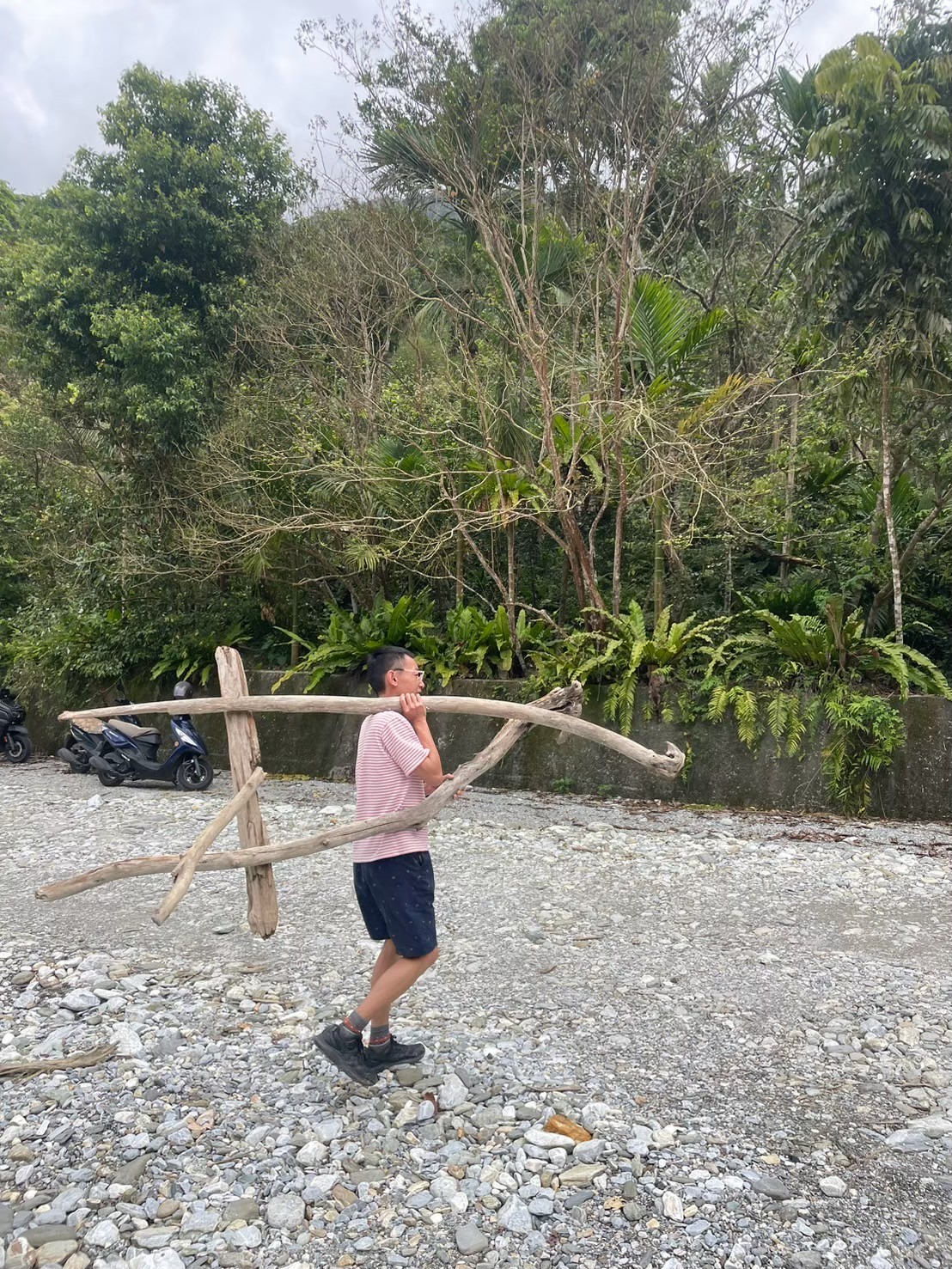
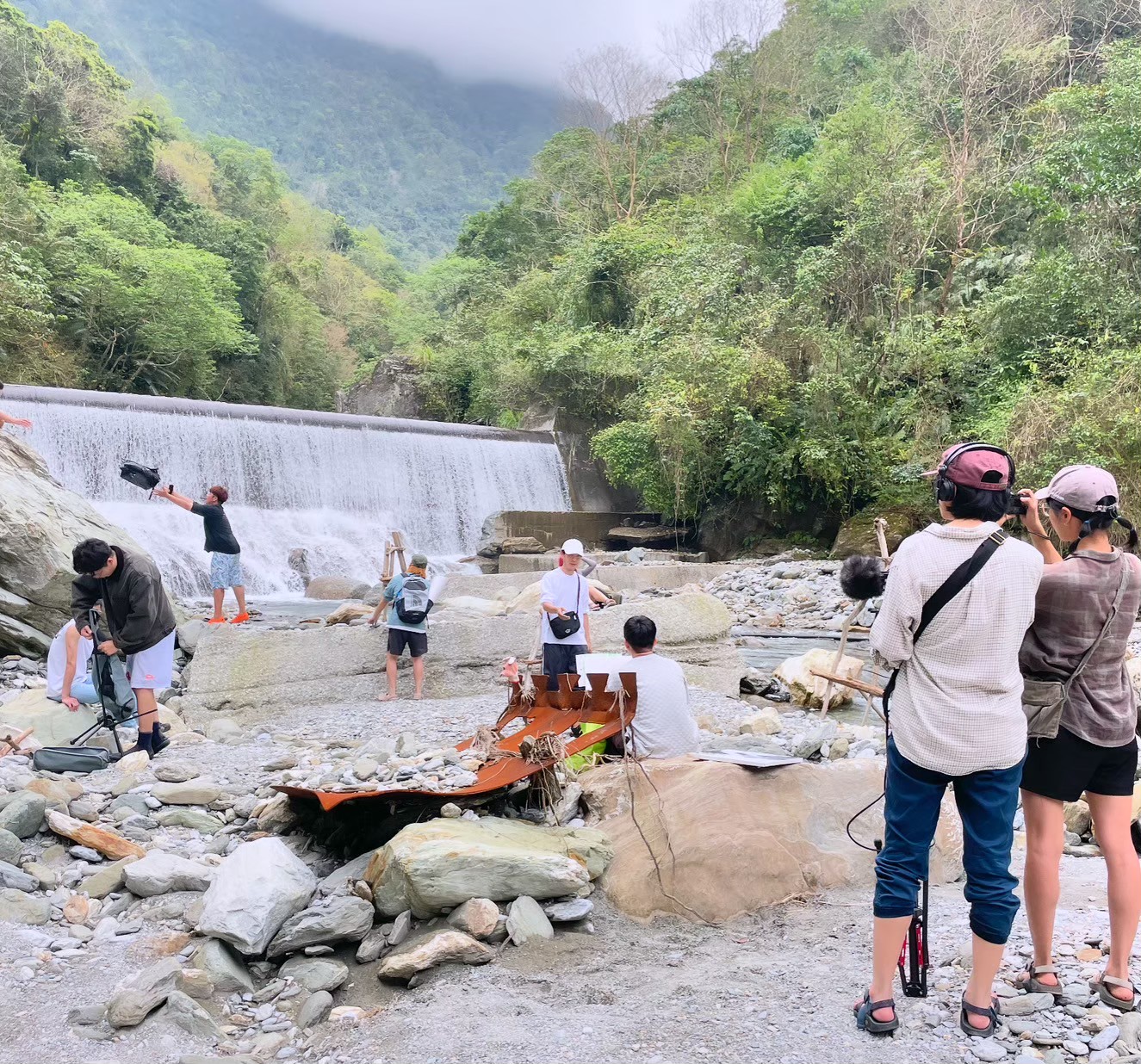
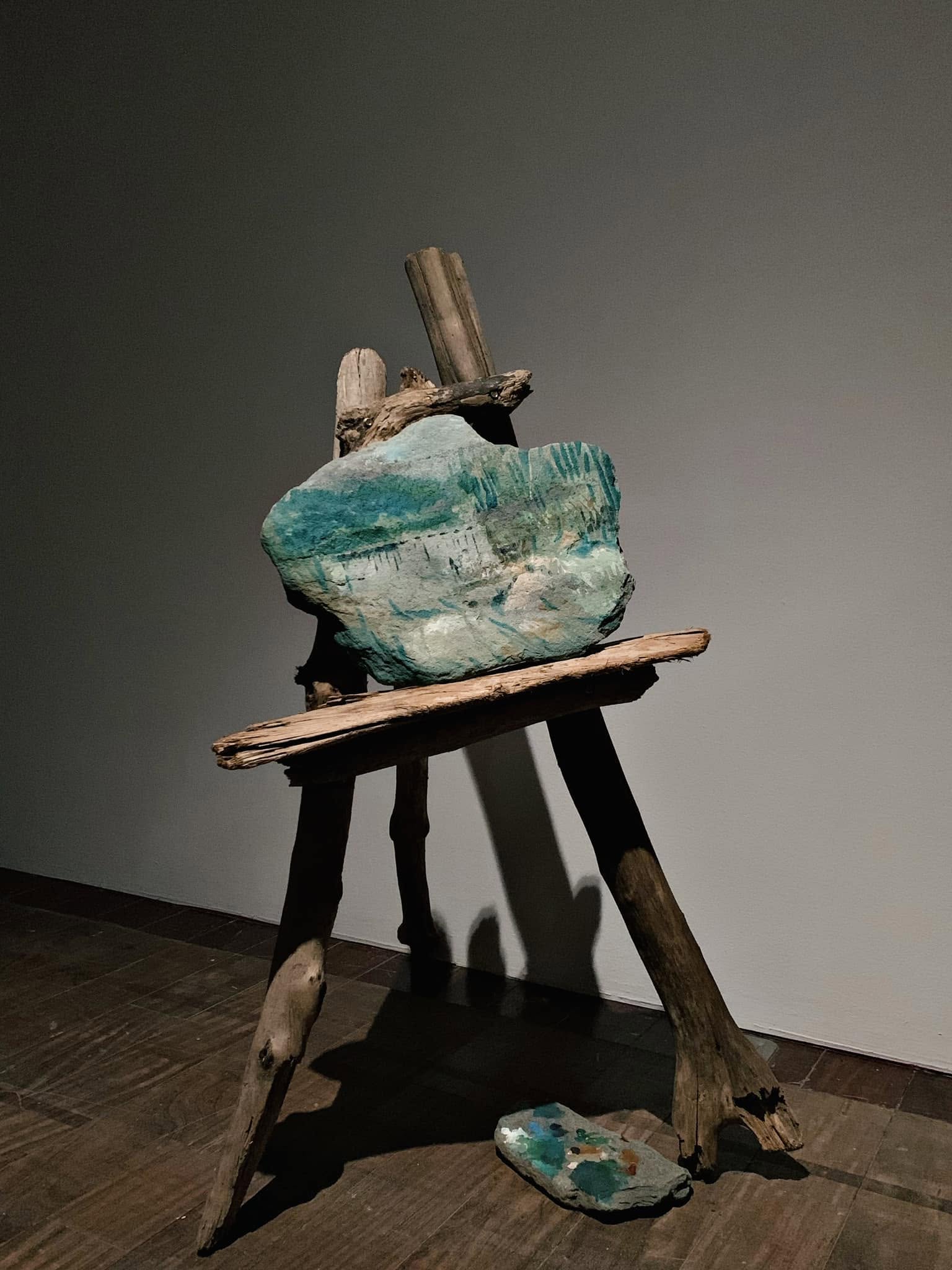
Following the path of driftwood, we traced the journey of these trees from the mountains to the coast. We collected driftwood along the shoreline and carried it upstream, returning to the water source where the landscape had been dramatically transformed after the earthquake. There, on the riverbed, we began to sketch. We turned the driftwood into makeshift easels on site. Some works were made on paper, while others were painted directly onto stones gathered from the stream.
A Forest Without Leaves describes the landscape found along the coast, where large numbers of trees accumulate on the beach. They once grew in the mountains, but have since lost their leaves and their original place. Carried away by the water, they gather elsewhere and form another kind of forest.
We attempted to retrace the routes from which they had come. Through walking, carrying, observing, and drawing, we sought to experience the complex relationship between natural disaster, the environment, and the human body. In this process, we gradually came to understand that physically arriving at a site and sketching there was not simply a means of documentation, but also a process through which we could begin to heal and understand ourselves.
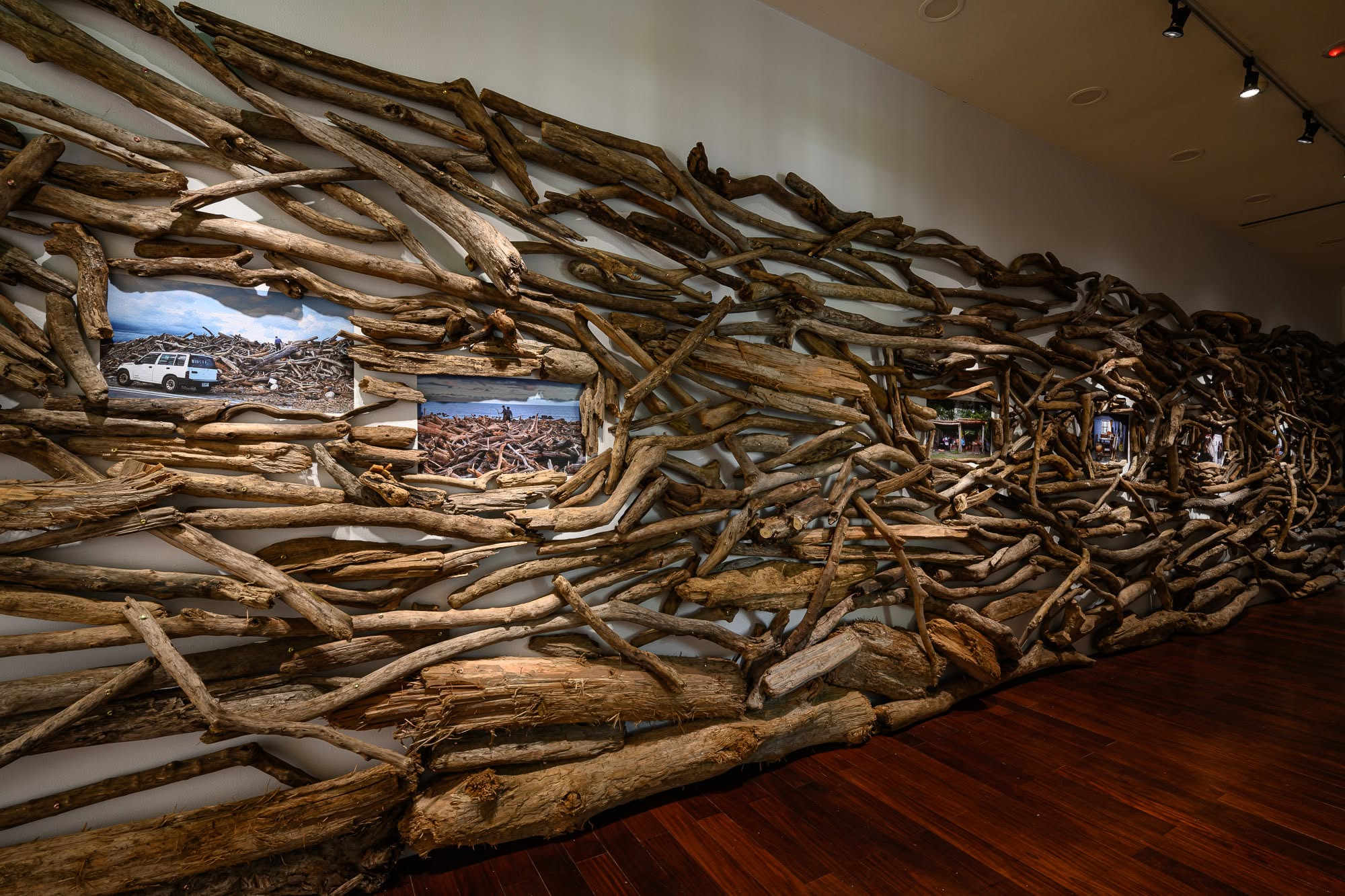
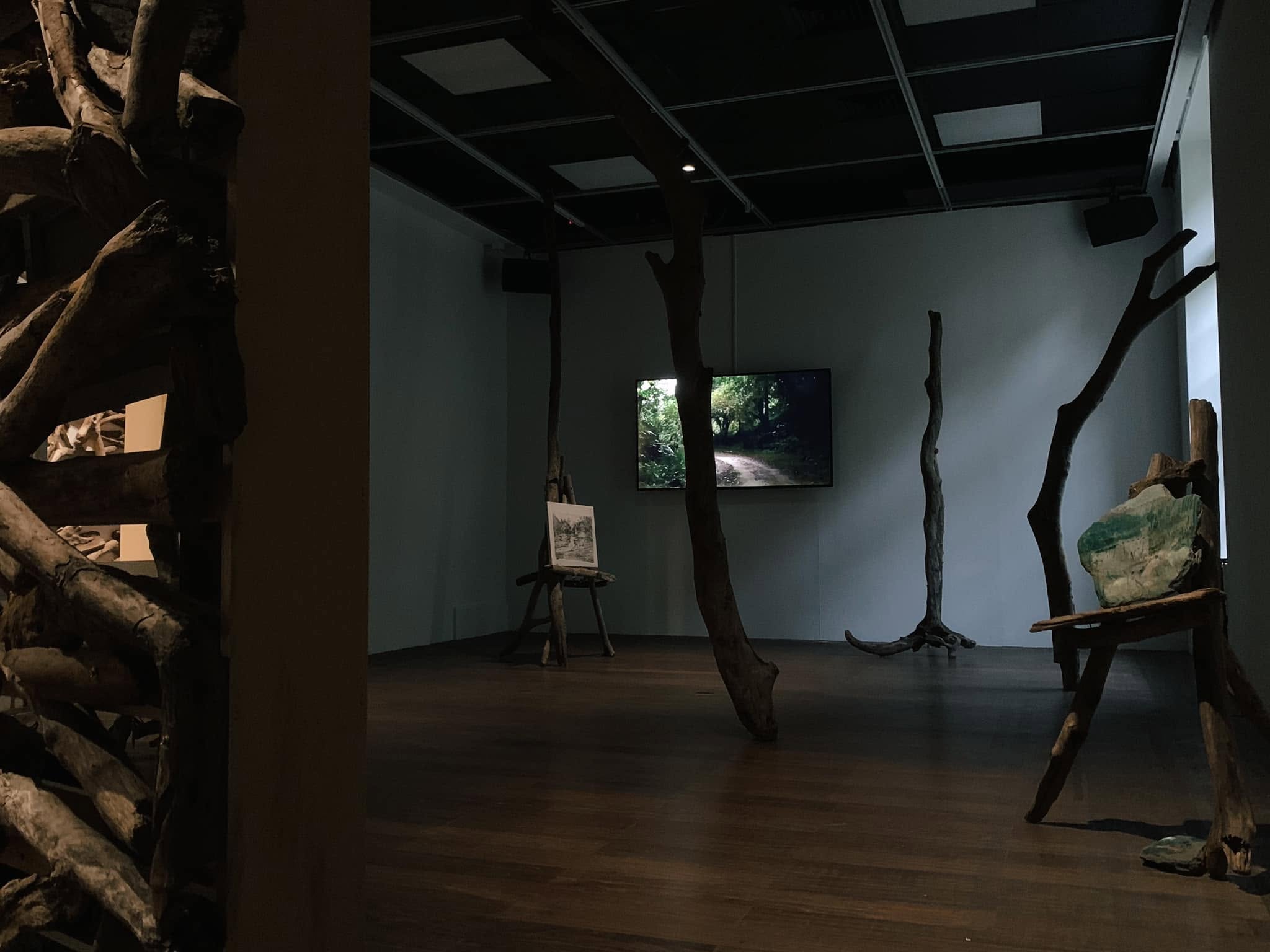
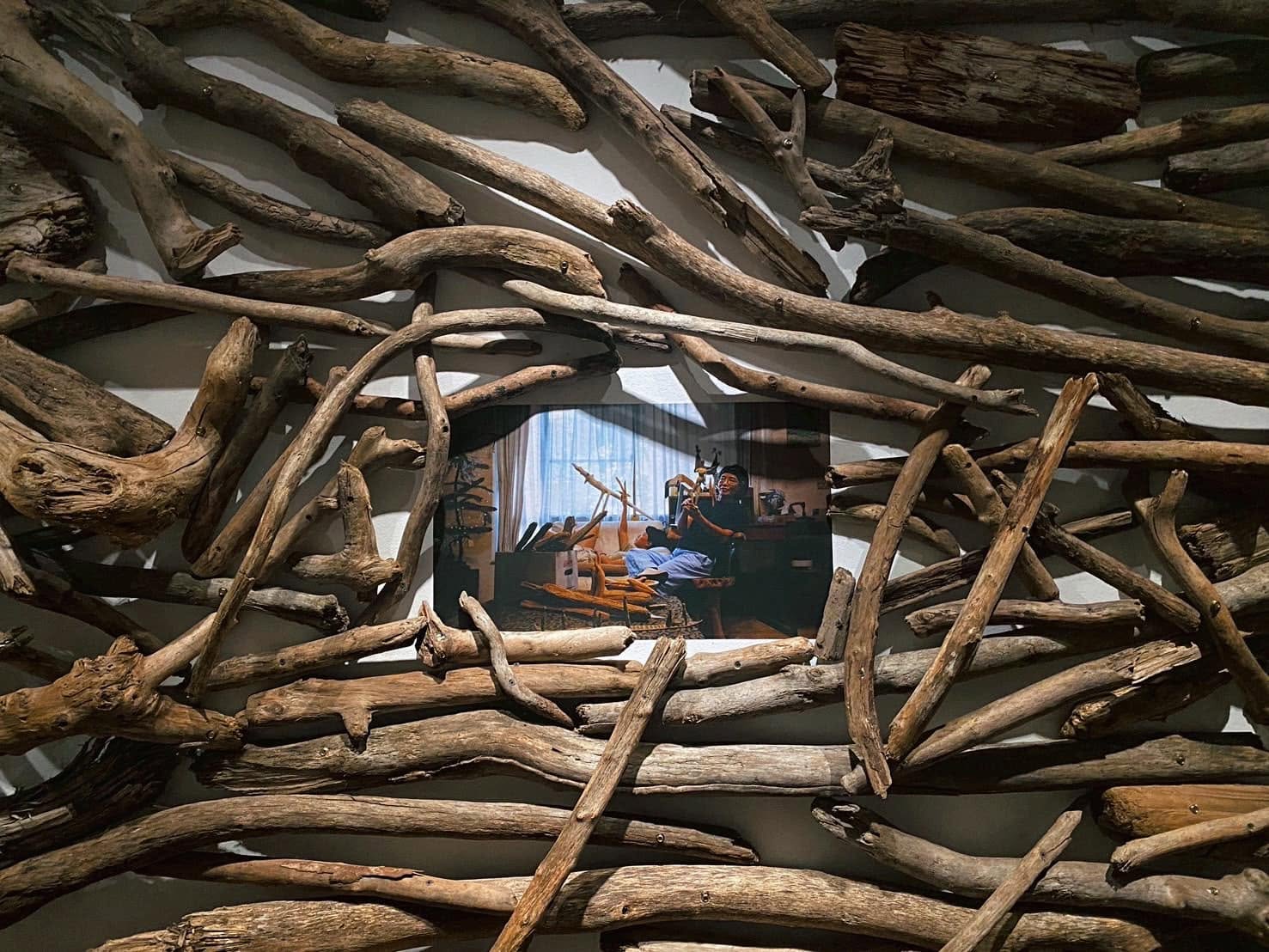
When the work was exhibited at the Museum of Contemporary Art Taipei, we transported a large quantity of driftwood collected from the coast of Hualien to Taipei. The driftwood covered the exhibition space, extending through the corridor and across the walls. Several large pieces stood vertically from floor to ceiling. At the center of the installation, a video documented the process of the action. The scent of the wood lingered in the air. Through these elements, we attempted to regenerate within the exhibition space a physical and sensory experience of the landscape.

2024年花蓮大地震之後,山體鬆動的土石與樹木,在當年颱風帶來的大水中被沖刷而下,隨著洋流聚集於花蓮沿岸。那一年,花蓮從北到南的海灘幾乎都被大量漂流木覆蓋,原本熟悉的沙灘消失,取而代之的是一片由樹木堆疊而成的「木頭灘」。這樣的景象持續了很久,花蓮人的日常也因此改變:人們在清晨與傍晚前往海邊尋找漂流木,辨認木頭的氣味與形狀,將被挑選的它們帶回家;海岸長時間瀰漫著木頭的氣味,成為震後花蓮共同的感官記憶。
我們開始意識到,地震帶來的改變不只存在於倒塌的建築與改變的地貌之中,也進入了居住於此的人們的身體。我們不知道究竟是什麼被改變了,於是選擇再次以身體來靠近心中的疑惑。沿著漂流木的路徑,回溯這些樹木從山林到海岸的旅程,我們從海岸撿拾漂流木,帶往溪流上游,回到震後地貌已大幅改變的水源地,在河床上進行寫生。我們將漂流木現場製作成畫架,有些作品繪於紙上,有些則直接畫在溪中拾取的石塊上。
「沒有葉子的森林」描述的是海灘上那些由大量樹木組成的景象。它們原本生長於山林之中,如今失去了葉子與原來的位置,被水流帶往遠方,重新聚集成另一片森林。我們試圖回到它們來時的路徑,透過行走、搬運、觀察與繪畫,感受天災、自然與人的身體之間複雜的關係。在這個過程中,我們也逐漸意識到,以身體抵達現場寫生,不只是紀錄,更是在療癒和理解我們自身的一個過程。
作品於台北當代藝術館展出時,我們將大量從花蓮海岸拾取的漂流木運送至台北,並以漂流木鋪滿展間與長廊與牆面,展場中豎立數根頂立至天花板的大型漂流木,中央播放的錄像記錄了這場行動的過程,木頭的氣味在空氣之中,我們試圖在這個空間重新生成一個體感。

_mp4.png)


bottom of page