Garden
《花園》
Materials: Fishing nets, rope, expanded polystyrene (EPS), steel cable, concrete
Dimensions: Variable dimensions
Year: 2021


《花園》源自一系列沿著淡水河流域展開的歷史遺址、廢墟與地景踏查。作品名稱借自波赫士《小徑分岔的花園》,然而我並非試圖詮釋小說本身,而是受到其中對於時間與世界的觀看方式所啟發。在踏查的過程中,我逐漸意識到,我們所面對的從來不是過去本身,而是過去在此時此刻所呈現的樣態。考古遺址並不是歷史的重現,而是時間持續累積後,在當下留下的物質形態。
這樣的思考也使我重新理解「花園」的意義。它不再是一個具體的場所,而是一個由不同時間、記憶與物質共同構成的世界。當我閱讀史料、走訪遺址、面對今日的城市景觀,以及回憶自身經驗時,這些彼此不同的時間層並未互相取代,而是在同一個空間中共同存在,形成一個不斷生成的世界模型。
Garden emerged from a series of field investigations into historical sites, ruins, and landscapes along the Tamsui River. Borrowing its title from Jorge Luis Borges' The Garden of Forking Paths, the work is not an interpretation of the story itself, but is inspired by Borges' way of thinking about time and the world. Through these investigations, I gradually realized that what we encounter is never the past itself, but the present form of the past. Archaeological sites are not reconstructions of history; they are material forms that have accumulated through time and continue to exist in the present.
This understanding also reshaped my interpretation of the "garden." Rather than referring to a physical place, the garden becomes a world where different temporalities, memories, and material realities coexist. Historical documents, archaeological remains, contemporary urban landscapes, and personal memories do not replace one another; instead, they occupy the same space simultaneously, forming a world that is continuously assembled and reconfigured.


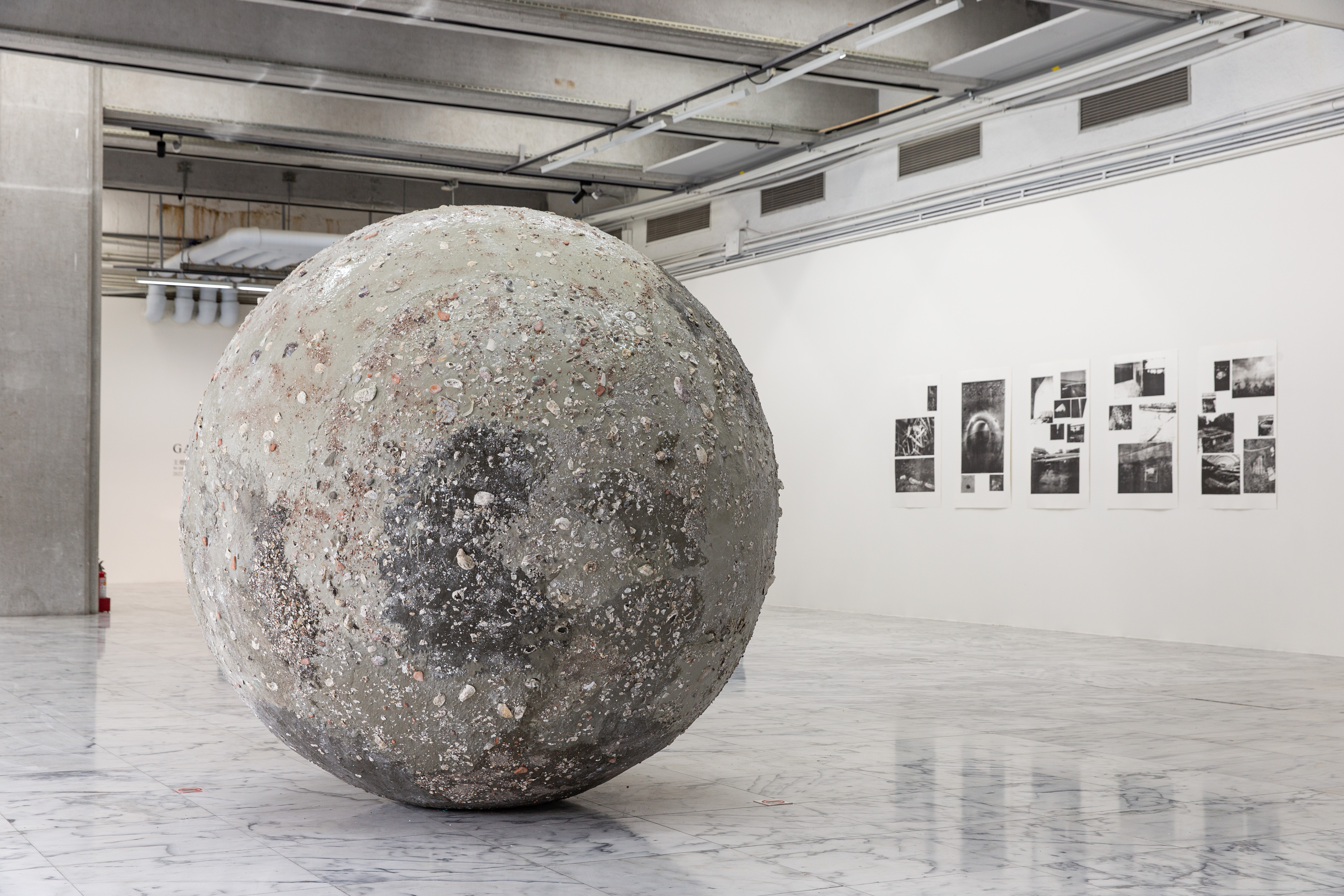
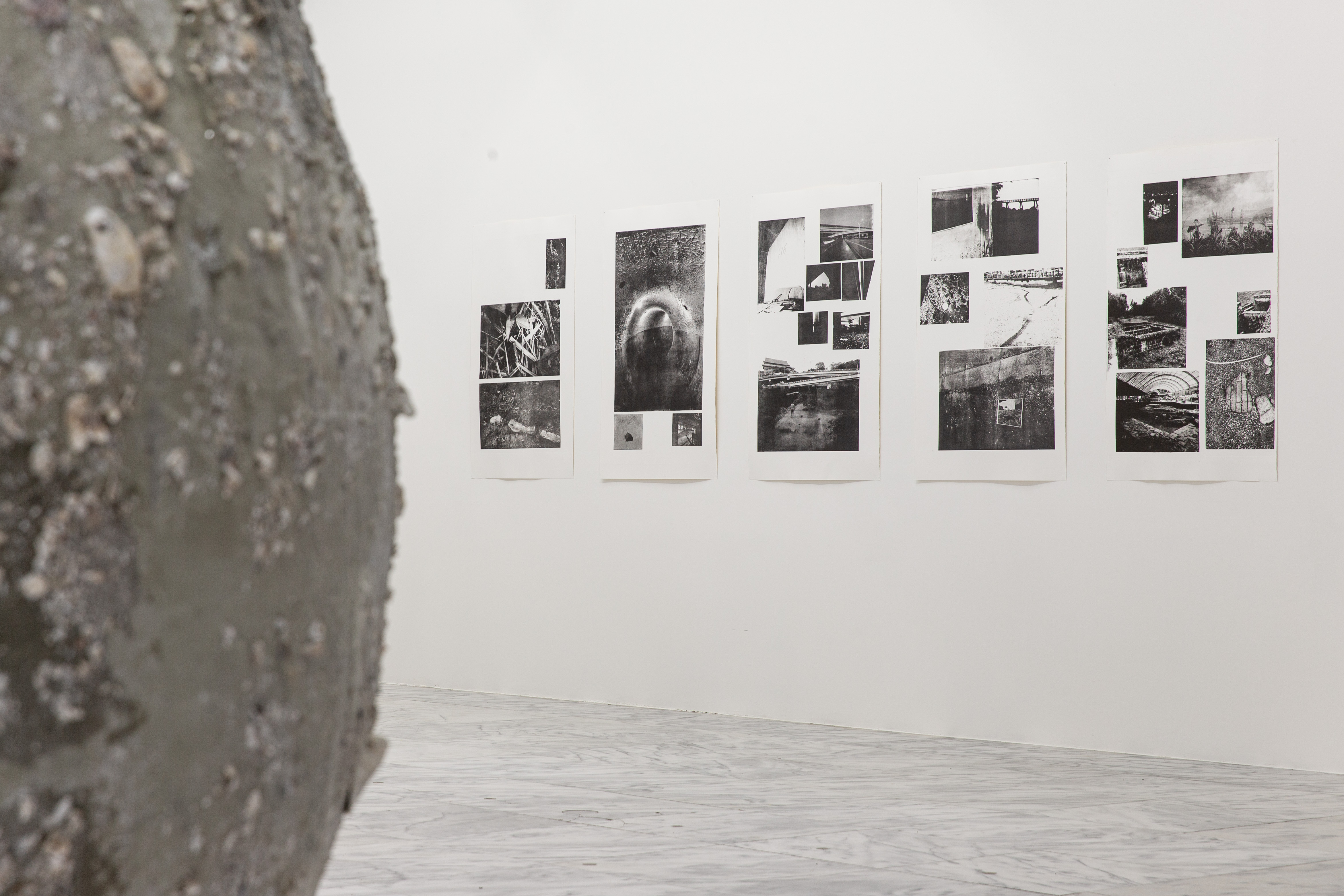
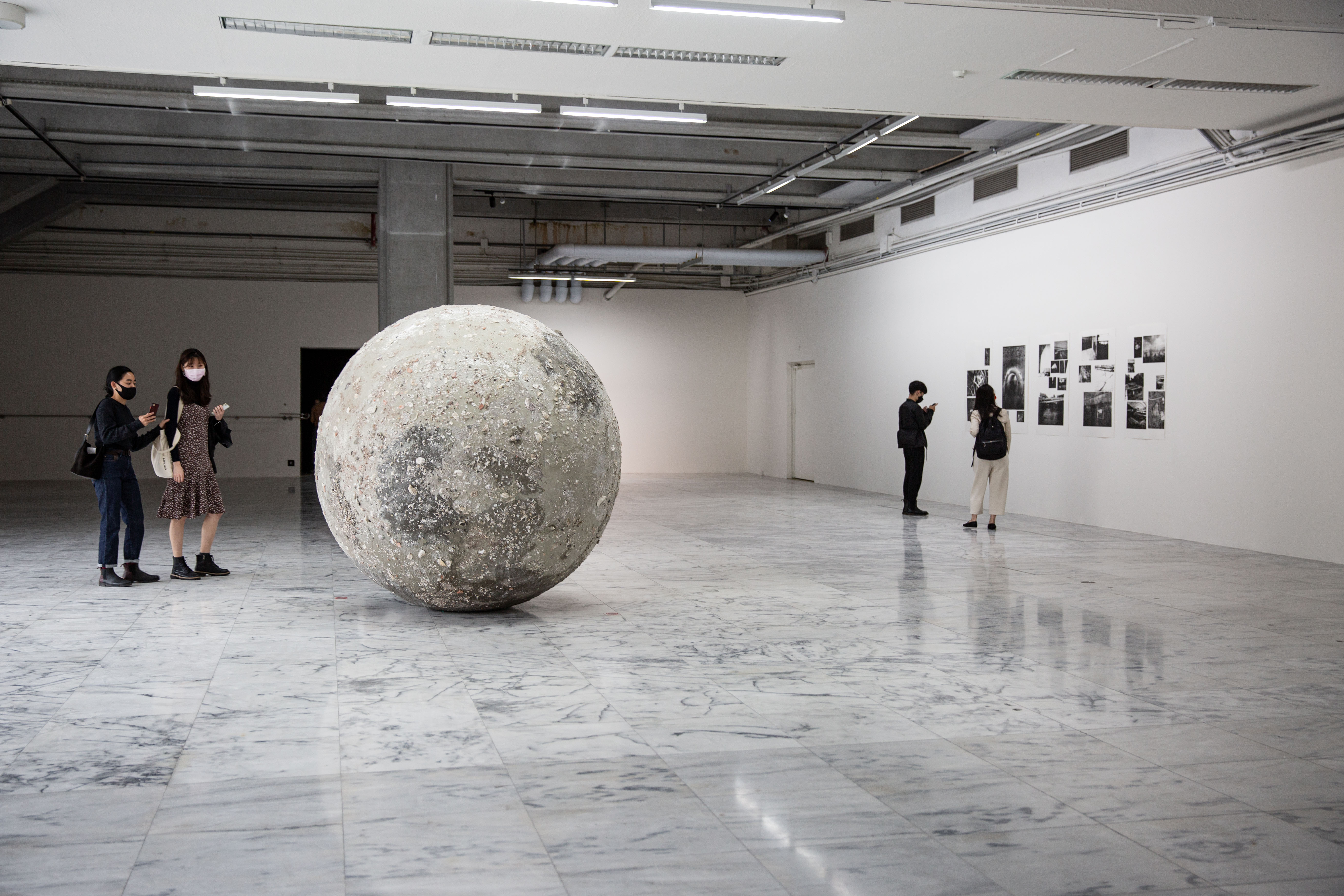
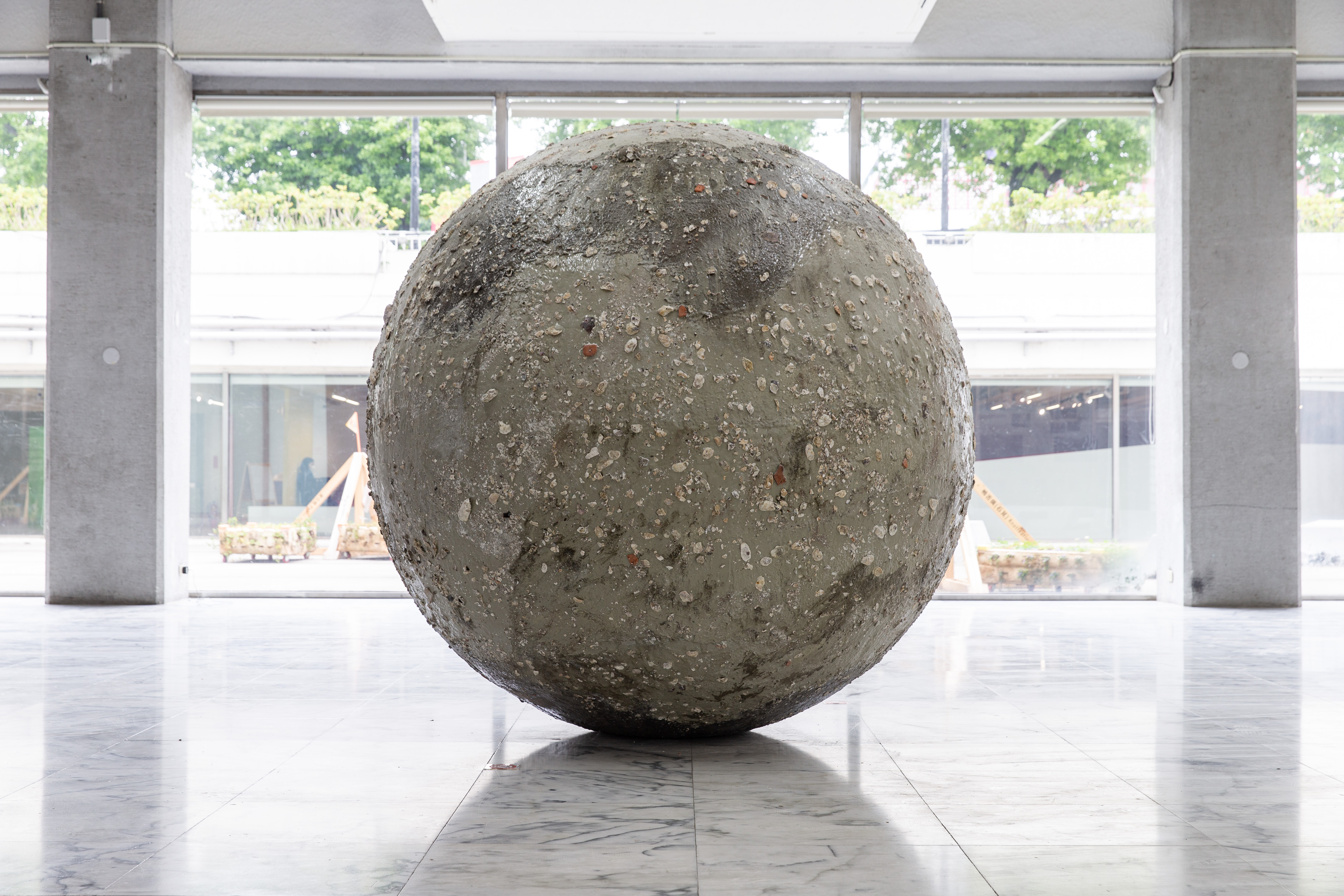
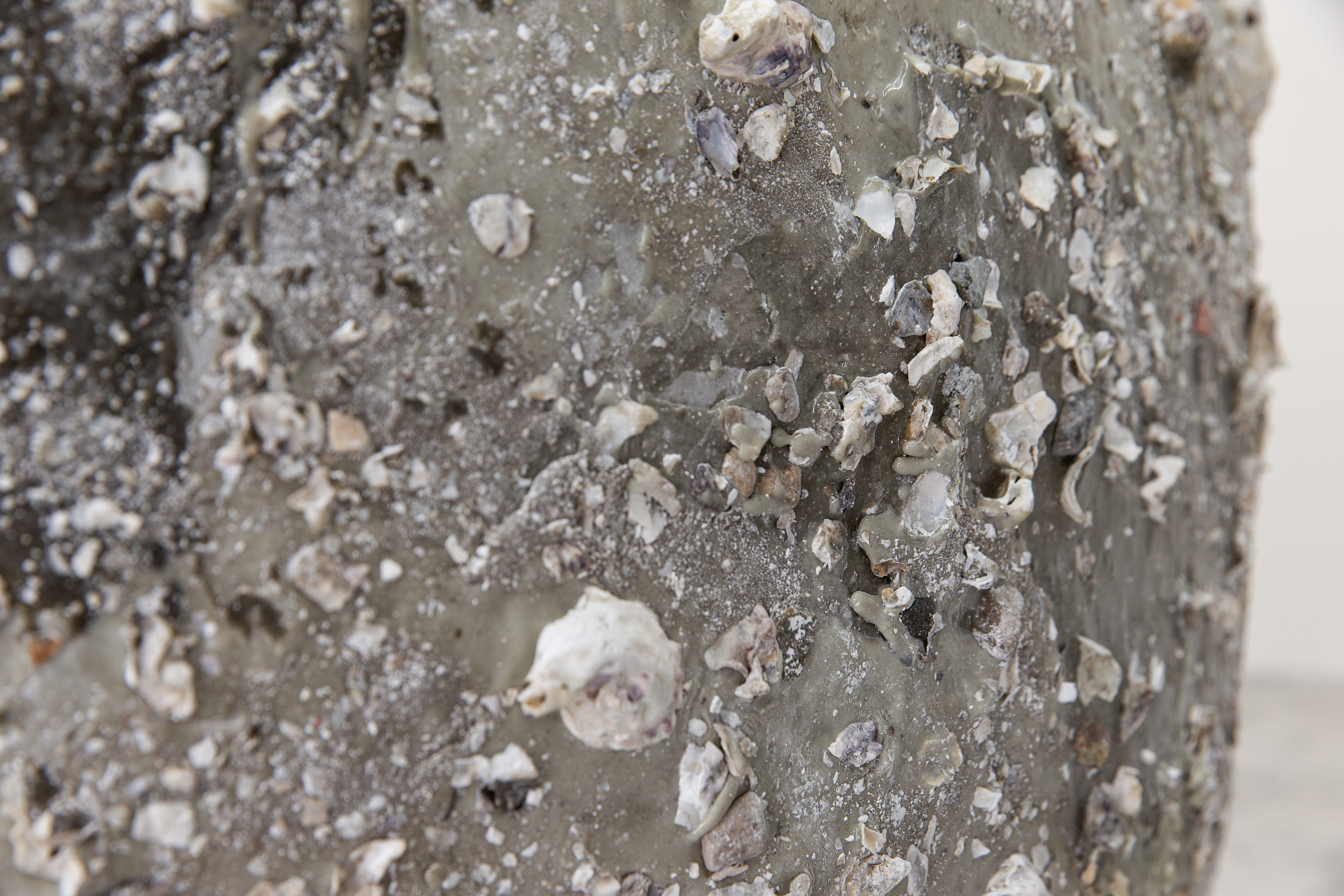
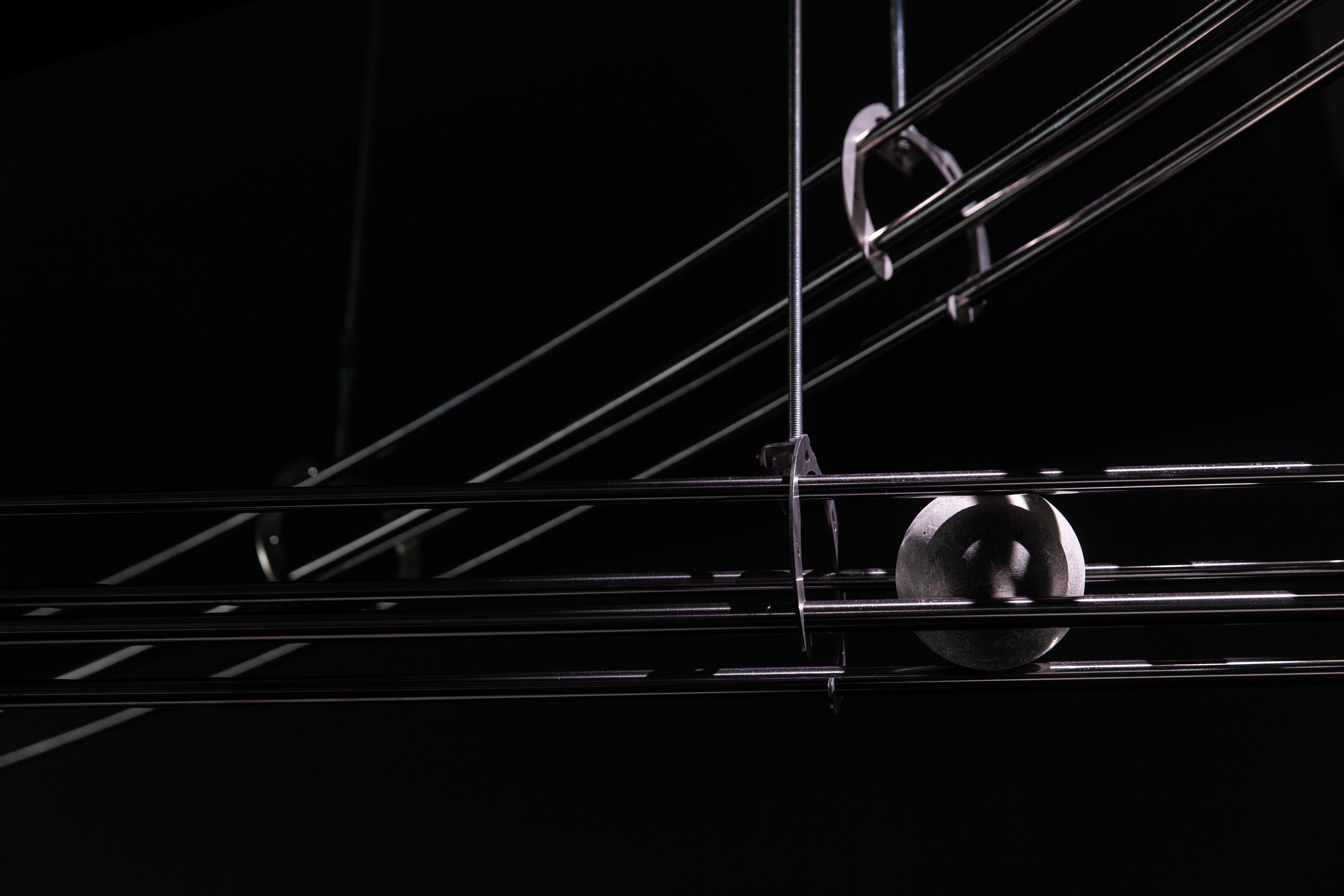
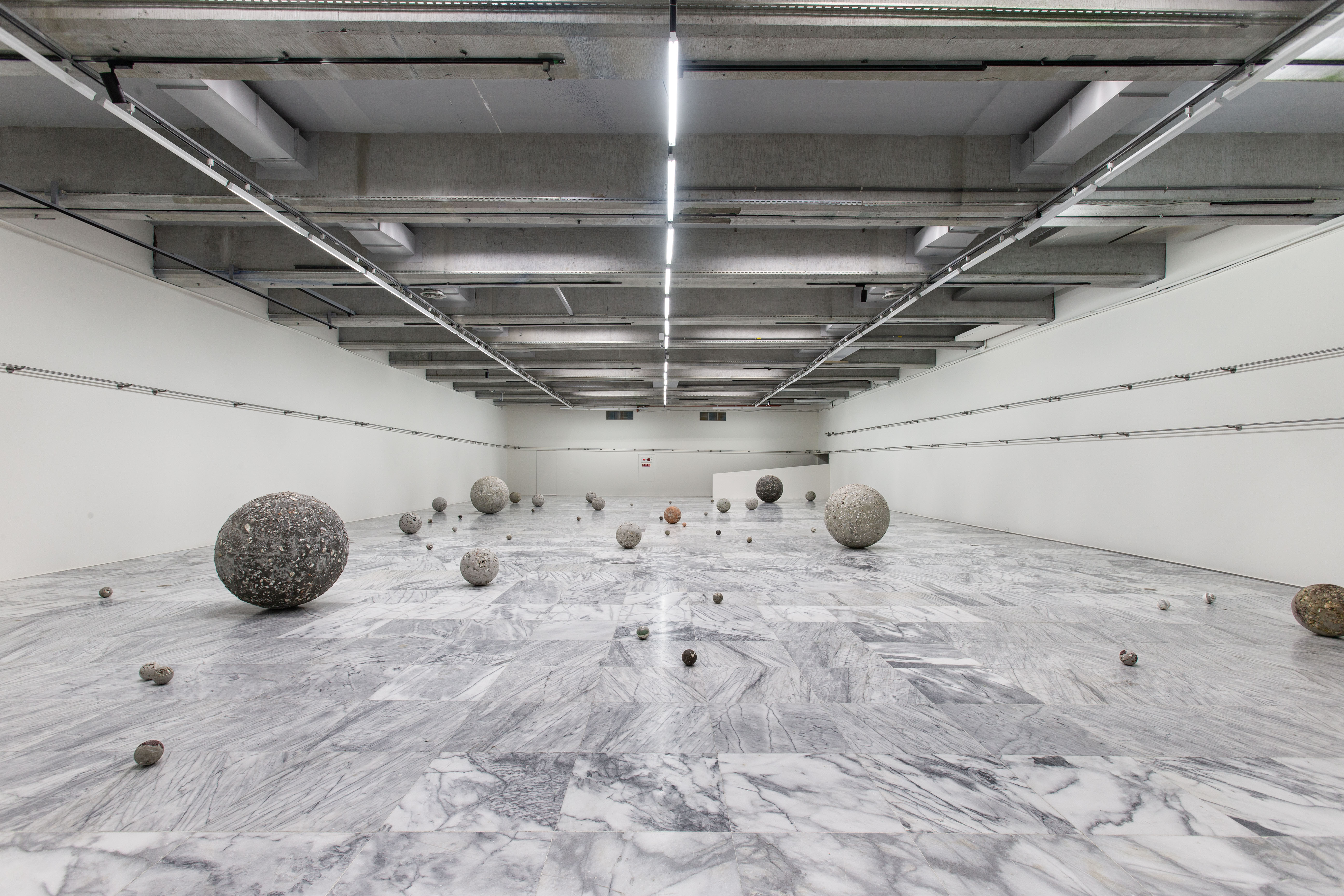
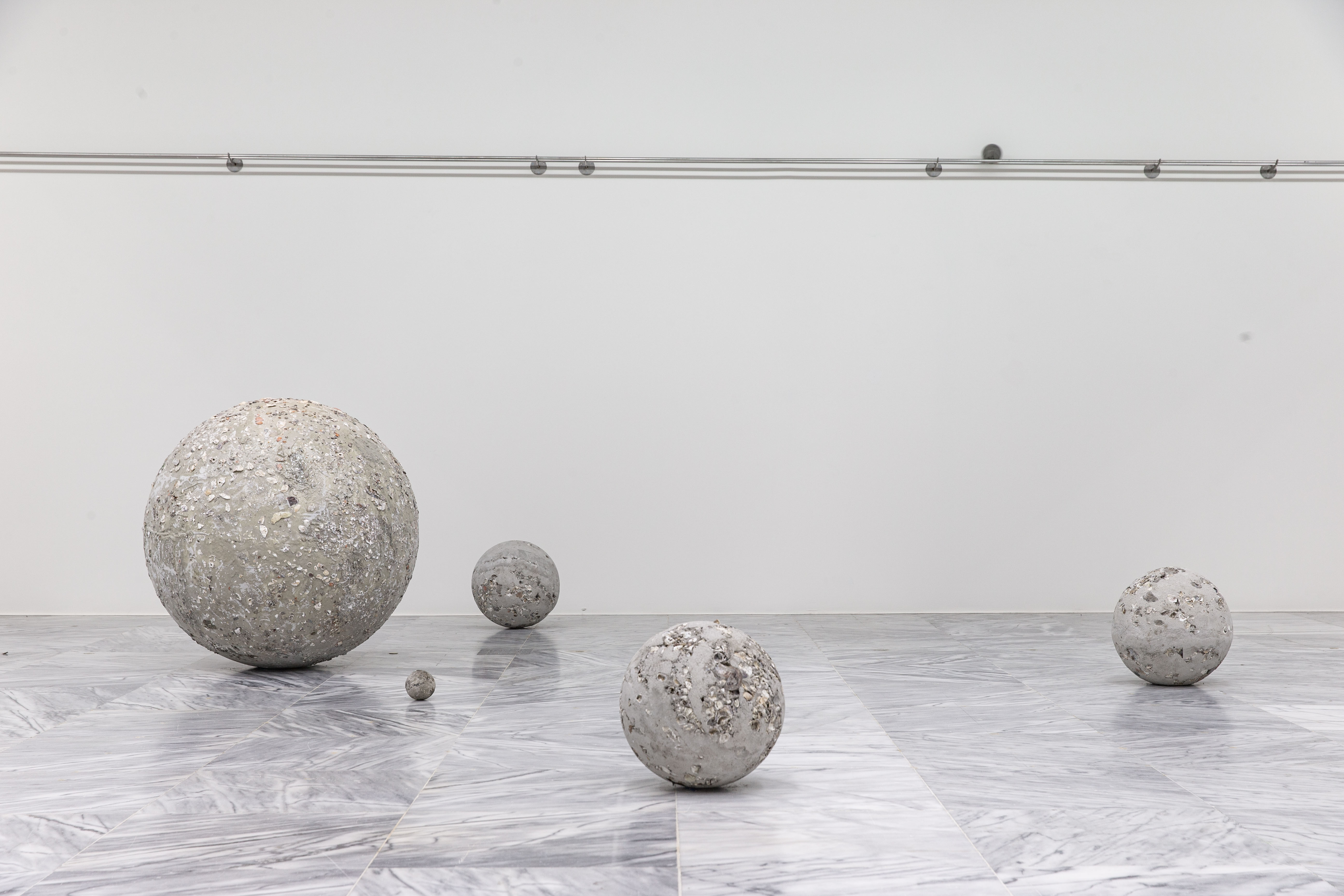
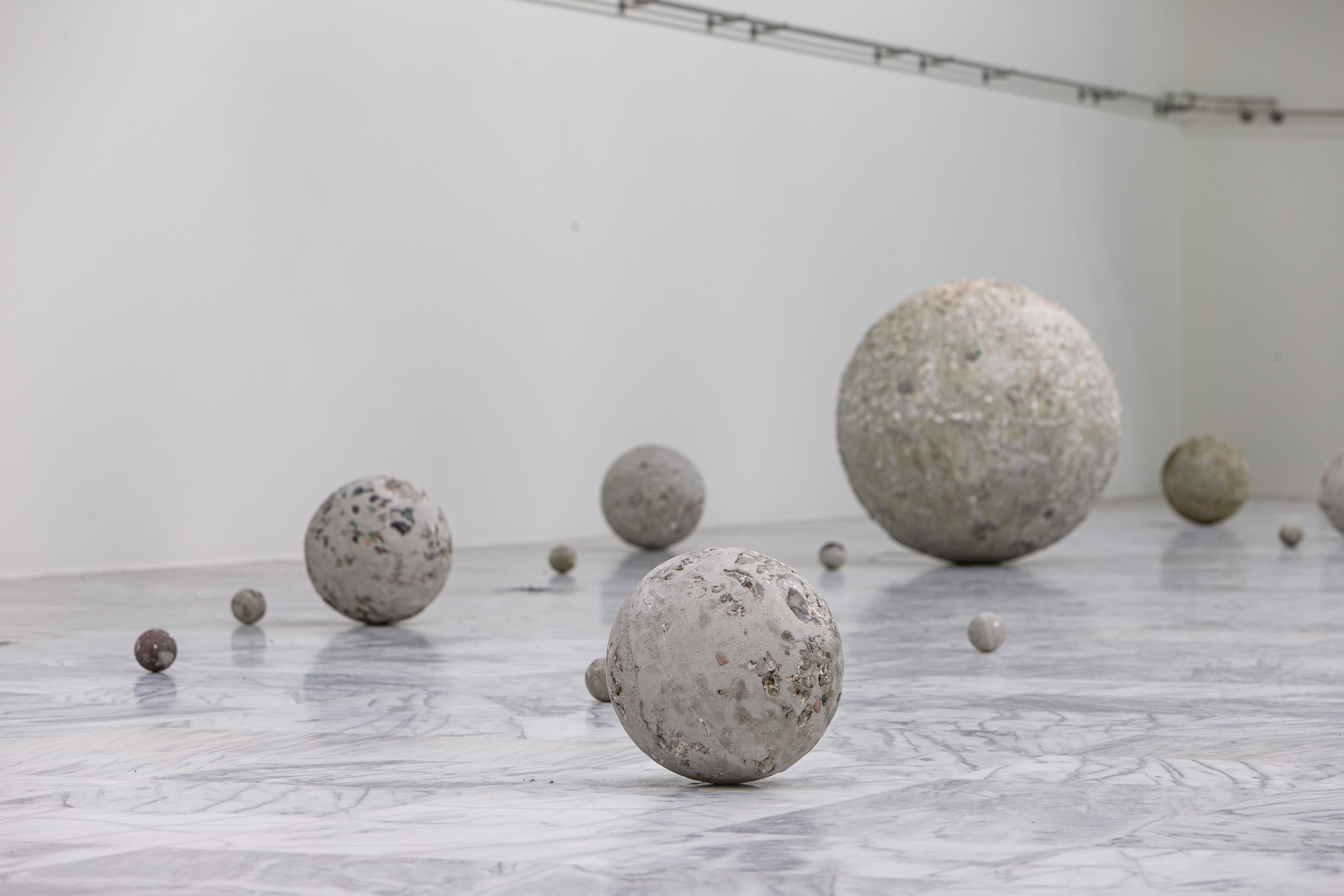
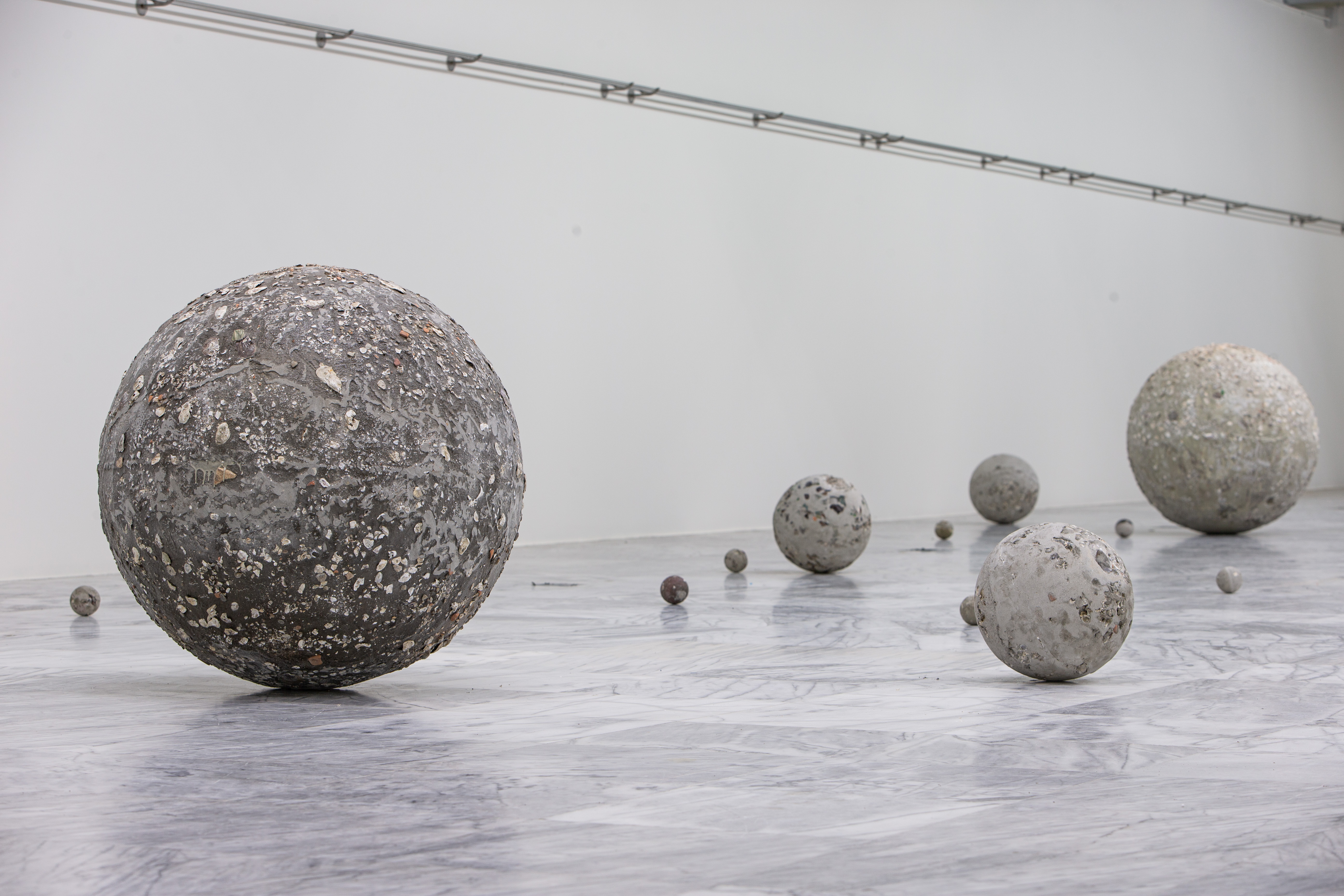
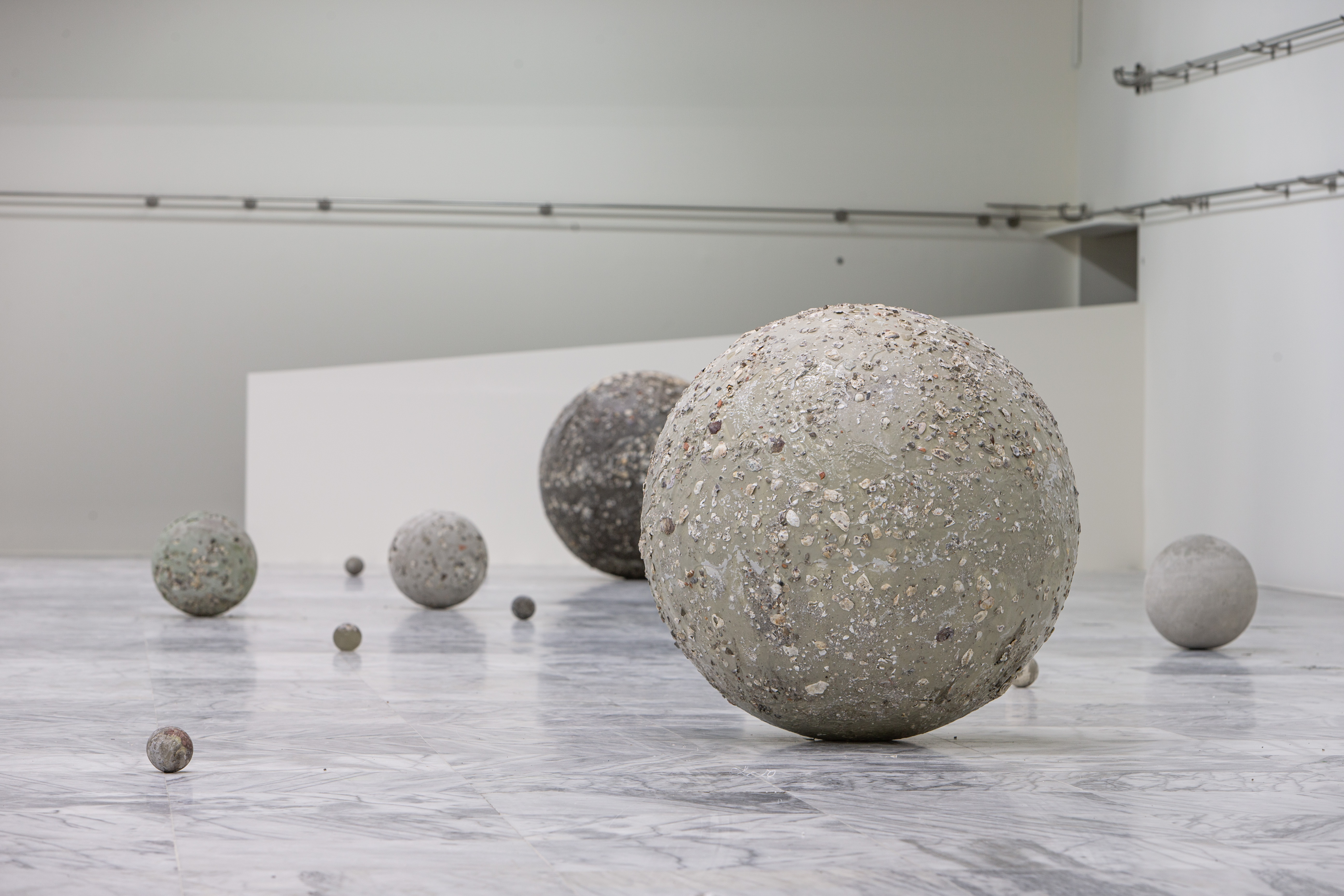
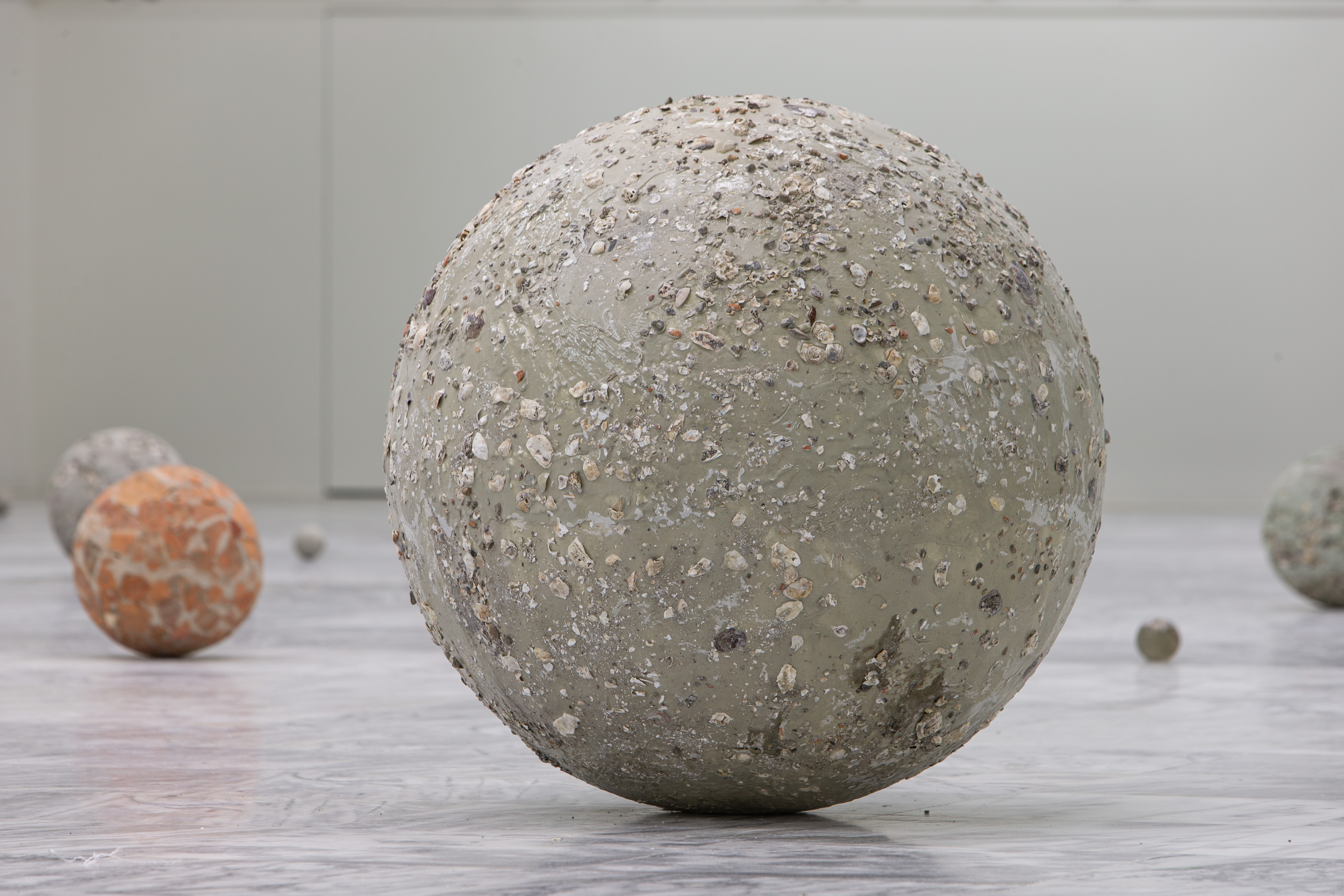
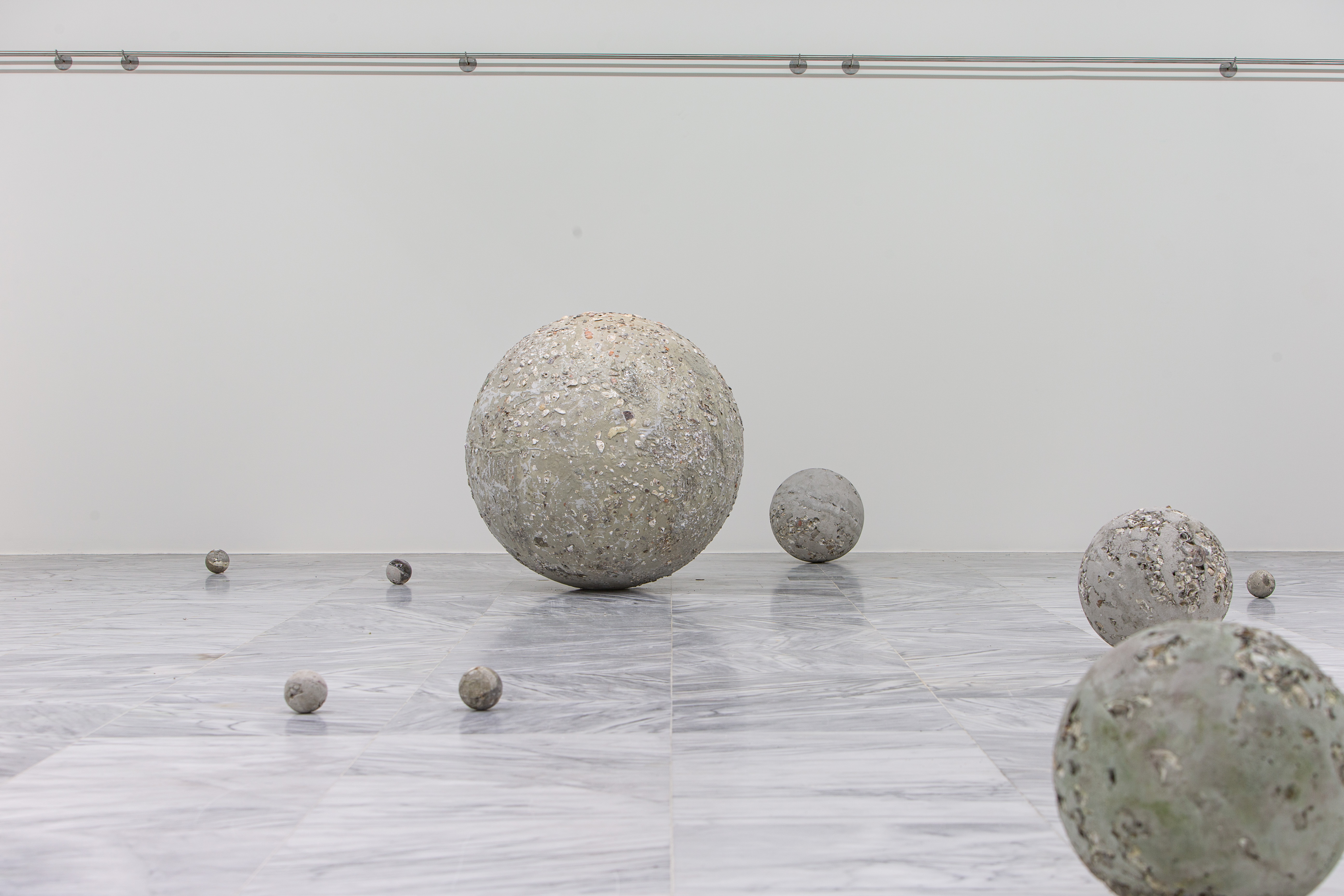
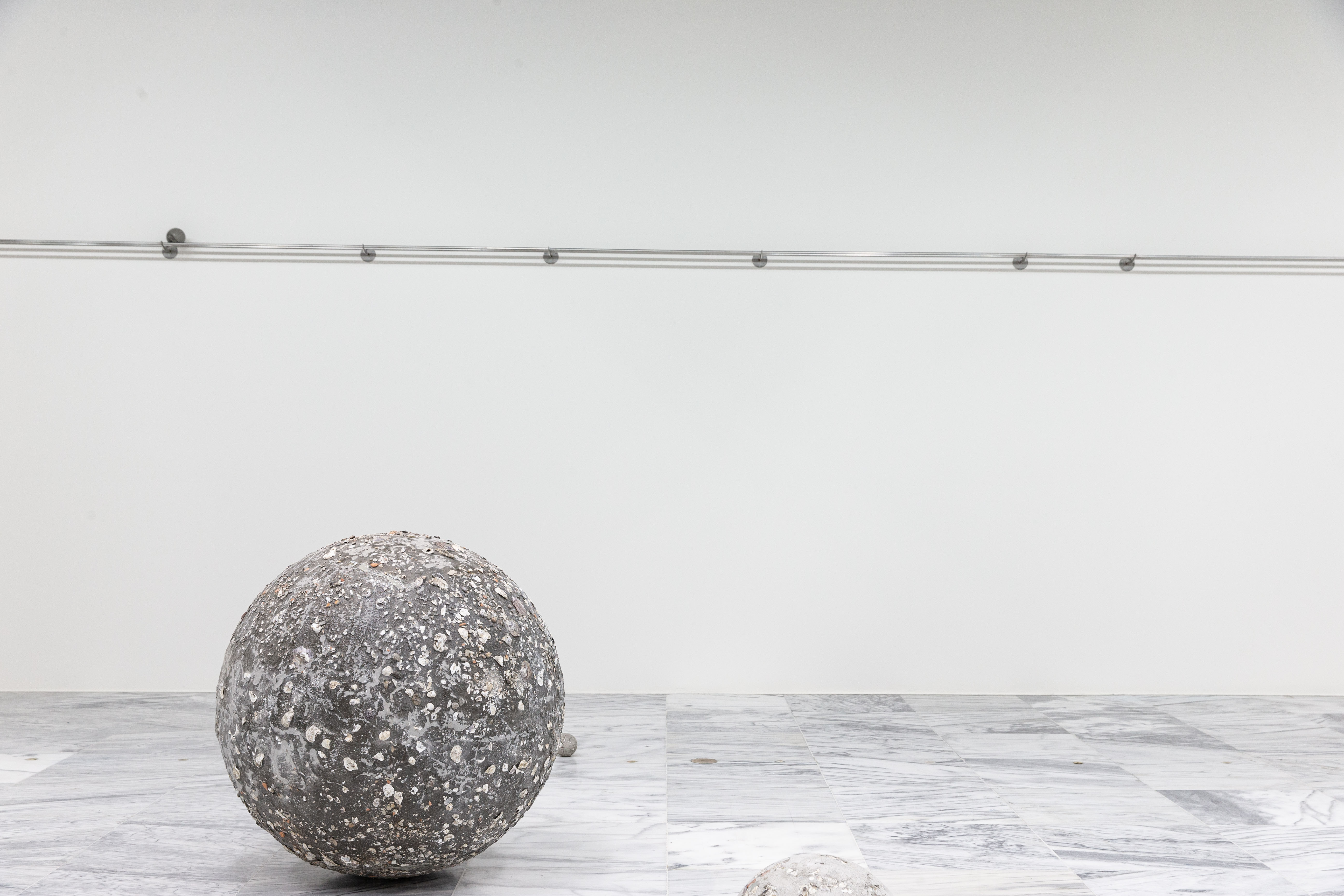
第一展間展示一顆直徑兩公尺的球體與五件版畫作品。球體表面的材料採集自版畫所描繪的地景,使不同場域的痕跡匯聚於同一件作品之中。
The first gallery features a two-meter sphere and five print works. Materials embedded in the sphere were collected from the landscapes depicted in the prints, bringing traces of multiple sites into a single sculptural form.
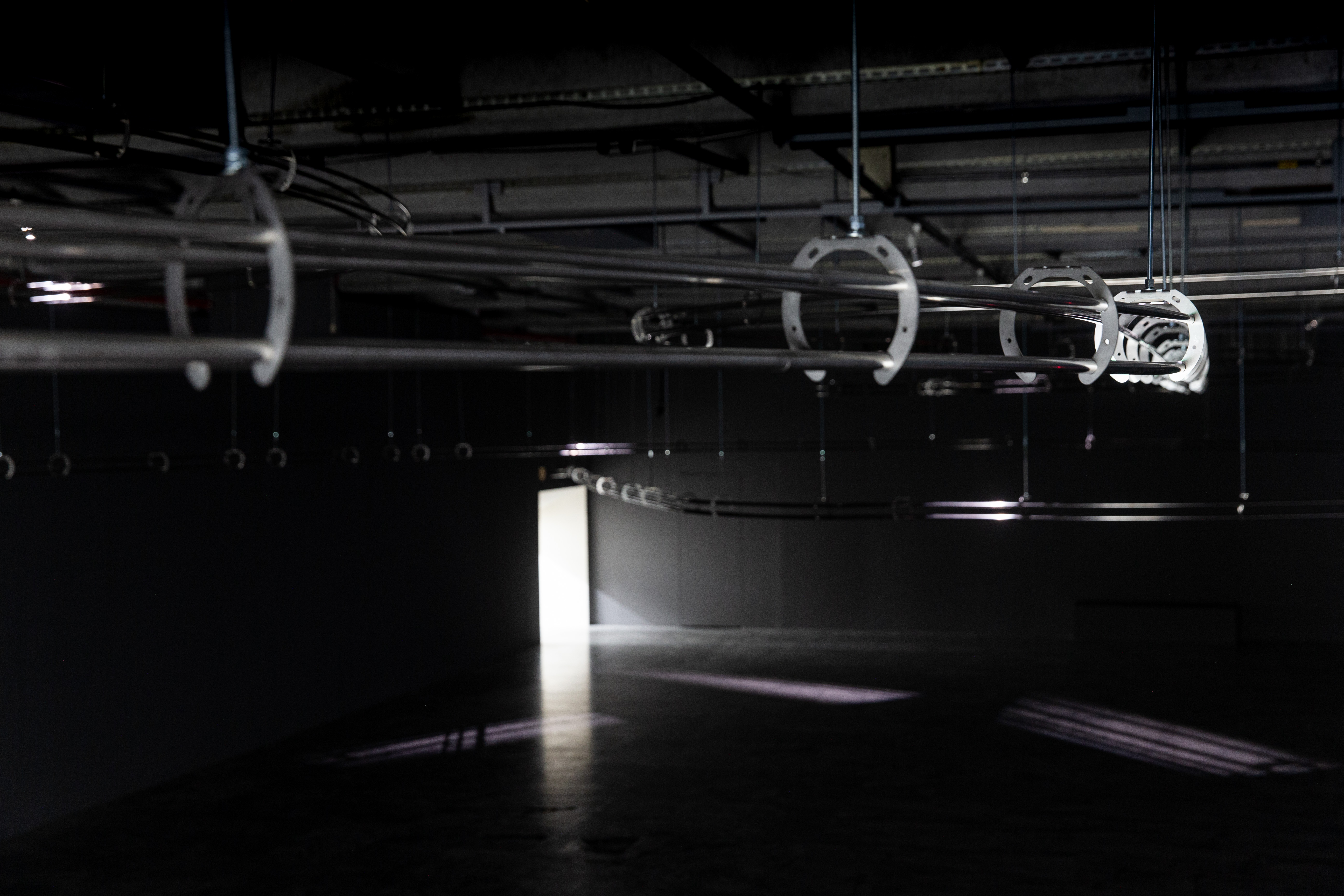
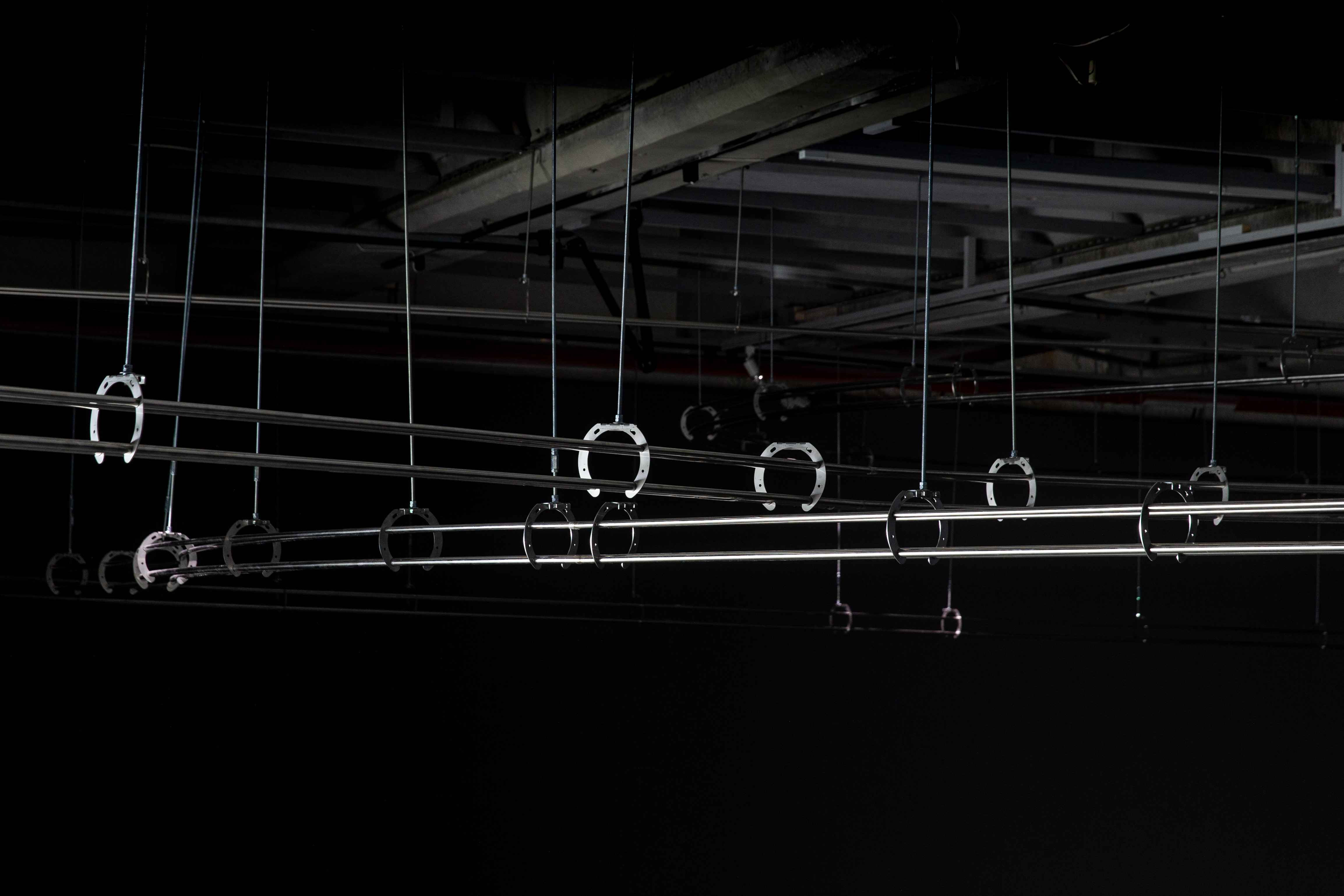
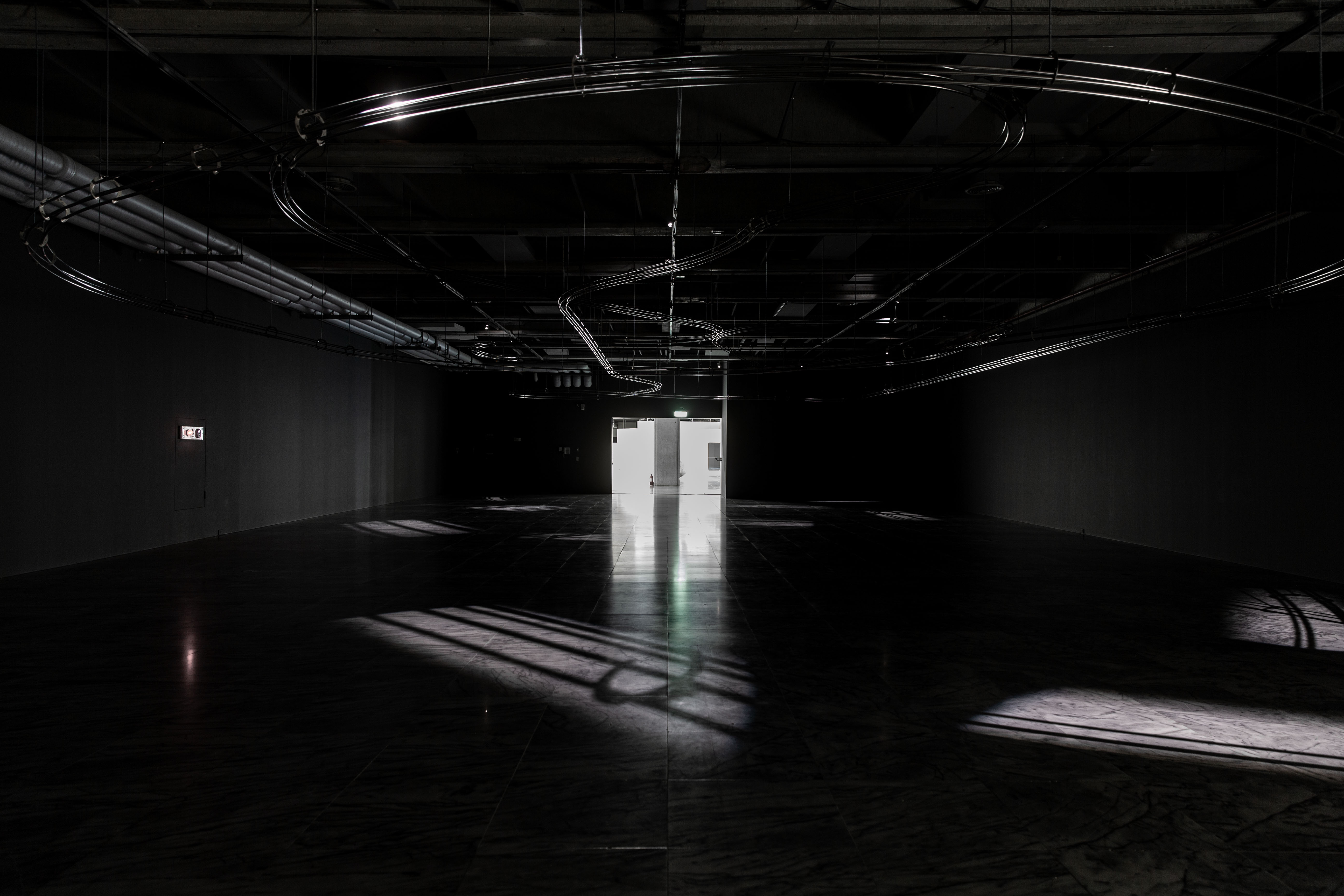
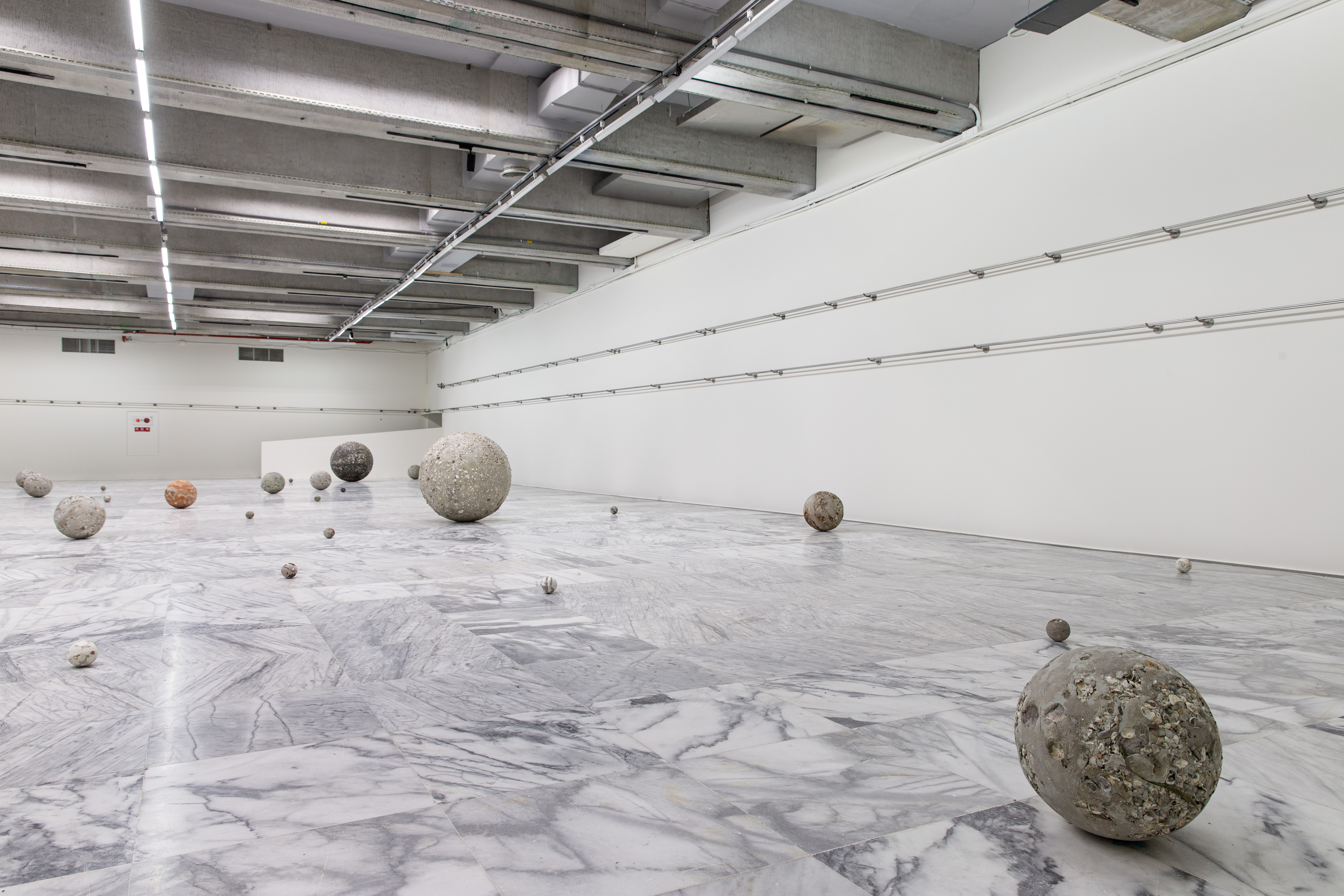
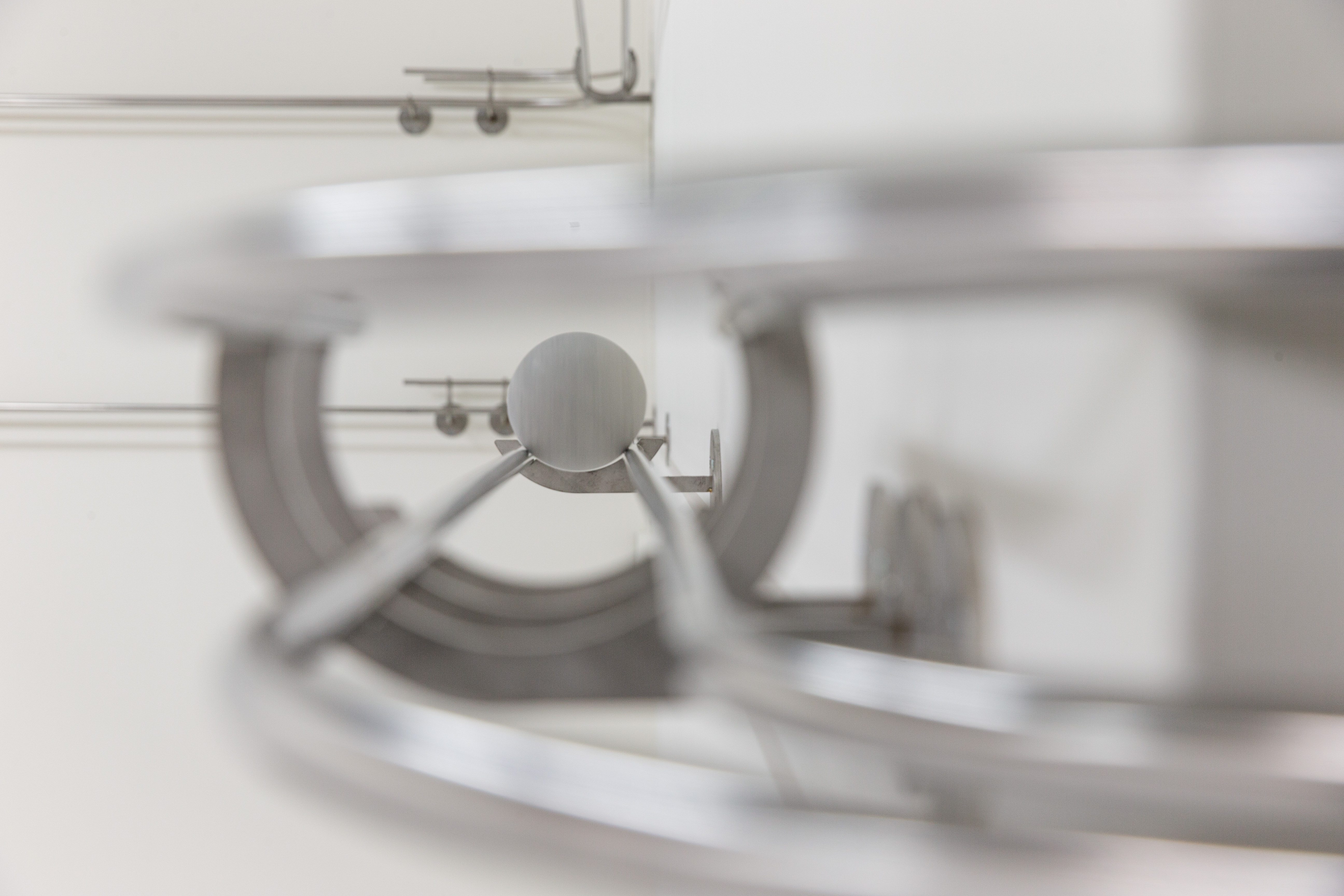
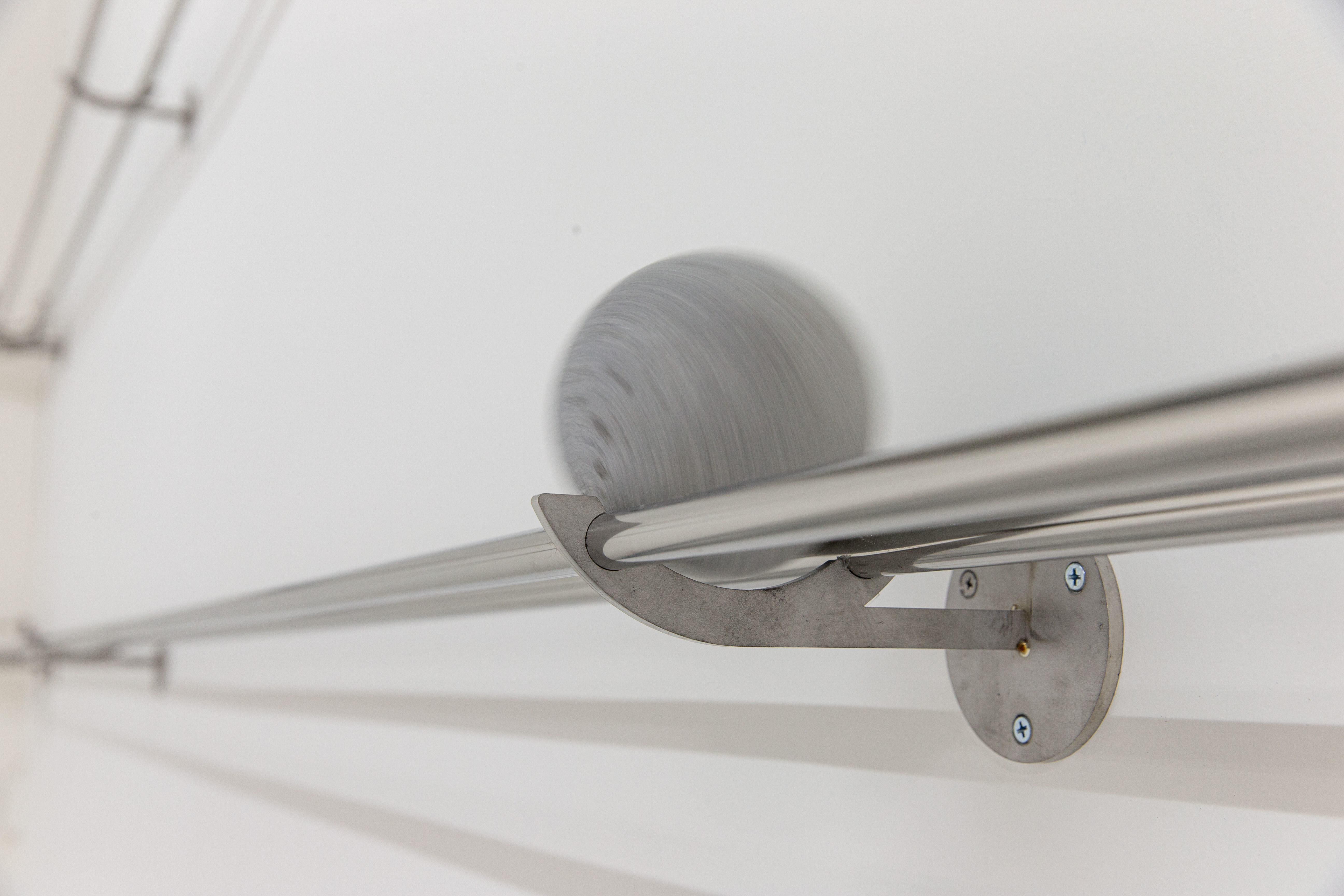
整件作品以地心引力作為最基本的運作原理。展場中央的巨大球體,依循自身重量,在地心引力的作用下緩慢滾動。它的移動既不是預設好的程式,也不是象徵性的表演,而是受到與大地相同的物理法則所驅動。正是這股無法被看見的力量,使物質不斷沉積、地景持續變化,也讓考古遺址在漫長的時間中逐漸形成。地心引力因此不只是自然法則,更是世界持續生成的條件,使物質、空間與時間不斷累積、轉化。
Gravity serves as the fundamental principle of the installation. At the center of the exhibition, a large sphere slowly rolls under its own weight, propelled solely by gravity. Its movement is neither programmed nor symbolic, but governed by the same physical force that shapes landscapes, accumulates sediment, and gradually forms archaeological sites over time. Gravity is therefore not simply a natural phenomenon, but the invisible condition through which matter, space, and time continually accumulate and transform.


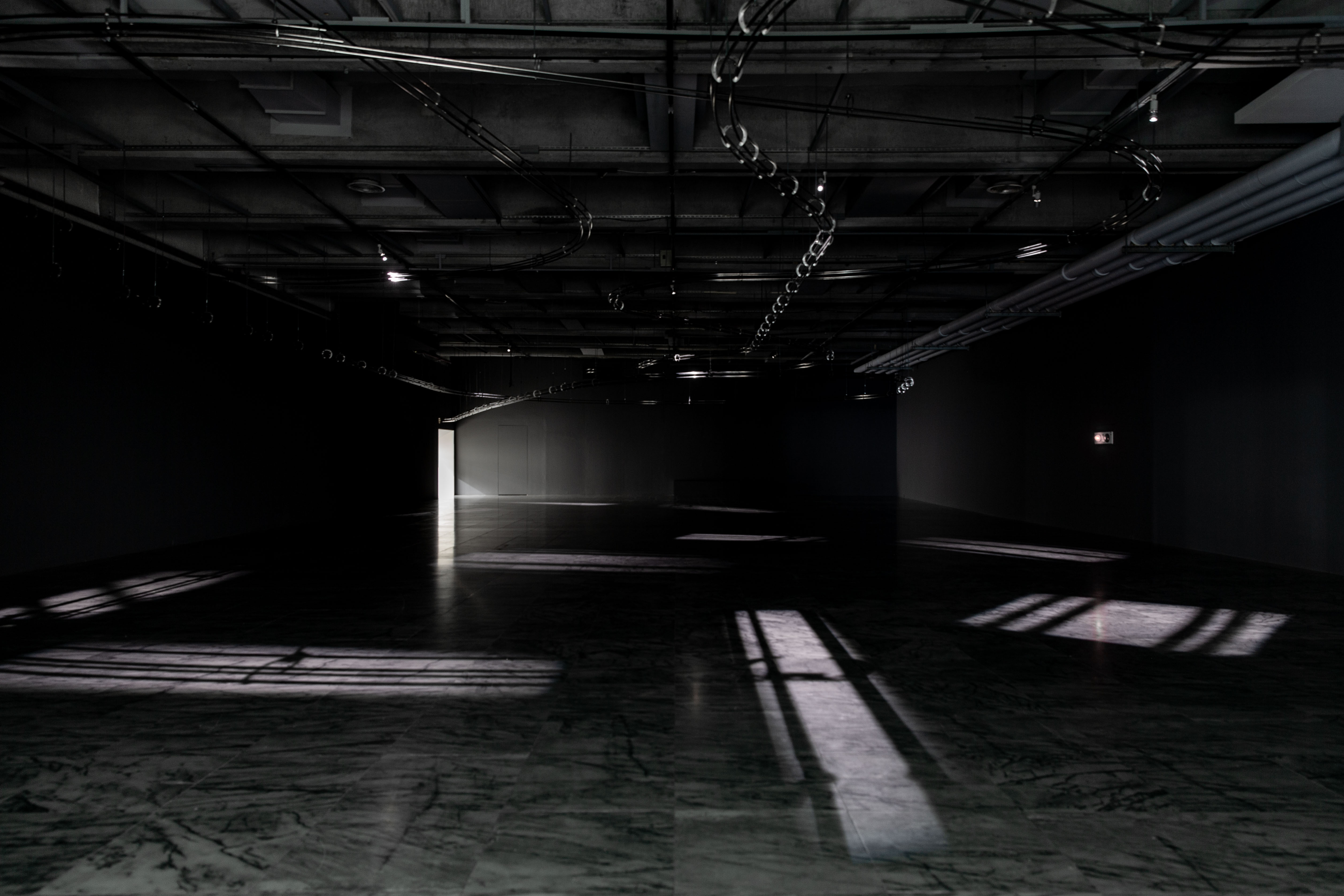
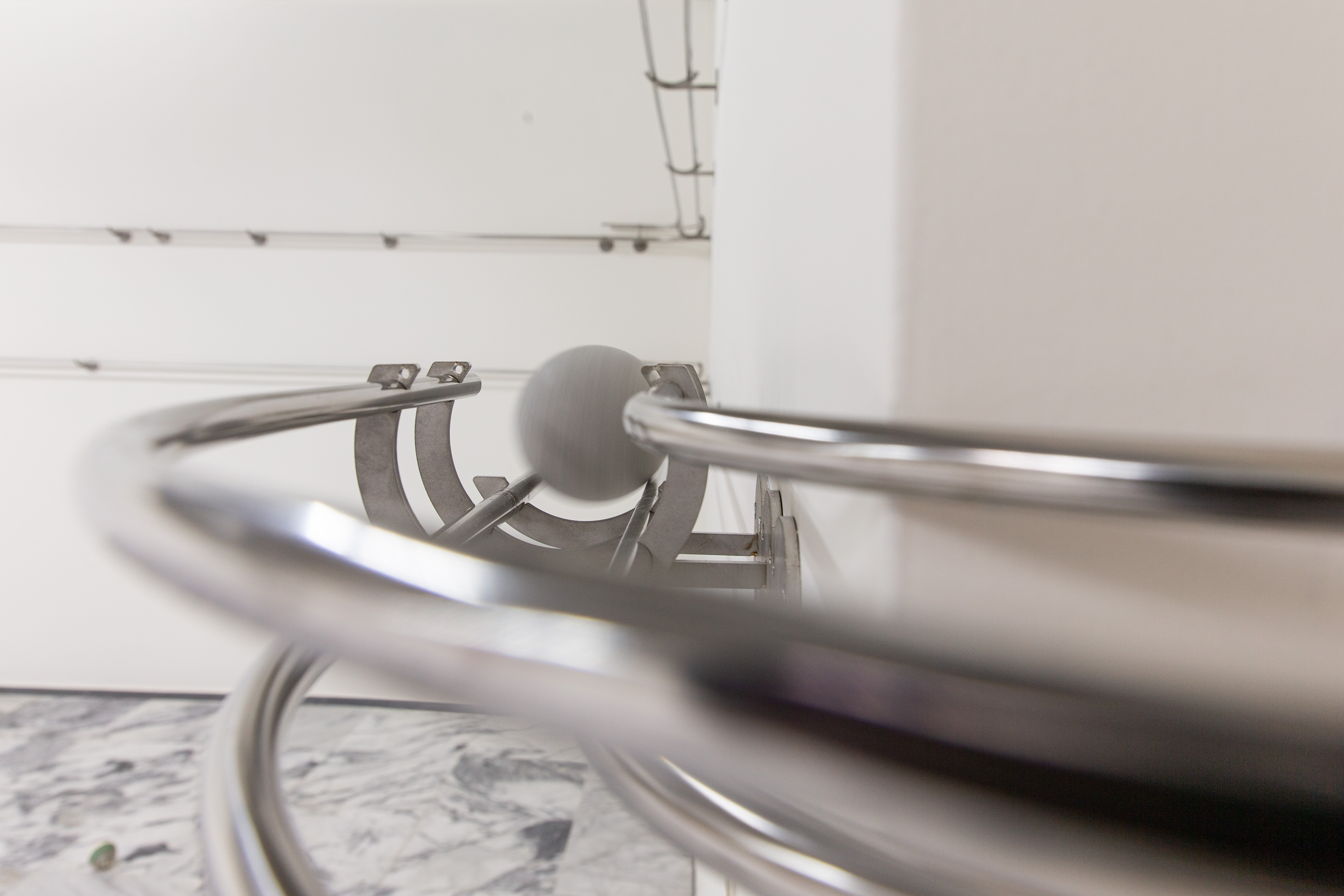
第二展間延續裝置的聲音路徑,觀眾循著球體的運動與聲響移動,在不同空間中持續感受作品所建構的時間與節奏。
The second gallery continues the sonic trajectory of the installation. Visitors move with the rolling sphere, experiencing the unfolding rhythm of time, sound, and space.
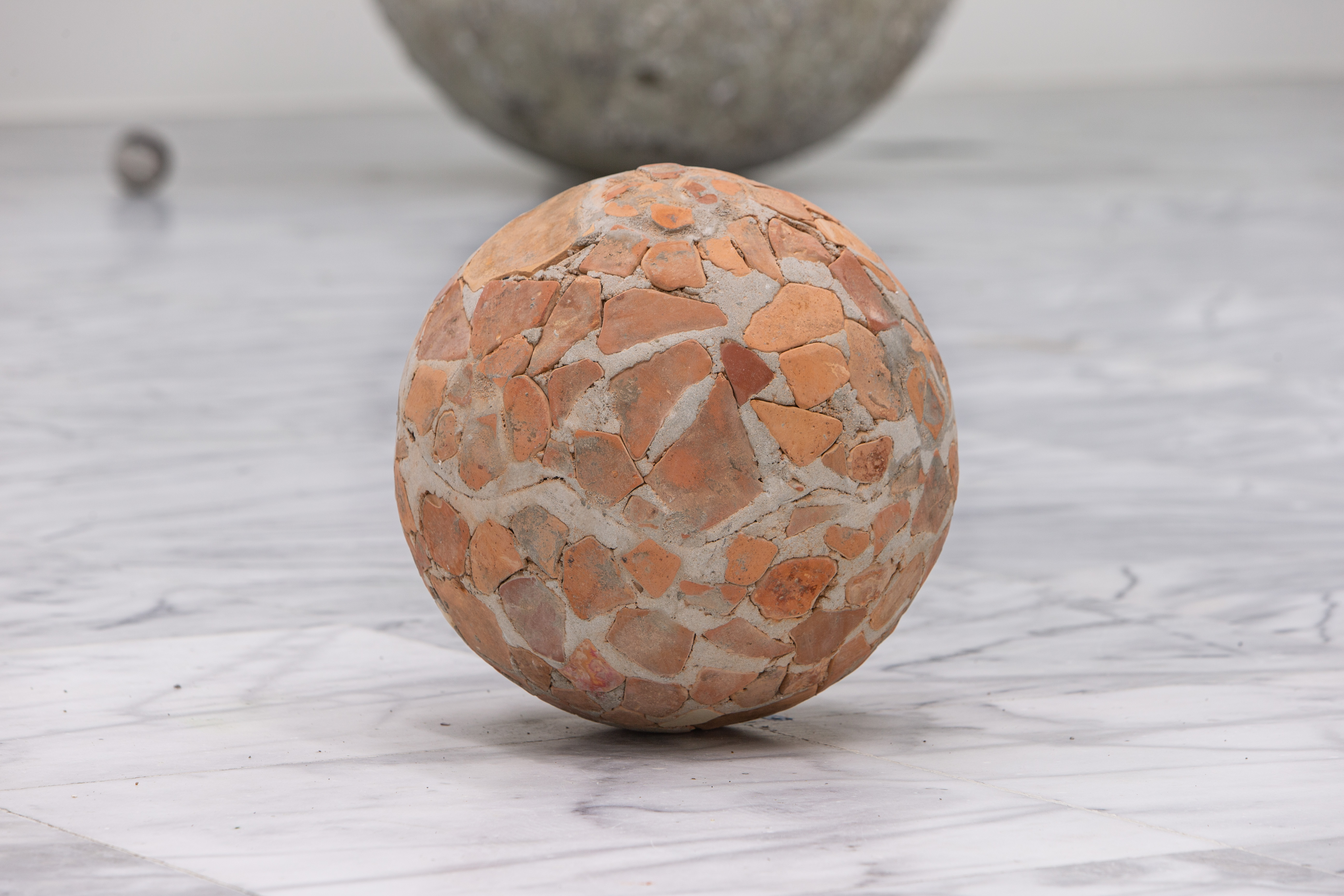
球體由我在踏查過程中所蒐集的材料組成,將不同地方的地景、記憶與時間層次壓縮進同一個身體之中。它並不試圖再現任何一個特定的地方,而是形成一個依循自身物理系統持續運作的微型世界。球體的滾動不是為了抵達某個終點,而是在重力的作用下,持續生成每一個新的當下。
Constructed from materials collected during my field investigations, the sphere compresses multiple landscapes, memories, and temporalities into a single body. Rather than representing a specific place, it functions as an autonomous world operating according to its own physical system. Its movement is not directed toward a destination; instead, each moment of rolling continually generates a new present.

因此,這件作品並非試圖重建過去,而是希望讓觀者經驗歷史存在於此時此刻的狀態。當球體緩慢滾過展場時,觀者所觀看的不是球體本身,而是它經過空間的那一個瞬間——那個無法停留、只能被經歷的「此時此刻」。如同考古遺址一般,作品所呈現的不是過去本身,而是時間累積至此刻所留下的形態。歷史從未停留在過去,而是在地心引力、時間,以及物質持續運動的過程中,不斷生成。
Rather than reconstructing the past, the work invites viewers to experience history as a condition of the present. What unfolds before the viewer is not the sphere itself, but the instant in which it passes through space—a fleeting moment that can only be experienced, never preserved. Like an archaeological site, the installation does not present the past itself, but the form that time has accumulated into the present. History is never something left behind; it is continuously generated through gravity, time, and the ongoing movement of matter.


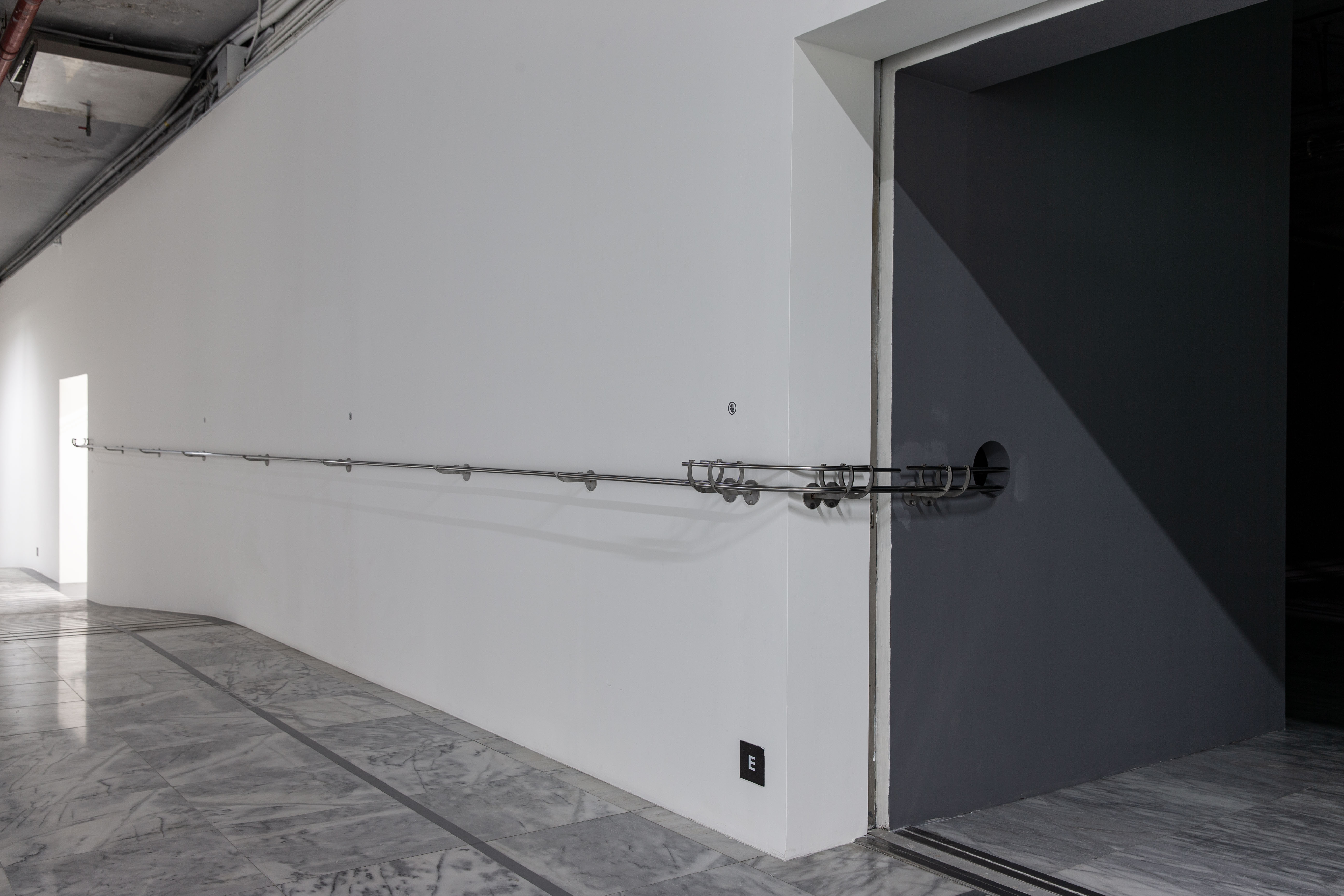
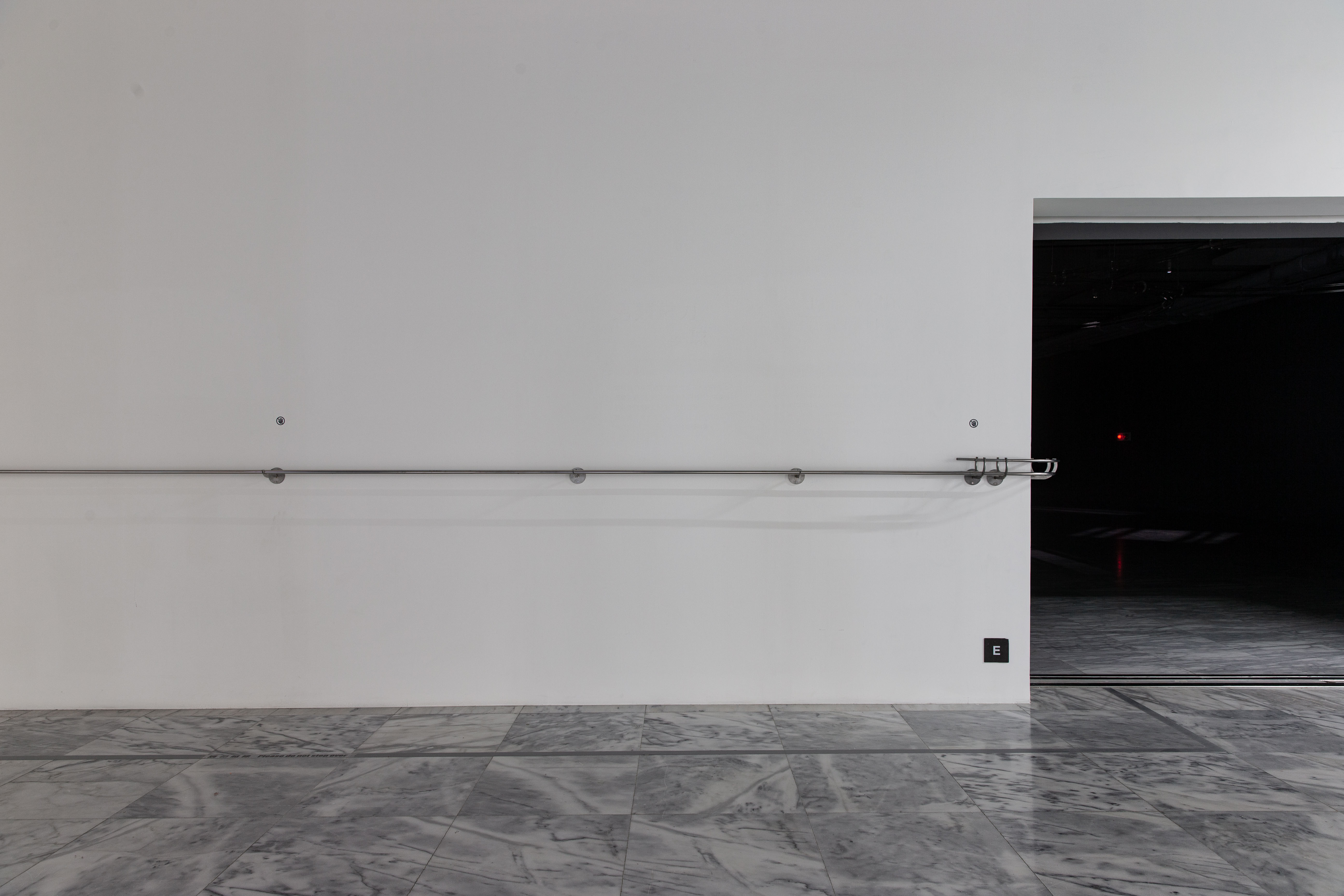
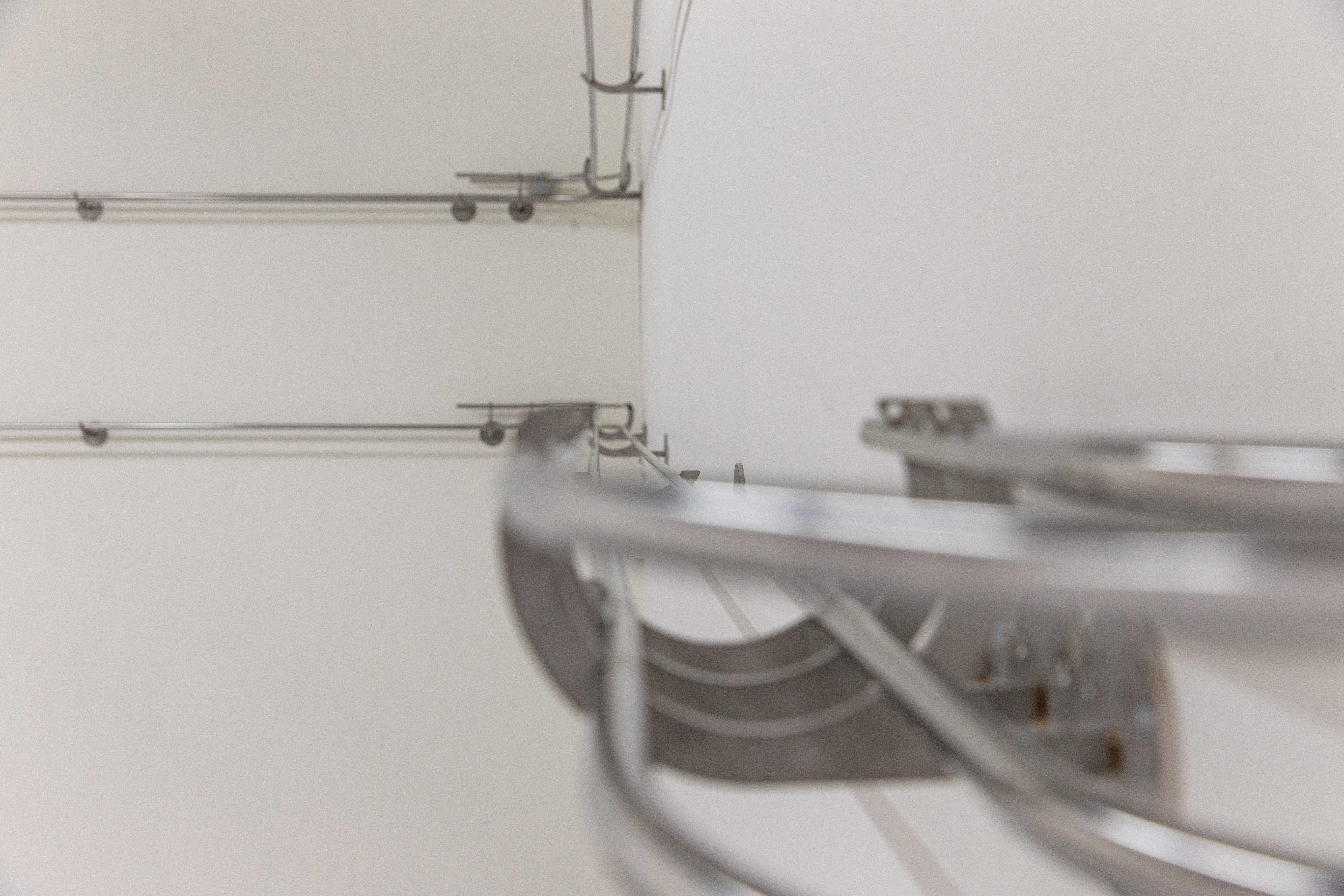
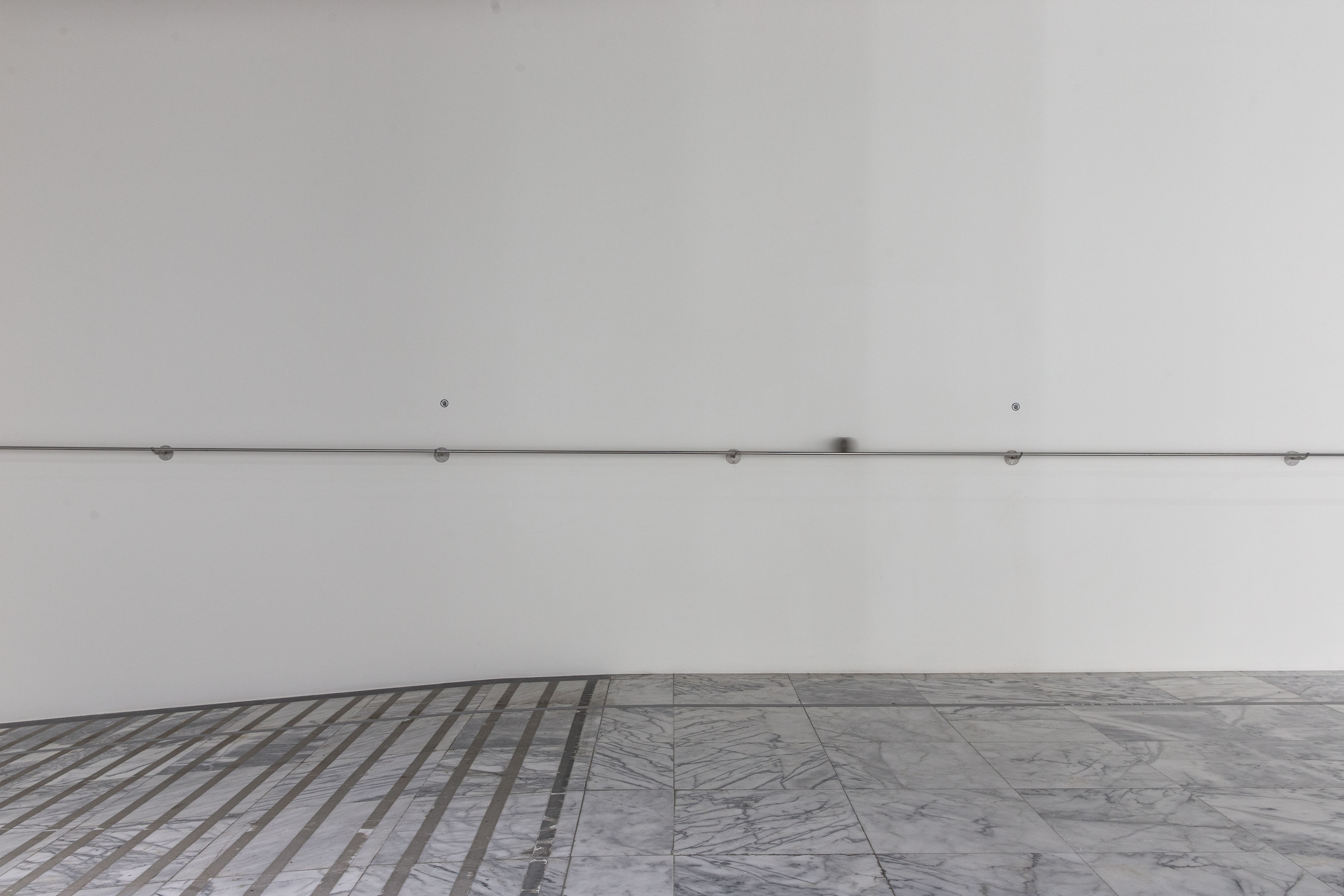
牆面的軌道以層層堆疊的形式排列,呼應考古地層中不同時代逐漸累積的痕跡。
英文:The wall-mounted tracks are arranged in layered bands, referencing archaeological stratigraphy, where traces of different periods accumulate over time.