I Am a Little Bird
我是一隻小小鳥
Pipe cleaners, cardboard, architectural plans, video, sound, site-specific installation
2017


The campus of Tainan National University of the Arts is expansive and quiet, yet it also carries a profound sense of isolation. Living there for an extended period, I gradually began to perceive the campus as if it were a constructed model. At night, the Bodhi trees illuminated by streetlights resembled theatrical stage props, while during the day, the clouds appeared like the artificial sky in The Truman Show. I often felt as though I, too, was merely a small figure inhabiting this carefully composed landscape.
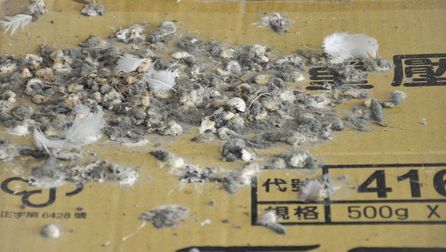
Late at night or early in the morning, I frequently wandered alone through the Visual Arts Building. The empty corridors, flickering lights, and cold concrete walls heightened my awareness of the space around me—its distances, temperatures, textures, and my own physical presence within it. One day, however, a patch of bird droppings on the floor prompted me to look upward. That simple gesture marked the beginning of a different way of seeing the building. I realized that this architecture was inhabited not only by people, but also by swallows. Although we occupied the same building, we experienced and navigated it in entirely different ways.
.jpg)
南藝是一座位於山中的校園,遼闊而安靜,卻也帶著一種與外界隔絕的孤獨。長時間生活於此,我逐漸感受到這裡像一座被建構出來的模型:夜晚,路燈照亮草地上的菩提樹,如同劇場裡的立體布景;白天,天空中的雲層又像《楚門的世界》裡的人造背景,而我也彷彿只是其中一個微小的角色。
深夜或清晨,我經常獨自在視覺館裡遊走。空蕩的走廊、忽明忽暗的燈光、冰冷的水泥牆,使身體更加敏銳地感受到空間中每一件物件的距離、溫度與重量。然而,一攤落在地上的鳥糞,讓我下意識地抬起頭,也開啟了另一個觀看空間的方式。我開始意識到,這棟建築除了人之外,同時也是燕子的生活場域;同一個空間,因為不同生命的存在,而有了截然不同的使用方式。

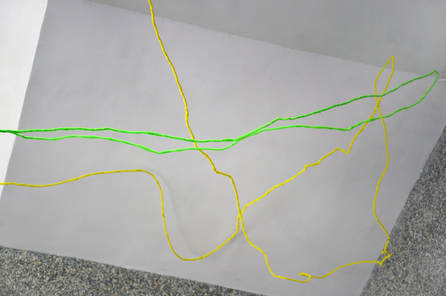
Inspired by Zhuangzi's The Joy of Fish (濠梁之辯), I began to ask whether it is ever possible to understand how another form of life perceives the world. I spent long periods observing how swallows nested, rested, and moved through the building. As I watched them fly, invisible trajectories emerged in my imagination—lines weaving through the architecture, forming a spatial map that seemed to exist only from the swallows' perspective.
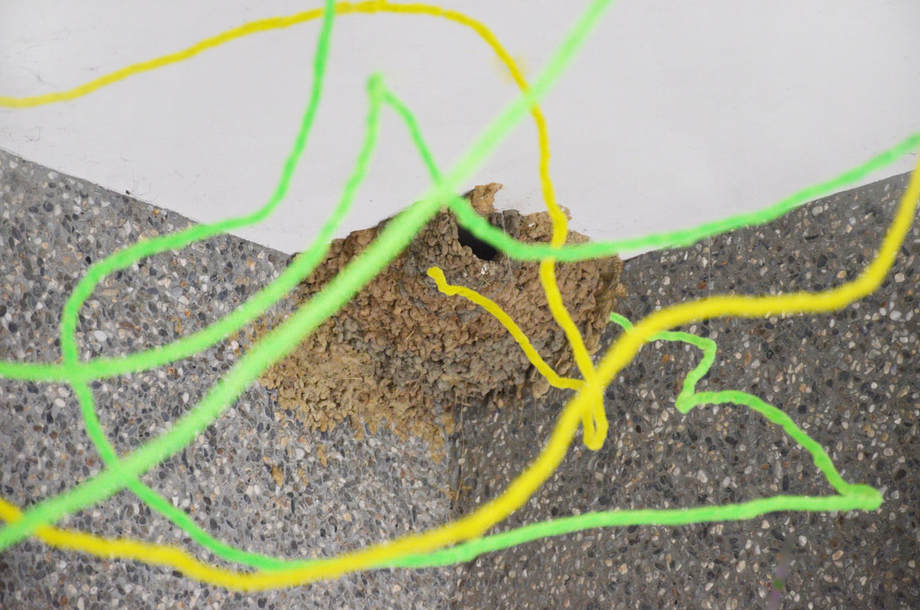
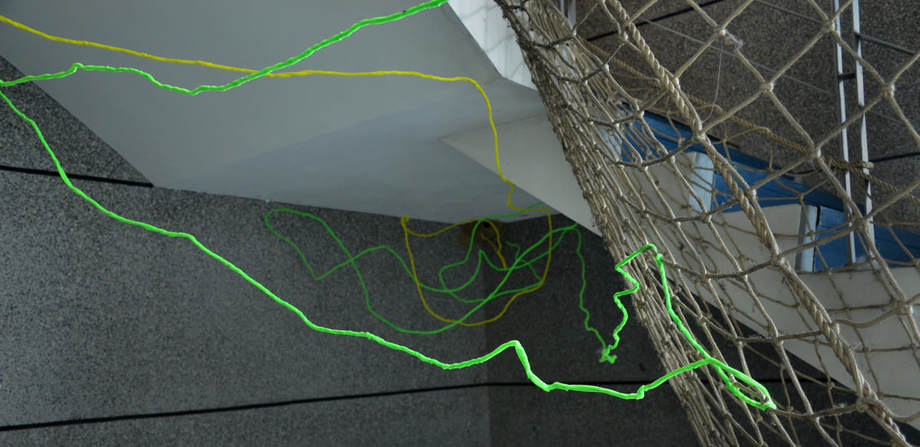
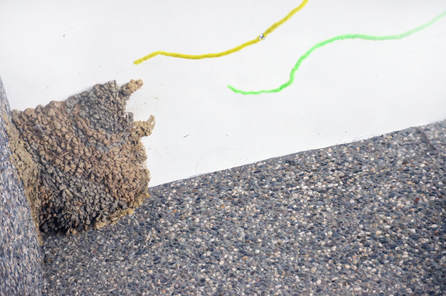
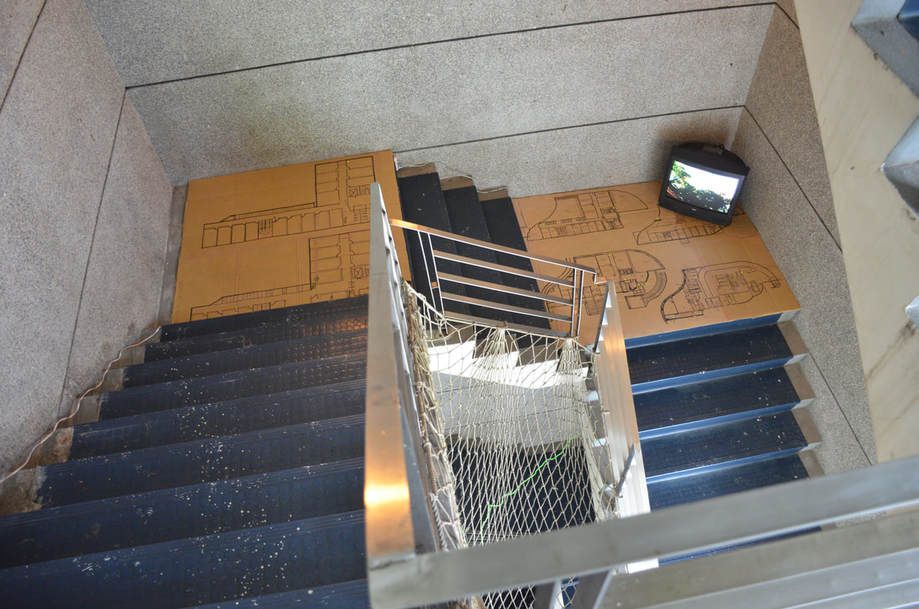
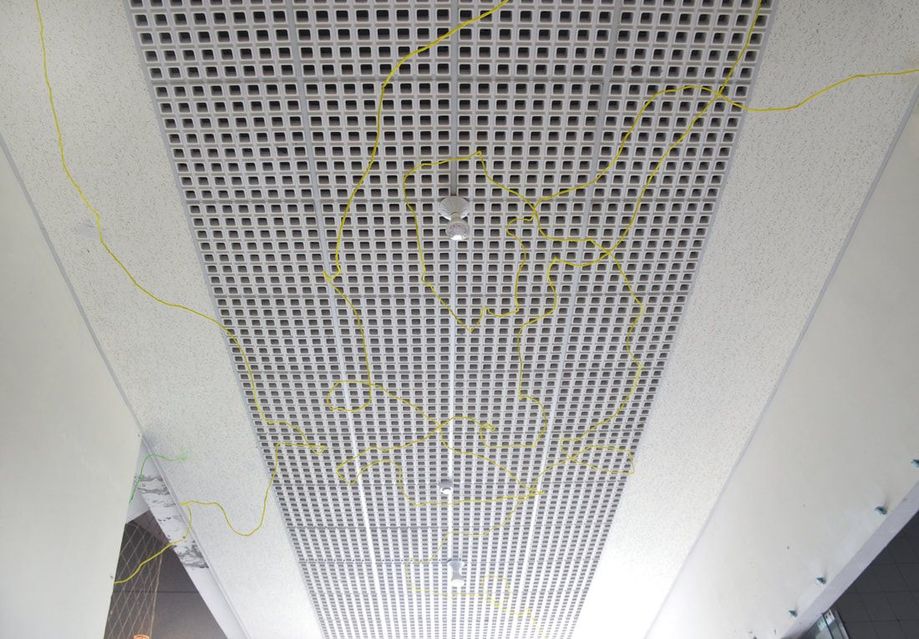
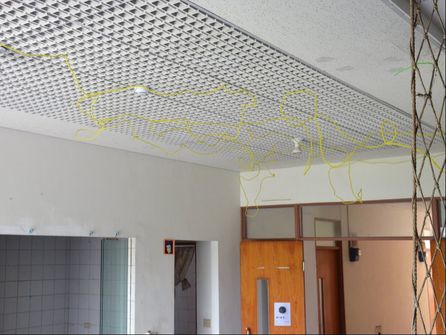
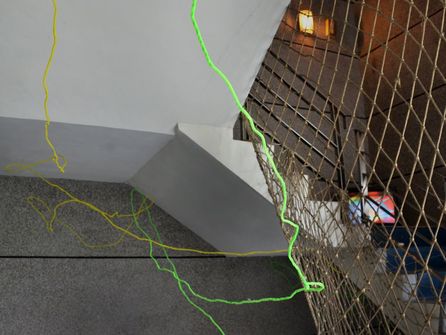
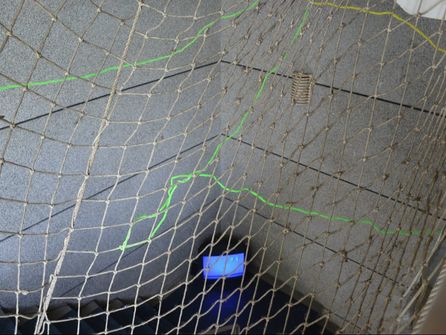
Using pipe cleaners, I translated these imagined flight paths into physical lines suspended throughout the space, making invisible movements temporarily visible. Two video works accompanied the installation: one reconstructed the staircase from an imagined bird's perspective, while the other slowly traversed every corner of the building, reconsidering the familiar architecture through movement. I also surveyed every swallow's nest within the building and marked both active and abandoned nests on the architectural floor plan, transforming a human architectural drawing into a map of the swallows' habitat.

受到《莊子》〈濠梁之辯〉的啟發,我開始思考,人是否可能真正理解另一種生命的感知方式。我長時間觀察燕子如何築巢、停留、飛行,以及牠們如何穿越這棟建築。觀看牠們飛翔時,我的腦海裡總會浮現一道道看不見的飛行軌跡,那些路徑如同漂浮在空間中的線條,交織出另一張只有燕子才能閱讀的地圖。
作品以毛根將這些想像中的飛行軌跡具體化,讓原本不可見的移動痕跡重新出現在建築之中。兩件錄像作品則分別以不同的方式回應這段經驗:一件以模擬燕子視角拍攝樓梯間,另一件則沿著建築各個角落緩慢移動,試圖重新觀看這座熟悉的空間。同時,我調查整棟建築中燕巢的位置,並將仍有燕子居住與已經棄置的巢穴標記於建築平面圖上,將人類慣用的建築圖面,轉化為一張屬於燕子的生活地圖。
I Am a Little Bird is not a work about swallows themselves, but an experiment in approaching the way they perceive and inhabit the world. Through observation, imagination, and acts of simulation, I attempted to move closer to their experience. Yet the process ultimately revealed that I could never become a swallow. We may never truly know how another living being experiences the world, but it is precisely this irreducible distance that makes observation, imagination, and artistic creation possible.

《我是一隻小小鳥》並不是一件關於燕子的作品,而是一場試圖接近燕子觀看世界方式的實驗。我不斷透過觀察、模擬與想像,希望靠近牠們的經驗;然而,創作的過程也讓我逐漸意識到,人終究無法成為燕子。我們或許永遠無法真正知道燕子如何理解世界,但正因為這段無法抵達的距離,觀看、想像與創作才得以持續發生。